Zombies are undead creatures, typically depicted as mindless, reanimated human corpses with a hunger for human flesh (Wikipedia)
Zombies are purported to be mythical creatures – nevertheless there is abundant evidence that they exists, but then more so as religious zombies, by sharing some of the same qualities as mentioned in the definition above.
The specific qualities I have in mind are, firstly, the apparent mindlessness of zombies as evidenced by the inability of religious individuals to think for themselves or avail themselves of reason when it comes to the credibility of their religious beliefs, which – like all religious beliefs – cannot be substantiated in any way, shape or form except by other religious beliefs. Examining these beliefs is like peeling an onion; in the end you will find nothing at its core. Religion is our biggest failure as a sentient and supposedly advanced species.
Secondly, as observed in the most severe and debilitating cases of religious zombie-ism – a pathological thirst for the blood of those who dare to disagree or subject to them, be they man, woman or child. Here it should be clear that I am referring to the infestation of the murderous Jihadists in the Middle East – a human pestilence of the worst kind, and a cause worth of the most severe kind of eradication! Only total extermination will do here so none will be left to kill the innocent or contaminate the feeble minded among us with this deadly plague of murder and mayhem. The fanatical Jihadists are the clearest evidence of the potential deadliness of runaway religious beliefs that are allowed to fester outside the reach of reason and beyond just plain old common sense.
A blight on mankind by any other name would be as deadly, and a wooden stake through the hearts of all of them so they will never ever have a chance to rise up again!
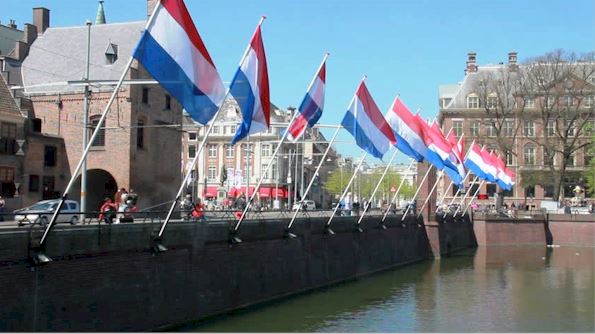
Today, May 5th, is National Liberation Day in the Netherlands to commemorate the capitulation of the Nazi forces in that country exactly 70 years ago on May 5, 1945. It is a national holiday, although not a statutory day off and employers are allowed to work this out between themselves and their employees.
As someone born in the Netherlands at the beginning of WWII I remain deeply grateful for the fact that Americans and Canadians came over to slay the evil Nazi beast and set us free. Many of them gave their lives for this. This surely was a case of a just war, wasn’t it: the grim and sadistic Nazi machine had to be stopped and sent back down the gates of hell from whence it came, goose-stepping and all. So many innocent people died as a result of this war, on both sides.
It wasn’t until much later that I heard about the Allied bombing of civilian targets, and in particular the firebombing of the city of Dresden when the Nazi Reich was already well on its knees, with the Germans surrendering less than a month later on May 7, 1945, following Adolf Hitler’s suicide and the Soviet troops conquering Berlin.
On the night of February 13, the British Bomber Command hit Dresden with an 800-bomber air raid, dropping some 2,700 tons of bombs, including large numbers of incendiaries. Aided by weather conditions, a firestorm developed, incinerating tens of thousands of people. The temperature of the masonry in the city’s cathedral reached an estimated 1,000 Celsius. Reports speak of many victims melting in the intense heat, their bodies becoming welded to pavements. The U.S. Eighth Air Force followed the next day with another 400 tons of bombs and carried out yet another raid by 210 bombers on February 15. (*)
The Dead of Dresden
It is thought that some 25,000–35,000 civilians died in Dresden in the air attacks, though some estimates are as high as 250,000, given the influx of undocumented refugees that had fled to Dresden from the Eastern Front, primarily from Silesia and on the run from Stalin and the Red Army. Most of the victims were women, children, and the elderly.
Dresden was just one of a number of German cities that were targets of aerial bombing raids as Hamburg and Königsberg suffered similar fates. However, the seemingly indiscriminate large-scale area bombing of civilian populations remained controversial throughout WWII. Winston Churchill went so far as to write “The destruction of Dresden remains a serious query against the conduct of Allied bombing.” While there were legitimate military targets in Dresden, how can one sanction the deliberate targeting of the civilian population?”
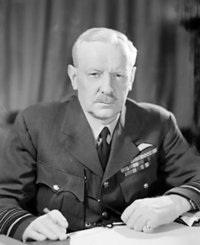
Arthur “Bomber” Harris
The British air attacks were conducted under the leadership of Air Officer Commander-in-Chief Arthur “Bomber” Harris, and when questioned about his preference for area bombing over precision targeting given the large number of civilian casualties and wide-scale destruction the strategy caused he is reported to have said:
“It should be emphasized that the destruction of houses, public utilities, transport and lives, the creation of a refugee problem on an unprecedented scale, and the breakdown of morale both at home and at the battle fronts by fear of extended and intensified bombing, are accepted and intended aims of our bombing policy. They are not by-products of attempts to hit factories”. (RAF Air Chief Marshal Arthur Harris, October, 1943) (**)
The issue was raised within the British House of Lords on Wednesday February 9th of 1944, when it was pointed out that this practice would have been contrary to International Law, as per the 1922 Washington Conference on Limitation of Armaments proposed code for Aerial Warfare.
While this code did not become an international convention, nevertheless great weight should be attached to article 22nd drawn up by a Commission of International Jurists: “Aerial bombardment for the purpose of terrorizing the civilian population, of destroying or damaging property not of military character, or of injuring non-combatants is prohibited”. As well, Article 24 stated: Aerial bombardment is legitimate only when directed at a military objective.
In this this context the British historian Frederic Taylor said that , while it was true that Dresden as a major German industrial and military centre was a legitimate target for the Allied Forces to go after, “When we think of Dresden, we wrestle with the limits of what is permissible, even in the best of causes.”
(*) In describing the RAF bombing of Dresden and other German cities during WWII, I wish to make it absolutely clear that anyone who gave their life in WWII to eradicate the criminal Nazi regime deserves our deepest appreciation, and their acts of bravery and self-sacrifice should never be forgotten. And this includes the thousands of US and British airmen who were ordered to perform incredible feats of courage, by flying nearly blind for hours and hours in the dark across hostile territory and aided by relatively limited navigational aids – at least by today’s standards)
(**) In defending his role in the fire-bombing of Dresden Harris wrote that “… the attack on Dresden was at the time considered a military necessity by much more important people than myself.” Bomber Command’s crews were denied a separate campaign medal (despite being eligible for the Air Crew Europe Star and France and Germany Star) and, in protest at this establishment snub to his men, Harris refused a peerage in 1946; he was the sole commander-in-chief not to become a peer. However, in February 1953 Winston Churchill, now prime minister again, insisted that Harris accept a baronetcy and he became baronet.
I think often about the human condition – and maybe too often – and in particular about what it would take to move beyond the current state of affairs that appears to be largely defined by an insatiable desire for personal gratification.
The rule seems to be: the more you have, the more you want – and one can never have enough. Here, we have truly abandoned our animal past, by perverting the need to survive into a grotesque effort to rise to the top of the heap through relentless consumption, sustainable or not – with no regards for the millions amongst us who can do no better than maintain a marginal existence to the point of starvation in the face of drought or famine, or other conditions of adversity that prevent even very moderate levels of prosperity to be in reach of those willing to work hard for it.
I guess we can’t help ourselves – the predator primate within us is still very much in charge, and as such we are human only to the extent that we like to think of ourselves as being able to be more than that, although we really don’t know what that means in terms what is actually achievable should we ever be able to put our minds to it.
This – for me – is one of the most depressing part of being human.
Franz Kafka’s Before the Law is a deliciously ambiguous parable that is part of his 1925 novel The Trial – about a man from the country who goes to the king’s castle in order to gain entry before the Law. (Kafka doesn’t explain what he means by “the Law” – and there is little consensus on this point – but I take it to mean “the Law” as in the authority as to why things must be as they are, and in this context the King would be the ultimate authority here …)
And so he is granted permission to appear for the Law, and is led to a gate that leads to it. While the gate appears to be open, there is a gatekeeper preventing him entry and who tells him that he cannot grant him entry at the moment. The gatekeeper gives him a stool and allows him to sit down by the side of the gate.
There he waits for days, weeks, then months, all the while asking and negotiating with the gatekeeper to let him through. And although the gatekeeper continues to suggest that entry continues to be a possibility – but not just yet – eventually years go by and he ends up waiting his entire life, to no avail, never gaining entry.
Then, when he is about to die, he wonders why he was the only person waiting at this gate seeking entry before the Law. The gatekeeper tells him that, “Here no one else can gain entry, since this entrance was assigned only to you. I’m going now to close this gate”.
Kafka has the unique gift of being able to capture a critical insight into the larger human condition and weave it with great literary skill into an allegory that gives it away – but not quite. As a result, we can’t always be sure of what aspect of our lives he is writing about. Countless interpretations have been provided by those who have studied Kafka’s writings over the years, intrigued by his efforts to challenge us beyond the usual boundaries of our thinking about the world and the role we play within it.
What I believe what he wrote about here is, once again, his own acute experience of being in the world without an apparent reason, and feeling compelled to make the assumption that there has to be an aspect of our existence that provides the justification for it. And while this reason may be staring us directly in the face from the very day that we were brought into this world, how will we ever gain access to it?
And so it appears that – while having evolved towards the capacity of being able to consider a reason for being, as in the question “I want to know why I am here, and for what purpose?” – being allowed to confront this question is no guarantee that you will be able to get it answered even if you are willing to dedicate a lifetime to it! At the same time, this is very much an individual question, in the sense that it is meaningful only for those who feel the need to pursue the answer for it.
It was reported in the news today that Islamist insurgents retreating from Timbuktu set fire to a library containing thousands of priceless historic manuscripts. The Saharan town’s mayor described the incident as a devastating blow to world heritage.
Apparently, al-Qaida-allied fighters on Saturday torched two buildings that held the manuscripts, some of which dated back to the 13th century. Soldiers got there too late to rescue the leather-bound manuscripts that were a unique record of sub-Saharan Africa’s rich medieval history.
This act tells you a lot about fanatical Islamic militants in general, and al-Qaida in particular. Like the book-burning that the psychopath Adolf Hitler presided over, these acts are about seeking out and destroying the recorded history of thoughts and events capable of showing that certain traits of thought have absolutely no substance to them. And in the case of the Nazis that would have included their own warped ideology idealizing “the German way of thinking” – whatever that meant, but likely only that there wouldn’t be any people of Jewish faith involved.
Likewise, al-Qaeda and similarly minded Islamist groups – such as Boko Haram – are on a quest to destroy not just the Western way of life – but any way of life that might undermine its miserable vision of pious totalitarianism that reduces people to a form of religious slavery by terrorizing them with the harshest form of barbaric Shariah law to keep them under their control.
It seems that this execrable brand of Islam seems hell-bent to prevent people in their power from exercising the one thing above anything else that separates us from the animal that we once were: our brains, and the ability to think critically about ourselves, our place in the world and what kind of future we want to create for ourselves.
This was a headline in the Scientist of June 13, 2012. The corresponding article by Ed Young based on The Human Microbiome Project Consortium, Structure, function and diversity of the healthy human microbiome (Nature, 486: 207-214, 2012) went on as follows:
The human body is largely not human. It contains trillions of microbes that outnumber our own cells 10 to 1, affecting our health and behavior. Now, an international consortium of around 200 scientists has mapped this diverse microbial community at an unprecedented level of detail, and shown just how much it varies from person to person.
Presumably, the main surprise was how these massive bug populations vary in makeup between individuals, while by and large fulfilling the same tasks for each person:
In cataloguing the healthy human microbiome, the HMP (Human Microbiome Project) has already yielded some surprises. For example, although each body part is characterised by some signature microbial groups, no species was universally present across every volunteer …
For me – if these observations shows us anything – it is the incredible creativity within the evolutionary process to make things work at the living organism level, as well as the symbiotic nature of life, i.e., no life-form is independent from some other form of life.
And as well as we might be able to catalog life by means of discerning distinct or discrete entities, in the end all life is as one and the living entity that is our planet Earth.
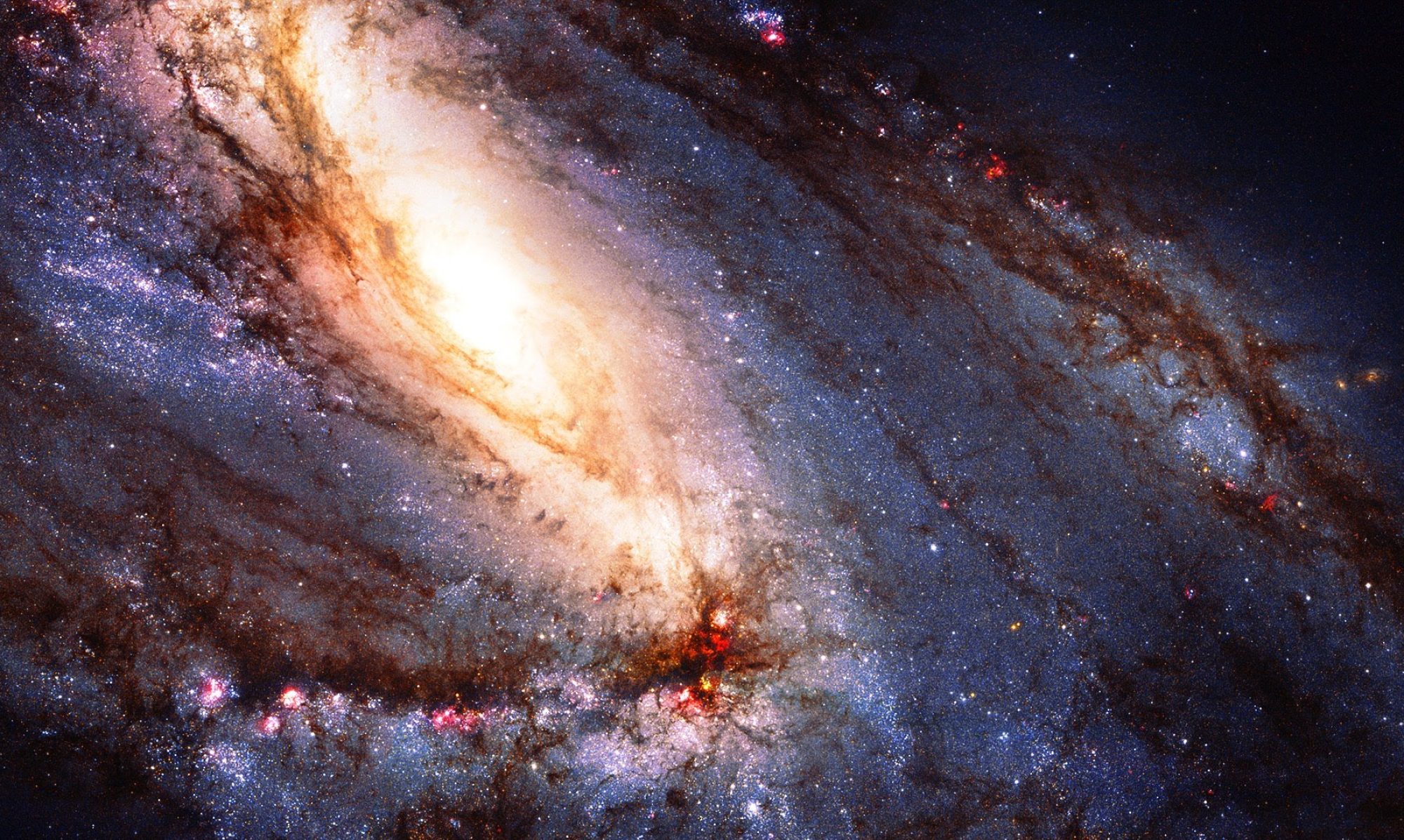
This realization strikes me every so often, and continues to fill me with awe: as this is what we are in the larger scale of things, in addition to being a creature made of flesh and blood here on earth! You just have to step back a bit to realize this, but when I look up to see the stars at night, I know we are made from the same magical stuff , and that we are related – In fact, these stars are our ancestors!
This also tells me that I relate to them not only as just another instance of cosmic being, but also as an instance of cosmic evolution the purpose of which is not yet understood.
But how do you reconcile the existence of the most distant star with our own existence, when we’re essentially made of the same stuff – stardust – yet cannot begin to explain why either exists in the first place?
Which brings me once again to my favorite subject: where is evolution taking us? Already, from stellar dust to the present day human being – we have been on quite a journey!
Are we there yet? I don’t think so … because we will know when we get there. My worry is, we have so much further to go on the evolutionary plane, we will get lost a million times before we will have even an inkling in which direction we should be heading. In the meantime, we appear to be little more than a pathetic collection of lost souls as evidenced by the content of the world news media every day.
Every time a child is born the human race gets another chance to discover some aspect of existence that goes beyond the needs of basic survival and is part of the larger context of which we are an intricate part but at the present time is entirely unknown to us.
That is to say – this context stares us directly in the face but we are unable to recognize it because we are looking at it from the outside in, as opposed to from the inside out.
It would be like looking at yourself in a mirror and assuming that this – the reflection – is who or what you are, as opposed to realizing that you are much more than that, and that your true substance lies within you and is waiting to be discovered by you.
You would think that – if life is inherent in matter – and evolution drives the process of reaching ever higher levels of organizational complexity within it, there would be a continuation of this process in the collective consciousness that was brought about as a result of it.
And indeed, if you look at the various forms of human organization that we are familiar with today – and consider something as complex as a modern democratic nation state – its successful functioning depends entirely on the organizational capacity of its people to integrate its many socioeconomic, moral-legal, cultural and political dimensions into a stable entity that is able to persist over a long period of time.
In the end, we can see a world order that exemplifies this principle to the extent that individual abilities are maximized for everyone in the interest of the self and the larger good, and that should mean we are no longer a threat to ourselves or the planet we depend on for our continued survival and well-being.
Then, we will be ready for the next phase of cosmic evolution, whatever that may be.
So, yes, that is what we are, basically – but am I alone in thinking that this is little more than arrangement that happens to work for the moment, insofar this appears to be a somewhat hastily coddled together assembly of organs and bodily functions designed to last only for a period of time after which it will gradually disintegrate and plow itself back into the fertile ground that it originated from – a clear case of built-in obsolescence, if you ask me – but not after having had an opportunity to replicate itself. And what a clever way to ensure successive iterations of the human creature will have an opportunity to evolve as necessary in response to the ever changing conditions on mother earth.
Looking at the human body in detail, one has to be impressed at the incredible complexity of this arrangement, yet at the same time get a sense of looking at an ad hoc composition of sorts to make things work – or: how to do things the hard way, and all this to accomplish what? The capacity for conscious, reflective thought: I think, therefore I am – but for what reason?
And if anything should come to mind about this, wouldn’t it be the tremendous evolutionary pressure behind the event of bringing us about, as well as for us to justify the incredible creative effort that has gone into this process? I think so, but given the history of the human race to date, it might well take us countless millennia to make something of it – whatever that might look like. I have no idea.


 Lost Planet