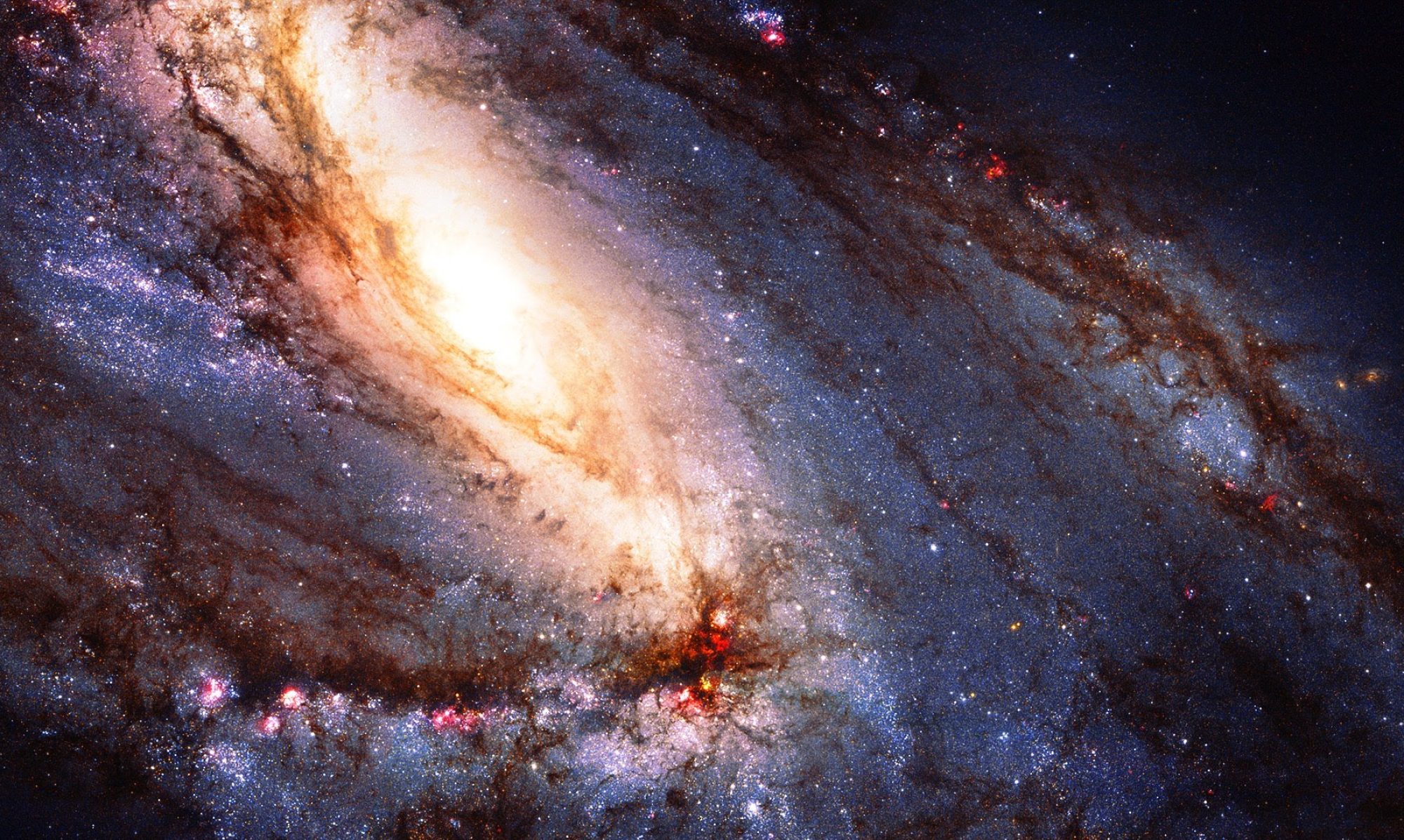
The Human Experience is a Cosmic Experience

In an earlier post I made the bold and seemingly outrageous statement that “… it will become apparent to us that our true (human) significance and destiny are entirely tied up with the meaning and purpose of the universe “, and I promised to get back to that point to see if I could actually make some sense of that idea. So here goes at least some of it.

The first point I would like to make is that it is unimaginable to me that we see the meaning of the event of ourselves as something over and above the event of the cosmos.  As such, the cosmos is intrinsic to our being, and vice versa – we cannot be separated.

It follows too that – while it may have taken the world some time to bring us on to the scene – we have always been here, in principle, from the very start, as a potential event that was eventually realized as an expression in physical matter.

Secondly, the incidence of our physical existence is not a function of when, where or how, but of why we are here. I know this notion flies in the face of those who believe that everything that exists beyond the most elementary particle of matter is strictly a function of the random action of such particles, with no rhyme or reason in mind – other than of course the seemingly innate ability of matter to organize themselves into progressively more organized structures which – in its most complex formation – are able to exhibit life, prescience and consciousness as new properties not seen before. This is of course a bit of a problem for the random motion folks who’s fear of metaphysics – the “why?” beyond the mere matter of cause and effect  – must be a product of random thoughts as opposed some kind of structured logical thinking.

I think that the reason why we are here is the same reason as to why the world is here – or, for that matter – why there is anything here at all. Well, at least it means we have only one why to worry about …

It is easy to be intimidated by the sheer scope of the physical universe, it age and its size, but as incomprehensible as that may be  – it would be wrong to attach a significance to that beyond the fact that it simply is what it is. Its true meaning will be completely independent from and over and above its physical attributes, in the sense that it will be larger than the sum of its parts.

This makes our experience of the physical aspects of our existence less relevant, and that beyond the point of being able to survive them, we can  – to a certain degree – take them for granted, i.e., we wouldn’t be what, how and where we are without them.

Thus, what we will conclude about ourselves is not going to be strictly a function of our physical interaction with the world, but what we discover about ourselves as we interact with our environment and, more importantly, with each other, i.e.,  what we mean to each other, how we treat each other, or are able to work together towards common goals, and how we arrive at such goals. And – ultimately – from what we want from life in terms of accomplishments during the short time that we are here as members of the human species, as well as what our history will show us about ourselves as a species.
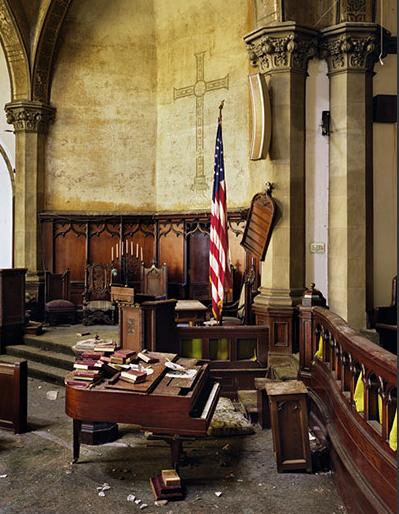
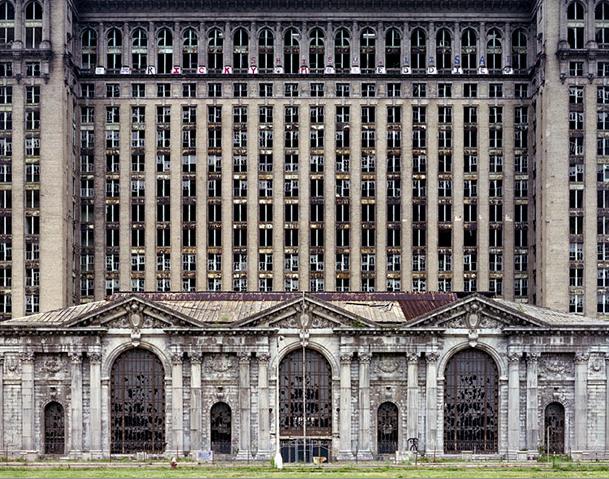
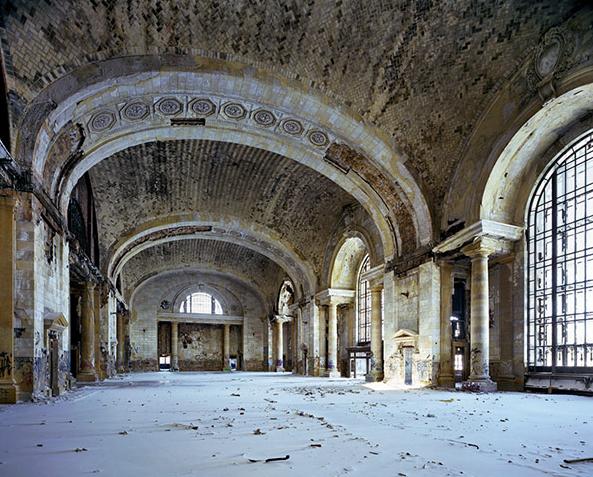
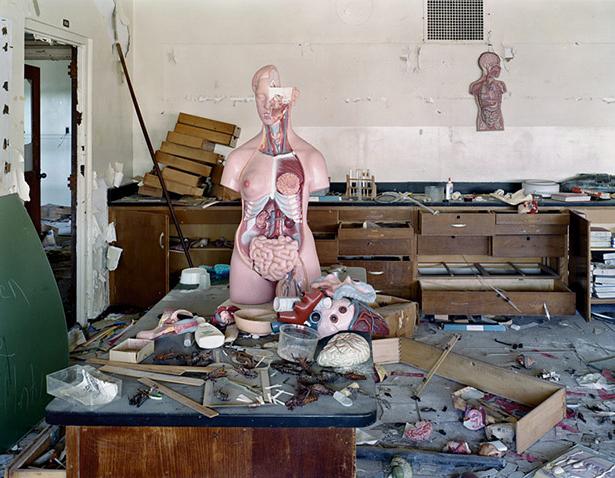
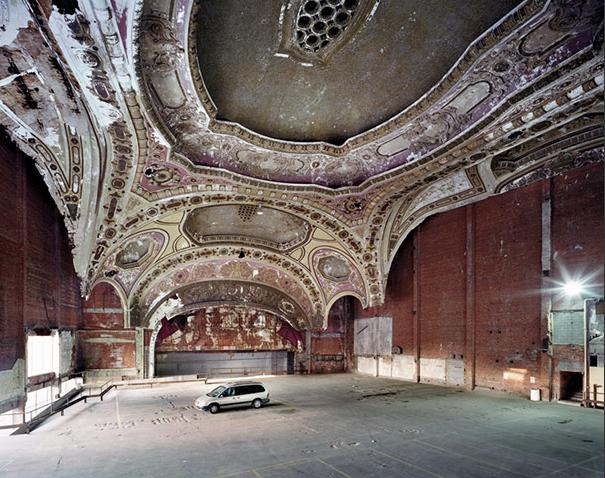
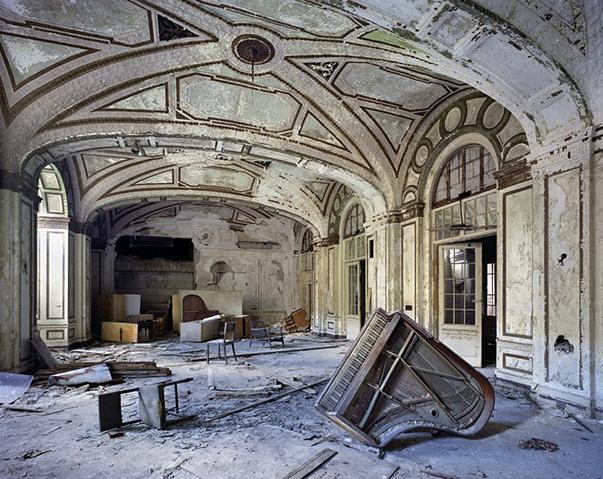
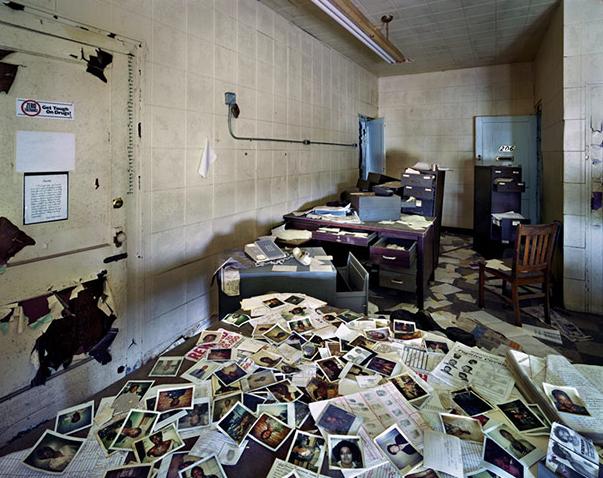
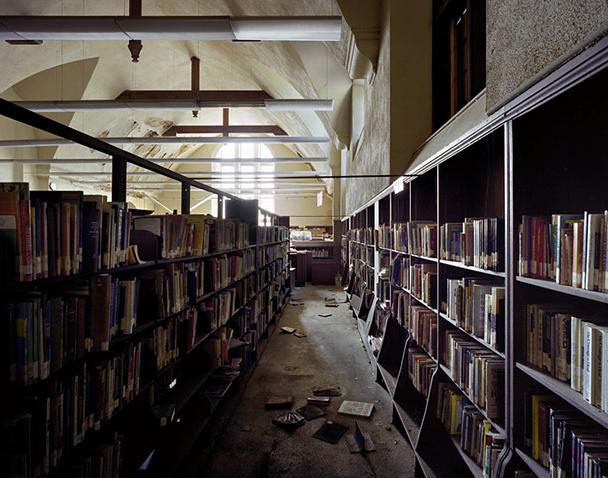
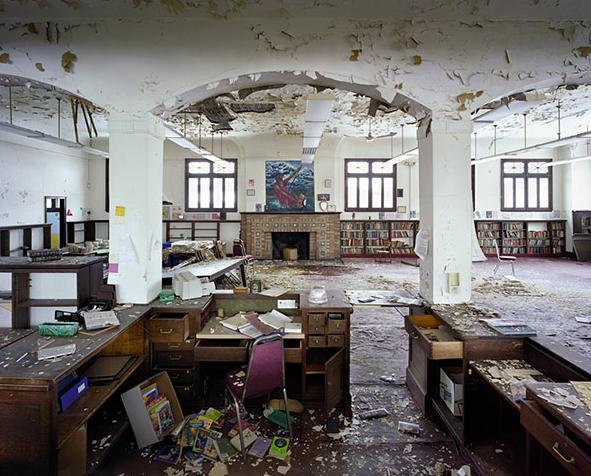
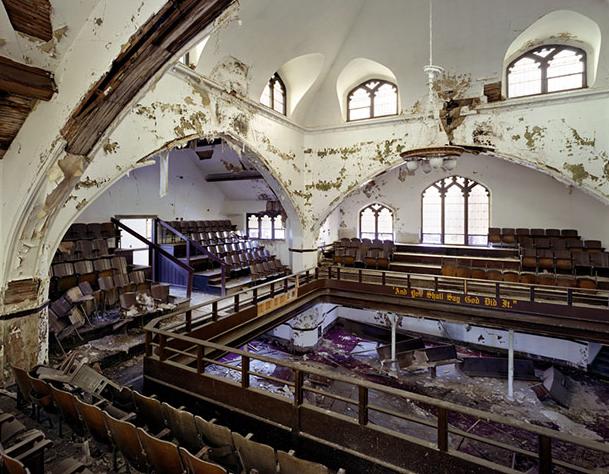
The Ruins of America

Ruins are the visible symbols and landmarks of our societies and their changes, small pieces of history in suspension. The state of ruin is temporary by nature, the volatile result of the end of an era and the fall of empires. (Sean O’Hagan – The Observer)

America, I love thee dearly, and don’t look now (but maybe you should … ) as your once great and magnificent country has been in serious decline for some time – and not just in Detroit!

Woodward Avenue Presbyterian Church
Michigan Central Station
Waiting hall - Michigan Central Station
Waiting hall – Michigan Central Station
George W Ferris School
Michigan Theatre
Michigan Theatre
Lee Plaza Hotel
Lee Plaza Hotel
Highland Park Police Station
East Side Public Library
St Christopher House- ex-Public Library
East-Methodist-Church
William Livingstone House - Brush Park
William Livingstone House – Brush Park

America, these photos are just one example of what is happening to your country ever since you put profit before jobs and people – by selling off your manufacturing capacity for cheap labour abroad; and since you allowed yourself to be robbed absolutely stinking blind by a handful of bandits on Wall Street and that resulted in the the 2008 financial meltdown.  And none of these financial bloodsuckers went to jail for this!

Yes, I know, there is a lot more to it than that, including allowing your interests being represented by politicians without any integrity whatsoever and who – from the very day that they are elected to public office – begin pimping their position to raise money for their next election campaign because that is the only way you can be in politics in the land of the free and home of the brave, and – above all – the land of the corporate lobbyist and self-interest serving politicians.

Your once thriving country was the product of many years of good strong government, driven by a common vision and the shared belief in what the American dream should be all about. But that vision seems to now have completely disintegrated, certainly in the political arena and aided and abetted by a sickly obsessive and obscenely partisan media that is putting it’s own shallow agenda of promoting hostility and divisiveness ahead of the common cause. And, no, that intellectual lightweight Glenn Beck and his out-to-lunch Tea Party won’t save you, and neither will that belligerent school yard-bully-in-training, Russ Limbaugh. Nor – for that matter – will Fox News contribute anything positive to the situation so long as it remains creepy Rupert Murdoch’s favourite  sewage outlet with the only mission of creating division by polarizing their audience towards the fanatical right.

As you sow, so shall you reap!

All photographs by Yves Marchand and Romain Meffre, from their book Detroit in Ruins, a stunning documentary document what remains of a once-great city and hint at the wider story of post-industrial America.

A Sad Day For Humanity

Salman Taseer – a senior member of the governing Pakistan People’s Party (PPP) –  was assassinated by one of his bodyguards angered over the governor’s opposition to blasphemy laws. He had recently angered Islamists by appealing for a Christian woman, sentenced to death for blasphemy, to be pardoned.

Earlier, Sunni Muslim clerics had organized a 24-hour strike  across Pakistan to protest against possible changes to blasphemy laws. Rallies were staged in Islamabad, Lahore, Karachi, Peshawar and Quetta after Friday prayers.

The government has distanced itself from a bill to change the law, which carries a mandatory death sentence for anyone who insults Islam. Rights groups say the law is often used to persecute religious minorities.

The legislation returned to the spotlight in November when a Pakistani Christian woman, Asia Bibi, was sentenced to death. Although no-one convicted under the law has been executed, more than 30 accused have been killed by lynch mobs.

Even the Pope got into the act by asking to show mercy on Ms Bibi, who denies insulting the Prophet Muhammad during an argument with other farmhands in a Punjab province village in June 2009.

As I stated earlier – the insanity that is religion,  kills – and there are unfortunately no surprises here.  Those who are afflicted by the most extreme manifestations of this pathological condition will stop at nothing in order to prevent any opposition to it, and even the mildest forms of it are seen as a threat and must be eradicated.

Don’t look for any rhyme or reason at the bottom of it, as you will only find hate, deep seated hate, so blinding in its intensity that no appeal to a common humanity can get through. This is because these feelings are not truly human; they belong to that part of the brain that is still pure animal, and driven by the most basic of primitive instincts: fear.

Such instincts serve the herd well and keep it alive, for religion requires herd-like behaviour that allows it to be a force to reckoned with, and not because it is made-up of  individuals who are themselves strong – no, precisely the opposite! Membership in the herd is based on mindless participation, of unquestioning obedience and servitude. As such, a mob, herd or a posse is a function of strength in numbers only.  No individuals need apply: there is no room for people who think for themselves, as that will only serve to destabilize the mob and so are seen as an absolute danger to it. And so they must be hunted down, murdered and destroyed to keep the herd safe.

Sadly, this was Salman Taseer’s fate today – shot down by his own bodyguard, someone who was hired to protect him, and dedicated keep him safe from harm. A traitorous, dishonourable act by any other name – but allegiance and honour are higher human qualities and are meaningless in the stunted mind of any member of the herd.

So indeed, a very, very sad day  for humanity today.

The Gospel According to Teflon Tony

I have been amused – somewhat – by the recent encounter between former British Prime Minister Tony Blair, and a frequent writer on atheism, Christopher Hitchens, on the resolution: “Be It Resolved that Religion is a Force for Good in the World.” Part of the Munk Debates, it took placed on Friday, November 26th at Roy Thomson Hall in Toronto.

I heard some of it on CBC the other day, and enough of it to feel comfortable with my view that Blair’s position is a sham, while befitting him as well as any of his previous untenable positions similarly devoid of true substance during his life as a politician, but nevertheless staunchly defended by him. Well, there is his view on the invasion of Iraq – and repeated consistently right up to the present moment, in that the invasion was “absolutely the right thing to do”, etc.

I must admit, not having a particular favorable view of Blair as a result of his political life – slick, if not oily, are the words that come to my mind – I am immediately suspicious of what he says, and why he would say them. Now knowing that his earnings since leaving Downing Street and hitting the lecture circuit are calculated to have topped £12 million, and in 2008 that figure represented more than six times his previous lifetime income, it is clear that his most outstanding skill is to speak convincingly about matters he is absolutely wrong about while claiming them to be absolutely true, and getting lots of money for it. In particular, his always somewhat evangelical speaking style has suited him well – and especially now, when he is trying to claim that religion isn’t the scourge that some of us make it out to be, and that it is a force of good in the world.

Christopher Hitchens does his usual good job of dispelling the metaphysical fog around religion, and exposing it for what it really is: an irrational state of mind too often met with deadly consequences, particularly between those who have competing versions of it. And as history has shown to those who are free to see this for themselves: the human race would be better of without it. This, of course, is a view to which I wholeheartedly subscribe.

Blair, on the other hand, is grasping at straws while trying keep his head above the usual quagmire of religious conundrums. He claims that, while religion has done bad things, such acts – atrocities, etc. – have been committed by non-religious folks as well, and can therefore not be blamed on religion exclusively – (Hitchens doesn’t claim that, BTW) – but that in many instances people have been driven or inspired to do good things because of their religious beliefs. Therefore “Religion is a Force for Good in the World”, according to Blair. Hitchens then goes on to show that people have done good and noble things without being religious – therefore, you can’t be sure that it when good and noble acts are committed they were part of a sense of common humanity that people were tapped into.

So, the bottom line for me would be the fact that while we would experience good acts and bad acts with and without religion, doing away with religion would remove an historically significant source of death and destruction in the world. And as I have claimed a number of times in earlier posts, one might claim that these kinds of actions have nothing to do with the religious beliefs themselves – and that they are misused when wielded as weapons of murder and destruction. No – it is precisely the unsubstantiated and irrational nature of these beliefs that allows them to be used in this manner. When you think you have the creator and eternity on your side – all your actions are justified; you cannot be wrong! Until we shake off the influence of these dangerous beliefs, our species will continue to be murdered for them.

Religion is an insult to human dignity. With or without it you would have good people doing good things and evil people doing evil things. But for good people to do evil things, that takes religion. (Steven Weinberg, 1999)

The Feeble Voice of Religion

Joseph Ratzinger, RC Pope, anachronism and pretender to some heavenly throne on earth – and who is already a fossil well before his time – claimed today that religion is ‘marginalized’ during his speech in Westminster Hall in the UK. He went on to warn the assembled that there were some people who wanted to see “the voice of religion be silenced”.

I presume I am one of those who would like nothing better than the voice of religion to be silenced, if only long enough for people to come to their senses so they will see through the pitiful sham it represents, be done with all that nauseating pomp and circumstance, and to start believing in themselves as the source of their own spiritually and redemption. This as opposed to being led like sheep down the garden path while having their pockets picked so Joe and all the other fat old farts can live like royalty in their palatial Roman digs.

I guess it is the misappropriation of being the local guardians of all morality that really sticks in my craw with these charlatans, particularly after being exposed for what they have being hiding amongst themselves in terms of the rampant incidents of child molestation committed by them over the last few years. More likely: over the last five hundred years!

Hypocrisy is too mild a term to describe their despicable behaviour – and no greater pretenders were ever thus …

Man is the Future of Man

The idea that – in the absence of God or a creator – we will be the exclusive authors of our own fate was a favorite topic for existentialist philosopher Jean-Paul Sartre (1905-1980). Quoting fellow author Francis Ponge in saying that “Man is the future of man” –  that this is absolutely true so long as you don’t believe there is a God out there who has already a future laid out for us,  and he knows exactly what that is, for then it would no longer even be a future.

That is what I mean when I say that man is condemned to be free. Condemned, because he did not create himself, yet is nevertheless at liberty, and from the moment that he is thrown into this world he is responsible for everything that he does. (Existentialism is a Humanism, by Jean-Paul Sartre, 1945)

You might want to question Sartre’s use of the word “condemned” here – because of its strong negative intent, as well as the sense of melodrama that it would seem to convey. But, presumably,  that is exactly what he had in mind.

Instead,  he might have said that –  contrary to all other creatures on earth that do not have a choice in the matter –  we have been given the freedom to determine our own destiny.

And surely, that has to be a preferable state of being in spite of the daunting challenge that this presents us with. This would include not being paralyzed  by the weight of the obligations that follows from this predicament;  something we can run – but not hide from.

Directly or indirectly, we will be confronted by this challenge at every decision we make on behalf of ourselves, and – by extension – on behalf of anyone else in this world.

Why Is There Anything Here At All?

For anyone who might have stumbled across this blog and stayed long enough to read some of it, they may have noticed that there appear to be a number of reoccurring themes in circulation throughout much of it.

And that is absolutely true.  I need to revisit these themes or premises on an ongoing basis; first of all, to ensure I am not straying from what I believe is absolutely true and fundamental about being a human being in this world.  Let me share what is for me most fundamental one of all, and while this theme underpins just about all my thinking for about as long as I can remember,  it was not until I read Franz Kafka (1883-1924) that I came across the perfect passage to give expression to it:

I am standing on the platform of the tram and I am entirely uncertain as to my place in this world, in this town, in my family. Not even approximately could I state what claims I might justifiably advance in any direction. I am quite unable to defend the fact that I am standing on this platform, holding this strap, letting myself be carried along by this tram, and that people are getting out of the tram’s way or walking along quietly or pausing in front of the shop windows. Not that anyone asks me to, but that is immaterial. (Franz Kafka – from The Passenger – 1908)

In short, we human beings have absolutely no idea why we are here or what we are doing here. We are the first and only creature on this planet that is actually capable of approaching the notion of “why”,  as in – “Why are we here at all?” – although very few actually take the time to consider it a worthwhile question.  Yet for me, this question should permeate every living breath we take and underscore every decision we make, in the sense that whatever the answer might be, it ought to figure prominently in the course of all human endeavor.

But this is not the case today as we are either not ready or willing to accept the responsibility that comes with the attempt to answer that question-  since nothing else is going to do that for us!  The critical question here is if we have the courage to take this on, since to decide  for oneself is to decide for everyone else also – are we not all in this together?- and so decide the very future of the human race.

In fact, it is my belief that being able to ask “why” and attempting to provide and answer to it  is in fact the sole reason why we are here as we are, and that all of evolution has added up to this point. And  this is not just about us as a species but about  all of the cosmos as we represent every particle of it  in our bodies when we are finally in a position to ask “Why?” – as in – “Why is there anything here at all?”

She Saved The Anne Frank Diaries

Miep Gies in 1998
Miep Gies in 1998

Miep Gies has died at the age of 100 on January 11 in Hoorn, The Netherlands;  she was born in 1909 in Vienna as Hermine Santrouschitz before moving to Amsterdam in the early 1920s and marrying Jan Gies in 1941.

Miep Gies helped hide Anne Frank and her family from the Nazis for two years in a secret annex of a house on the Prinsengracht in Amsterdam. She also saved Anne’s diaries from destruction, allowing the world a glimpse into the day-to-day realities of Jews during World War II. Of the numerous people who helped the Frank family avoid deportation for two years from July 1942 to August 1944, Miep Gies was the last one still alive.

Despite the heroic efforts of Gies and the others,  a tip off by persons unknown allowed theNazis to raid the Frank’s hiding place on the morning of Aug. 4, 1944 and deport  its residents to Auschwitz. Anne Frank, spared immediate death in the Auschwitz gas chambers, died of typhus in the Bergen-Belsen camp just weeks before the end of World War II. She was only 15. Miep Gies recovered Anne’s dairies after the raid and gave them to Otto Frank – Anne’s father and the only member of the Frank family to survive the war — upon his return and he published them in 1947.

Of all the European countries, the Netherlands – together with Poland and Greece – fared the worst as a result of the Holocaust in terms of a decline in their Jewish populations.  The Netherlands lost 75% of its Jewish population, with the Nazis deporting more than 105,000 people primarily to Auschwitz en Sobibor between 1940 and 1945, leaving roughly 35,000 Jewish survivors between those who remained hidden during the war and those who managed to find their way back from the death camps after 1945.

In 1994, Gies was awarded the Order of Merit of the Federal Republic of Germany as well as the Wallenberg Medal by the University of Michigan. The following year, Gies received the Yad Vashem Righteous Among the Nations medal. In 1997, she was knighted in the Order of Orange-Nassau by Queen Beatrix of the Netherlands. The minor planet 99949 Miepgies is named in her honor. She always maintained that while she appreciated the honors, they embarrassed her:

“I am not a hero. I am not a special person. I don’t want attention. I did what any decent person would have done.”

On 30 July 2009, the Austrian Ambassador to the Netherlands, Wolfgang Paul, presented Grand Decoration of Honour for Services to the Republic of Austria to Gies at her home.

anne-frank-house
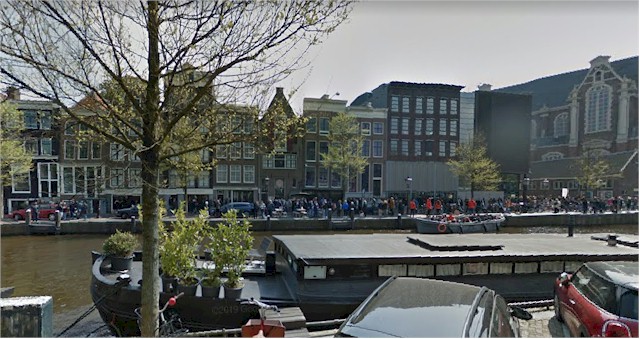
Anne Frank House today – museum on the right across from the Westerkerk.

The Diary of Anne Frank is a 1959 film based on the Pulitzer Prize-winning play of the same name that was partly filmed at the actual building at

I must admit I have never read the Anne Frank’s Diaries – but one day I will summon up the courage for it, to read them in the context of a time really not all that long ago, dominated by those who thought that she should be hunted down and exterminated because for what she was. And what else could a 15 year old girl be? Someone’s sweet daughter –  nothing more and nothing less – capable of innocent hopes and dreams only, until her life was stolen from her through a state-sanctioned act of unimaginable savagery:

Anne Frank was discovered, seized, and deported; she and her mother and sister and millions of others were extinguished in a program calculated to assure the cruellest and most demonically inventive human degradation. The atrocities she endured were ruthlessly and purposefully devised, from indexing by tattoo through systematic starvation to factory-efficient murder. She was designated to be erased from the living, to leave no grave, no sign, no physical trace of any kind.

 Her fault—her crime—was having been born a Jew, and as such she was classified among those who had no right to exist: not as a subject people, not as an inferior breed, not even as usable slaves. The military and civilian apparatus of an entire society was organized to obliterate her as a contaminant, in the way of a noxious and repellent insect. Zyklon B, the lethal fumigant poured into the gas chambers, was, pointedly, a roach poison.

Anne Frank escaped gassing. One month before liberation, not yet sixteen, she died of typhus fever, an acute infectious disease carried by lice. (Excerpted from an article by Cynthia Ozick, The New Yorker Magazine,  September 28, 1997)

On the Use of Religious Symbols

Much has been made of the fact that the Swiss population rejected via a referendum the further propagation of religious symbols across the Swiss  landscape in the form of minarets on mosques.  Predictably, the politically correct have cried foul and see this as an assault on the freedom to practice a religion.

And – not surprisingly – most of the noise about this will come from the Muslim communities around the world,  and which are not exactly known for their tolerance  of  divergent religious beliefs in  their midst. In fact, they are the least likely to make allowances for other religions  in their communities – and the irony of this should not  be lost on anyone

But let’s be clear:  this is less about the freedom of religion, and more  about the need by some to brand the landscape with one’s  particular flavor of religious superstition through the use of distinctive architecture.

When this has happened, I can’t help but think of how similar this is to what animals do to mark their territory (!)  But by erecting one’s uniquely symbolic  architecture across the country is one way to assert ownership or control of sorts.  This is religion at its very tribal origin – and  goes together with all the other outward symbols of religious tribalism, such as hairstyles,  beards, turbans and other headgear, e.g., burkas, kippahs,  shtreimels, as well as specific rituals, such as genital mutilation, etc.

And so this wasn’t at all about some religious group not being able to practice their faith in public. But by  rejecting the public display  of their most visible and overt  symbolism of their faith  across their landscape,  the Swiss are in effect only saying that  “believe what you want, but don’t  mark or otherwise contaminate our landscape with it!

No More Crucifixes In Classrooms In Italy

crucifixion image
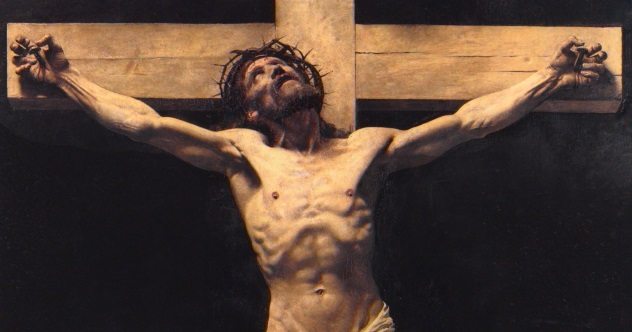
The Crucifixion of Christ

The European Court of Human Rights has ruled against the use of crucifixes in classrooms in Italy. It said the practice violated the right of parents to educate their children as they saw fit, and ran counter to the child’s right to freedom of religion.

As expected, the Vatican objected vigorously – no doubt seeing this as an encroachment on their corporate mandate  – if not very lucrative business that continues to milk its customers with the promise they are able to save their sinful souls from being condemned and dragged off to hell. ( Where is that place, anyway?)

A Vatican spokesman told Italian TV: The crucifix has always been a sign of God’s love, unity and hospitality to all humanity.

Well, with respect to that particular statement – and in particular the reference to God’s love –  one might well want to take a good look at a crucifix.  It seems to me it seems to depict the horrible suffering and barbaric death of an individual nailed to a wooden cross.

How could anything so cruel and abhorrent be central to any religion where the subject in question is supposed to be the son of an all powerful deity, and “a loving God”? Obviously his love does no extend to his own son since what father would have allowed his own son to suffer such a savage and excruciatingly painful death while supposedly having the power to stop it at any time?

And so the real question is: how could God have allowed this to happen?  The answer is  – as Nietzsche put it once  ” downright terrifying in it’s absurdity: God gave his Son for the forgiveness of sins, as a sacrifice.  The guilt sacrifice, and that in its most repulsive and barbaric form, the sacrifice of the innocent man for the sins the guilty! What atrocious paganism!”

I guess for some folks the Dark Ages clearly aren’t over yet as they continue put their faith in this bizarre tale of human sacrifice and the baroque and antiquated institution that perpetuates this kind of barbaric pagan mythology.