A Tale of Two Selves

Why is the human race, with its superior intellectual capacity when compared to its most recent primate ancestry on the phylogenetic tree, at the same time so unstable, so unpredictable, and so neurotic, and so often acting against its own interest? One would have thought the advanced brainpower would have had the opposite effect, by assisting its host in all aspects of human endeavour and  maximizing its existential advantage to the benefit of all of humanity. Instead, we seem to have ended up being a deeply troubled, schizoid species.

I think we can safely conclude that all the human induced problems in the world are related to the very latest features of our neuroanatomy, as no other species had its brain hijacked by what has been classified as “the human cortex”. While being an integral of our brains, the expansion of the cerebral cortex, the neocortex, and in particular that of its prefrontal region, is a major evolutionary landmark in the emergence of humans, the crowning achievement of evolution and the biological substrate of human mental prowess.

Yes, and so the trouble started, as much of the misery experienced by human beings is likely the result of the conflict within our minds between the inherited lower and newly acquired higher brain functions, i.e., between the animal, or instinctive self and the moral, or rational self, and the latter presumably courtesy of the evolutionary upgrade

The moral self is that part of our self-awareness (as opposed to mere awareness)  that is able to take responsibility for its actions in light of its consequences, whether they are intended or not. In doing so, it must be able to think and act rationally, and see itself as a causal agent with respect to its actions and its consequences.

It presupposes that all rational actions are preceded by a decision making process – essentially making all actions initially optional, as opposed to an automatic or learned response to a stimulus, which would be the case for any action initiated by instinct only.

After receiving a major upgrade in the grey matter department, quantitatively as well as a qualitatively it seems, the new human species saw the world and themselves in a different light from their genetic progenitors. On the assumption that our sensory organs have not changed all that much qualitatively from our immediate ancestors,  we can suppose that sensory data would show the world in many ways unchanged, yet different from the moment they started interacting with it. Instead, it became an environment capable of being changed based on how they interacted with it. No longer were they merely at the receiving end of the world; they were now in a position to alter, if not recreate certain aspects of it.

More importantly,  major substantive changes were introduced in how the new species is able to communicate among its members. Beyond the hitherto primitive primate cultures depending primarily on grunts and gestures for communication – but already including a degree of social structure – Homo sapiens developed something entire new under the sun. They were able to establish cultures capable of abstraction and conceptualization, in language, in the arts and above all, in the sciences

The result has been that, in spite of all the turmoil, upheaval and chaos our species has endured since the beginning of time, self-induced or not – and a subject not easily dismissed or glossed over if our recorded history of past and current civilizations has anything to say about it – our knowledge and understanding of the physical world has steadily increased, to the point that – after a long and initial period of linear growth – it is now growing exponentially, doubling on average every twelve months according to what has been referred to as the  Knowledge Doubling Curve.

This later fact should not surprise us, as we have this innate need to know; it is an essential if not “necessary” feature of our species to keep looking for more answers, about the world, the greater universe, and by extension about ourselves. And necessary, since we will not be able progress along the path – and in the direction  that evolution is pushing us –  unless we keep increasing our knowledge and understanding of the cosmic phenomenon that we find ourselves an intricate part of.  Evolution isn’t some process over and above ourselves – we are the very embodiment of it,  each of us being an instantiation of that process!

An essential step in that process will be the need to reconcile the instinctive self with the rational self, to establish some sense of a harmonious, symbiotic or constructive relationship between the two, such that we  will only undertake actions that are to the greater long-term benefit of our species. Will we ever be capable of this?  I don’t know, but time will tell, and as AI continues to edge forward in our lives, it may well decide the matter for us, one way or the other. More about that later.
Evolution in Transition

the -human-brain

Neuroscientists have described the human brain as the most complex biological structure in the known universe, containing hundreds of billions of cells, and trillions of connections controlling every thought, feeling, movement and function of our bodies.

If this proves anything, it would be the fact that – outside of explanations invoking religious mythology – the evolution of matter was able to bring something as intricate and organizationally complex as the human brain about through a teleological process that appears to be internal to it.

And when I say “internal” I mean this in the sense that the drive to evolve is a property of the material universe that will manifest itself in the presence of conditions that would allow for it.

As such evolution utilizes the seemingly randomness of cosmic events to arrive at ever higher levels of organizational complexity through a process of trial and error to find the required material stability  and biological survivability that would allow it to achieve its desired objective, whatever that might be.

In that context I see the arrival of the human species as the introduction of a critical transitional period and the next phase of cosmic evolution that pushes  life beyond the mere acts of  survival and propagation, and  allowing it to venture further into the realm of consciousness  and expanding its content in terms of knowledge and ideas.

Homo Sapiens straddles the Past and the Future. What I am referring to here is our species’ precarious status as a creature that has one leg still firmly in the animal kingdom – our past – while the other is in a future we know little or anything about. And so we are acting accordingly, with no clear idea of what is expected of us, making us inherently unpredictable if not an unstable life form at best, as evidenced by its self-destructive tendencies, including suicide, homicide,  genocide, and undermining  its own life-sustaining environment.

But there is one type of human activity where we have clearly gone beyond our animal traits and can claim some considerable accomplishments since our arrival as a brand new species:  the areas of science and technology.  Our successes on this front may well be proof that our relatively recent arrival on the cosmic scene constitutes the transition of matter’s evolutionary prowess from a strictly internal process to an external one as we apply our sciences and technologies to just about all aspects of our material existence.

We can point to the ingenuity of our species to manipulate and restructure  aspects of our material reality  into ever increasing levels of organizational complexity, such that – through us – the cosmos, nature, life – has achieved a quantum leap in  creative productivity and is now able to push its evolutionary objectives – whatever they may be – over significantly shorter time frames. In this sense, human beings function as nature’s evolutionary agents and enablers, pushing these objectives along an ever increasing pace for no other reason than that it seems to be the natural thing to do …

The World is Larger than the Sum of its Parts

As I stated up front – in so many words – I’m writing this primarily for myself in the attempt to figure out what the world is all about beyond the twists and turns that life can throw our way, and beyond the  typical humdrum of daily tasks that – while not necessarily meaningless in themselves –  tend to obscure the larger existential questions, and so, by extension, what life might conceivably mean to everyone else.

I know that sounds rather presumptuous, but given that each of us is just one of many – and, when it comes down to it, not all that different from each other when it comes to what we bring to the table to take on the challenges of everyday life. That is to say, how different can we be in our overall approach to life, when as members of one species we are primarily driven by our shared biology, and the differences between us are no more than varieties on a theme, i.e., they are differences of degree, and not of kind.

Beyond that, there are the circumstances of our birth such as the place and social-economic environment that we grow up in including our culture –  that help shape us into the individuals that we are today.  That this will leave each of us as distinct and unique individuals with needs and desires and expectations from life possibly as different between two people as day and night is undoubtedly true, yet at the same time the differences again are a matter of degree, and not of kind.

And if I can shed some light on the meaning and purpose of life for myself by sharing my thoughts about it, perhaps this might help someone else to start thinking about what life means to them, and add some definition or context or value to their outlook on life in a world that, in my humble opinion,  is going down the wrong path in terms of pursuing the best possible future for our species.  This is not to say that I think the human race is irrevocably going to hell in a handcart, although there are many among us who appear to be doing their best to make this happen.

I’m thinking of the massive environmental damage being inflicted on our precious planet on a daily basis, and beyond that: who can begin to enumerate the number and variety of social  economic and health issues ranging from poverty to homelessness to starvation across the globe? Just this week the NY Times in an article titled The U.S. Can No Longer Hide From Its Deep Poverty Problem showed a tally of those living on $4 a day or less in selected developed countries, and it included 5.3 million people living in the US.  I don’t necessarily want to pick on the US, but with the highest GDP in the world you wonder how this can even be the case when a country is deemed the wealthiest country in the world.

Then there is the disturbing statistic that half of the world’s wealth belongs to the top 1%, while the top 10% of adults hold 85%, and the bottom 90% hold the remaining 15% of the world’s total wealth.  If you believe that these discrepancies  are simply a function of some folks working harder and smarter than others, and reaping the benefit of it, then bless you, but you may have to learn something about how some people, organizations and certain governments operate in order to produce the incredible wealth that they have accumulated.

So against these things  – and with the brazen assumption that there is a lot more going on in the world than meets the eye –  I am introducing “the larger context”,  which, I postulate, naively as it may be,  is the true meaning  or intent behind the world. It is the reason for it being there in the first place,  including our very own presence in it, and something I hope we will  be able to get a glimpse of once we look  beyond the nonsensical content of religious dogma  (of whatever flavor) and the unsupported and hence unintelligible notion that someone or something else is in charge of our world beyond ourselves.

Why do I think there is ” a larger context” or  “true intent” to life that we are currently not aware of?  Only because we are the offspring of the greater cosmos, and as such contain its “DNA” within every particle of our being.  We are in fact one entity! As a result, what motivates it likely motivates us, either directly or indirectly,  and then at  a level where we would be capable of initiating some course of inspired action commensurate with the evolutionary achievement that we currently represent. However, at the moment one might be hard pressed to think much of that,  given the aforementioned sorrowful status of the world today, and that would include the questionable quality of  leadership of some of the most powerful nations in the world at the moment..

But it is without question that our evolutionary path shows that the cosmos is on a mission, and to date we  appear to be that mission; it is just that we don’t yet know what that mission is about. But it would be unreasonable to think that this is a multi-billion year mission of self-annihilation, given the kludge that we are currently making of it, although I hate to think that we are  doomed to end up that way because we haven’t evolved enough in the grey matter department to be able to take care of it.

And so my hope is that by  gaining even an inkling of  understanding of the world’s greater purpose, on the assumption there is one  – oh, and what an assumption – we might eventually be able to abandon the current seemingly runaway path of self-destruction by rising to the occasion and take ownership of our destiny by determining as best we can what our role should be in this fantastic cosmic adventure that we have only  just woken up in.  Evolution is providing us with some pointers here, but we need to be able to understand a lot more of what has moved us along its path to the present moment  before we can start making more  sense of it.

In the end, much of this is about not being able to see the forest for the trees, or, for that matter,  the universe for the stars, when, usually, the whole is larger than the sum of its parts –  and so is the world; we’re just not seeing it at the moment, and my greatest fear is that we might never be able to.

An Unnatural Disaster

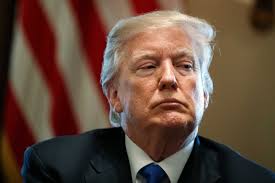
donald-trumpThe unnatural disaster that is called President Trump is continuing to threaten the stability of the world, if only because it directly involves such a large and powerful country as the United States of America, formerly known as the leader of the free world.

Following a recent mea culpa admission by co-author Tony Schwartz of Donald Trump’s 1987 book The Art of the Deal, for realizing that this superficially positive and flattering portrayal of Trump’s approach to business glossed over the incredible shallowness of the main character, and so ended up promoting what appears to be a charlatan entrepreneur into the status of (for some) credible presidential candidate.

In addition, in the case of the current  President of the United States we appear to have the actual instantiation of what has been described in the field of psychology as the the Dunning–Kruger effect:

This effect manifests itself as a cognitive bias in which people of low ability have illusory superiority and mistakenly assess their cognitive ability as greater than it is. The cognitive bias of illusory superiority comes from the inability of low-ability people to recognize their lack of ability. Without the self-awareness of metacognition, low-ability people cannot objectively evaluate their actual competence or incompetence.

We were subsequently treated to Michael Wolfe’s 2017 book Fire and Fury, a presumed  reasonably accurate sketch of Trump’s first year in office, showing a largely  dysfunctional administration around a clueless president who is so out of his depth that you can’t help but to feel sorry for the folks assigned to assist him through the daily turmoil of trying to keep him in some semblance of presidential demeanor. One particular astute observation from it, as provided by White House staff that Wolfe has interviewed, was that to interact with Trump can be akin to “… trying to figure out what a child wants”.

Now, former G. W. Bush speechwriter and Republican columnist David Frum has published his new book Trumpocracy: The Corruption of the American Republic, described by the SF Chronicle as “a persuasive and detailed account of how Trump is undermining American institutions, including the presidency itself”.

Frum is no light-weight Republican; he is as astute as they come, as evidenced by the following analysis of Trump’s first year in office, and his warning that despotism doesn’t necessarily begin with violent disruption.  “It can come on little cat feet”

The thing to fear from the Trump presidency … is not the bold overthrow of the Constitution, but the stealthy paralysis of governance; not the open defiance of law, but an accumulating subversion of norms; not the deployment of state power to intimidate dissidents, but the incitement of private violence to radicalize supporters.

Frum is not holding back either when it comes to his opinion of the quality of the man now in charge of the White House, and has summarized him as follows:

… an amateur, a charlatan, a con artist, a manipulator, a poseur, a serial fibber if not outright liar, a vulgarian, a swindler, a skimmer and a trimmer, a man-child lacking character, intelligence, integrity, judgment, clarity of thought, a coherent philosophy or a worldview and management and organizational skills.

Now that is a lot of ugly name calling, but the scary thing  is that none of this surprises me in any way. Just watching Trump during a TV appearance, now or in the past during his presidential campaign, leaves me with an instant feeling of unease – well, distaste, really – and reach for the mute button on the remote to avoid the insipid bombastic language, or just the sound of a bragging, brawling, or denigrating tone of voice. Combine this with the pouting face, the silly hairdo, and you are presented with an image of a larger than life windbag, someone with an obnoxious personality so  devoid of any real substance that it would suck all the air out of the room the moment he entered it.

Lastly, as stated by David Remnick in a January 15th article in the New Yorker titled “The Lost Emperor” ….

…. there is little doubt about who Donald Trump is and the harm he has done already, and the greater harm he threatens. He is unfit to hold any public office, much less the highest in the land. This is not merely an orthodoxy of the opposition; his panicked courtiers have been leaking word of it from his first weeks in office. The President of the United States has become a leading security threat to the United States.

While much of this commentary makes the Trump presidency sound like something akin to a toxic spill – and equally difficult to contain – it  can be claimed that  much of this negative appraisal of  is based on anecdotal accounts,  and then primarily by biased individuals who simply don’t like him to begin with.  But for those not convinced by now that Trump is in fact the blowhard that millions of Americans have  already made him out to be, you may want to read a Newsweek article from  October 18, 2016,  written by Kurt Eichenwald and titled  A People’s History of Donald Trump’s Business Busts and Countless Victims, .  Trump’s specialty, it seems, was  to snatch huge fistfuls of cash from a companies that were about to go broke, wiping out the savings of millions of people who had invested in them after he had convinced them to do so.

God  – or somebody – help  America, and in the process the rest of the world.

On The Back Foot Once Again

And so another year has passed, and while the saying goes “another year older, another year wiser”, I’m not convinced that this actually applies to our species. It was a year ago  that one of the largest and most powerful countries in the world installed a political novice and intellectual lightweight of questionable character as their leader at a time that the world needed strong – and especially united – leadership to help save the planet from itself

The ensuing year proved many of the dire predictions true and consistent with what one might expect from having a leader who might best be described as “Captain Chaos” if it wasn’t for the fact that there is nothing comical  about the current leader in the White House. Well, perhaps his unique hairdo might qualify for a sad laugh or two. Personally, I very much regret ever having seen it.

I can’t help but think the Americans have done themselves – and in the process the world – a huge disserve by installing a head of state who couldn’t be more divisive even if he tried to. This as opposed to electing someone who would have made America “whole” again. And this is not to say that the loosing candidate would have made a much better choice – and although this would certainly have been the case in the intelligence and experience department – as divisiveness appears to have become a permanent feature on the US political landscape for some time now.

So, we start this year on the back foot once again,  as it is clear from the absolutely sorry state of the world today that  we haven’t got a clue of why or what we are doing here, all 7.6 billion of us, on this planet, in this universe, all the while fouling our own nest as we ride roughshod over our fellow human beings – as well as the many other living creatures on this earth – in a haze of metaphysical and ideological confusion, and in the West more than anything else, driven by insatiable consumerism.

For many – if not the vast majority of people in the world – it is difficult to see beyond the current moment as the effort to survive and provide for themselves and their families occupies their daily lives from morning to night.

Nevertheless, trying to understand life – or the raison d’être for it – our world, the larger universe, is something we should all have an interest in. That is, if we want to experience and value these things beyond the tragedy we appear to be mired in today, and in a way that show our daily actions to be steps in the larger task of advancing our species in line with an evolving universe that otherwise appears to be descending into entropy.

The inescapable fact remains that we are finding ourselves at the receiving end of a cosmic event that we do not grasp the meaning of by any stretch of the imagination, yet we soldier on regardless – seemingly without goal or purpose. Or at least no goal or purpose that would in any way make sense or do justice to the sheer scope and unimaginable effort that the universe represents and that is represented within every particle of our bodies. Even a mere inkling as to where we are going with this can be a beginning in the way we shape our lives and create a world that is more meaningful while suggesting a destiny that is worthy of this effort.

And when it comes to exploring these kinds of thoughts on a medium such as this site for more than ten years now,  I am under no illusion that I am writing this  for a very small audience –  and as such will be stating my views primarily in my own echo chamber.

But so long as I am making reasonable sense to myself I will be satisfied, even with the full realization that I might well be bleating into a vacuum. Nevertheless,  I continue to hope I can get someone else thinking about this material, and so I want to be sure I have presented my views as clearly as possible.

This is just to say that – if I have any pretensions at all – they apply to anyone who also believes that our species is in serious trouble and slowly but surely giving in to the forces of entropy. As such we appear to be marching towards extinction unless we change our ways significantly, and for the better – using the amazing creative energies that lie within – and towards a future that represents the very best in us. But, it is clear that this day has not yet come and is likely still some time away …

Only the day after tomorrow belongs to me. Some are born posthumously. (Nietzsche)

Better Never to Have Been

A South African philosopher by the name of David Benatar believes that the world would be a better place if sentient life disappeared altogether, i.e., no remaining life-form capable of undergoing pain or suffering. As a consequence he claims it would have been better if no one had children ever again since reproducing is intrinsically cruel and irresponsible – not just because a horrible fate can befall anyone, but because life itself is permeated by badness.

Benatar is a proponent of what has been termed the anti-natalist position. In a 2006 book titled Better Never to have Been: The Harm of Coming into Existence he writes that

While good people go to great lengths to save their children from suffering, few of them seem to notice that the one (and only) guaranteed way to prevent all the suffering of their children is not to bring those children into existence in the first place.

The disappearance of sentient life on this planet would be of no consequence to anyone or anything according to Benatar, and in that context he joins earlier existentialist writers such as Sartre and Camus when he believes the universe is indifferent to our fate; it is without meaning, and other than that “we are subject to blind and purposeless natural forces”.

But when at least Nietzsche would find some purpose in suffering (and hence life) when he wrote “To live is to suffer, to survive is to find some meaning in the suffering” Benatar does not believe that human suffering and the struggle to survive are capable of providing meaning to existence.

While one might want to argue about all the good things in life providing value to it, he would claim that they can never offset the badness of all terrible tragedies that might happen during one’s lifetime, including one’s death. I guess he has a point when you think of all the natural disasters that have happened – and are likely happen again – be they earthquakes, floods, famine, and what have you.  Or man-made tragedies, such as the 9/11 terror attack, the holocaust or the slaughter of millions of people  in the various wars. What kinds of positive experiences might one put on the other scale to suggest that all this will balance out in the end?

This is not to say that on an individual basis someone might not be able to look back at one’s life and conclude that it has by and large been a very positive experience – but I’m assuming that Benatar has appraised the human condition from a species perspective, and from there concluded that it – life – just isn’t worth it when it is all added up. So why bother; sentient life is just a waste of time, causing much unneeded pain and suffering

I have some sympathy for the view that planet earth would be better off without the likes of us,  given our longstanding and well established record of harming ourselves and the  environment.  And no doubt there is something to say for discontinuing the amount of pain and suffering we have inflicted onto our fellow creatures in the animal kingdom through our thoughtless practices of whatever nature – such as the asinine practice of trophy hunting certain animal species into extinction, to give just one example.

And so the question remains if the continuation of sentient life – and in particular human life – is a value added experience of sorts, and the point being that – regardless of incredible misery, pain and suffering being regular features of human existence – life is worth the effort of sustaining it.

Clearly, professor  Benatar thinks not, but I have already argued that it is, since just because we appear to be unable to determine the meaning or purpose of life today  beyond the immediacies of survival doesn’t mean it has no meaning or purpose in a larger context. (I suspect this question is too large for us today).


The Right to Bear Arms

Another post outside my usual range of subjects, yet relevant – I believe – in terms of what we are doing with our lives while not being at all sure what we should be doing with them.

This one is about Americans and their guns, a perennial issue that continues to get under my skin.  They love their guns – but with on average as many as 32,000 people being killed by a firearm in the US annually, you wonder why? Well, I do, so let’s look at this situation a bit more closely …

Now the USA is a large country, and with more than 323 million inhabitants the 32k losing their life as a result of some pulling the trigger on a firearm of sorts is perhaps less meaningful than presenting these facts on a per capita basis and comparing them with other OECD countries.

Using their own data, last year a study by the American Journal of Medicine published on February 1st of 2016 showed that Americans are 10 times more likely to be killed by guns than people in other developed countries. I think that is a mind-numbing statistic! And you don’t need to look far to come up with some reasons as why this might be the case: the fact that Americans have roughly 10 times the number of guns per 100 inhabitants than any other country in the world.

The simple fact remains that, if you don’t have a gun, you can’t kill anyone with it, including accidentally, or yourself (!) This latter fact should deserve more appreciation as there are statistics out there that show that most gun deaths are suicides, and that the states with the most guns report the most suicides! (2005 data) There is a lot of research that shows greater access to guns dramatically increases the risk of suicide. For that reason alone, it would seem logical if not outright commonsense to seek some restrictions on who can have one, e.g., only law enforcement in protecting the greater interest of society, as a means and deterrent to keep bad people at bay.

But logic or common sense has nothing to do with firearm control in the USA – this in light of the nearly sacred Second Amendment that guarantees US citizens “the right of the people to keep and bear Arms, shall not be infringed.” I say “sacred” because to some Americans it is as if Moses himself brought this Amendment down from the mountain, and is something akin to a God-given right – if not a little difficult to reconcile with the “Thou shalt not Kill” commandment. And speaking of your typical hard-nosed ultra-right God-fearing US Christian, in addition to the Second Amendment, many take Jesus’ command to his disciples in Luke 22, “And the one who has no sword must sell his cloak and buy one,” as the first personal carry permit.

However, anyone questioning the wisdom of keeping such a right in place hundreds of years after the US Constitution was signed on September 17 of 1787 will be attacked with a ferocity akin to challenging the right of America to defend itself as a sovereign nation.

There are a number of reasons for that, and not the least by the inherent ambiguity in the way the amendment is written: was the amendment created to ensure the continuation and flourishing of the state militias as a means of defense, or was it created to ensure an individual’s right to own a firearm?

The fact is that the world today is much different from what it was in the 1789:

Standing armies were mistrusted, as they had been used as tools of oppression by the monarchs of Europe for centuries. In the war for independence, there had been a regular army, but much of the fighting had been done by the state militias, under the command of local officers. Aside from the war, militias were needed because attacks were relatively common, whether by bandits, Indians, and even by troops from other states.” (quoted from usconstitution.net)

Today it seems utterly unreasonable for a modern democratic country to have such a constitutional provision as the 2nd Amendment around on the assumption that the people may one day need to take up arms and fight their governments – the very people they have elected to represent them in all matters of nationhood.

Nevertheless, gun enthusiasts, manufacturers and their representatives – such as the NRA – have seized on the ambiguity to take the concept of gun-ownership one step further, namely that the right to own a firearm equates to the necessity of having to own one, and this in the interest of your own safety, to have the right means to defend your family, should that ever be necessary.

As a result, an average of 5,790 children in the United States receive medical treatment in an emergency room each year for a gun-related injury. About 21% of those injuries are unintentional, while on average, 1,297 children died annually from a gun-related injury, according to the study, published in the journal Pediatrics in June of 2017. So much for gun ownership in the interest of protecting your family. What an absolute tragedy!

And while it is true that – as gun lobbyists are fond of pointing out – there has been a 49 percent decrease in gun homicides over the last 20 years, the claim that this is the result of personal carry laws must be disputed as violent crime in general has decreased during this period, and gun homicides have followed suit for all of the same sociological reasons. At the same time, a direct link still exists between localized gun statistics and homicide rates.

And that just about sums it up for the 2nd amendment – and the folks supporting it – including the roughly 32,000 Americans that  get shot and killed annually as they pay the  price for supporting it.

Universal Healthcare

This post is a bit of a departure from the prevailing flavor of esoteric material found on this site – and more of a social commentary that touches the hands-on, day-to-day status of our lives, as opposed to taking the longer and higher level view of what we are trying to make of our lives on this world as a species of uncertain parentage.

In terms of what we are trying to make of our lives, one would think that “better health outcomes for all” would be a desirable goal for any country interested in the well-being of its citizens. But this appears not to be the case in the USA, given the Trump administration continuing attempts to repeal the Patient Protection and Affordable Care Act that was signed into law in 2010 by President Barack Obama to provide coverage to an additional 20 million people who were previously uninsured. However, even with what has since been called “Obama Care” there are still approximately 40 million Americans who still don’t have health insurance.

During his campaign for President of the US Trump described Obama Care as an “incredible economic burden” which resulted in “runaway costs, websites that don’t work, greater rationing of care, higher premiums, less competition and fewer choices” and promised to replace it a new healthcare bill that would give Americans greater choice and stop the current Obamacare “death spiral” of higher costs.

Trump’s objections to Affordable Care Act appear to have resonated with Americans who were against it because it made health insurance mandatory. This needs to be seen in the context that you end up paying for it even if you choose not to participate in it, as you will have to pay a tax “penalty” unless they qualify for an exemption, and this would include such things as affordability.

With millions more Americans now being covered under the Affordable Care Act it should not come as a surprise to anyone that the total cost of healthcare in the United States has risen significantly. But this is caused by more than just the fact that more Americans are being covered, as at $9,000 per capita the U.S. spends more on health care than anywhere else in the world. To give just one example, that is $6,000 per capita more than what is spent in Finland on health care, and with an infant mortality rate less than half than in the US.

Given these astronomical costs, it is difficult to believe that the US ranks about fifty-seventh in the world in infant mortality and thirty-sixth in life expectancy as reported by the World Health Organization in 2016. It gets even more embarrassing at the state level, where per capita more children perish in infancy in Mississippi than in Botswana, to give just one example. The conclusion has to be that Americans are not getting value for money when they are paying for health care, and there are some apparent reasons for this, the main one being a cultural one.

The best way to make that point is to look a Europe and the evolution of social health institutions and the fact that they are seen as being as much sociological as economic in character – e.g., as a way of life that will benefit the majority of people.  You will find this approach reflected in the universal healthcare programs of countries such as Australia, Austria, Canada, Ireland, The Netherlands, France, Germany, Denmark, Switzerland, Taiwan, Singapore, and Japan. There are many others—including Moldova and Portugal. This in contradistinction to the evolution of U.S health institutions into primarily an economic means, i.e., a way to make money regardless of whether this will benefit the greater whole of society.

Their health systems are simply framed by a different set of values. The primary purpose of their healthcare system approach is to provide decent medical care for all of their inhabitants. In contrast, our current American healthcare system is organized to transfer money from the many to the few.  (Dr. George Lundberg)

US attitudes with respect to any kind of universal health care are further complicated by the belief that the Government shouldn’t be in the Health Care insurance business.  This harks back to the assumption that any business will be run more efficiently and hence more cost-effectively from the private sector, where costs are a function of competition in the marketplace, hence guaranteeing the best value that money can buy, regardless of the service or product you are talking about.

This assumption is worth looking into a little further as it appears to ignore the primary raison d’être  of for-profit organizations, namely that they are in business to maximize profits. At bottom it is driven by the principle that you should always charge the highest amount the market will bear, regardless of your actual costs to produce or deliver your product or services, and regardless of the economic impact it has on the individual or community that you are operating in. Hence affordability is not something that comes to mind in the context of running a business that is looking to cash in on its market share as well as increasing it by buying out the competition.

If any of this seems contrary to or incompatible with what you would want to be the basis of an affordable universal health care service you will know why a wealthy nation such as the US of A has a problem in keeping up with the rest of the world in providing such an essential service for the majority of it citizens.

Finally, this whole matter of raising public support for funding something like a universal healthcare program falls afoul of the average US citizen’s inability to distinguish socialism from communism, and can be laid at the doorstep of their public education system.  For many Americans the implementation of universal healthcare would be the first step in becoming a communist country, never mind that successful capitalist free-market economies such as found in most – if not all – Western European Countries have adopted some version of this kind of health benefit for their citizens without having descended into communism. Seems to me the communist bogeyman as envisaged by Joe McCarthy is still very much around in the Land of the Free and Home of the Brave.

The Substance of the World

Baruch Spinoza was a Dutch philosopher of Portuguese-Jewish extraction who lived from 1632-1677. Spinoza  strongly rejected the notion of a providential God – the God of Abraham Isaac and Jacob, in complete control of all things; he claims that the Law was neither literally given by God nor any longer binding on Jews.  Not surprisingly, this conception of God got him thrown out of the Amsterdam orthodox Jewish community for good when they excommunicated him in 1656.

When Spinoza writes about God, it is not in the anthropomorphic sense of a God as usually portrayed by the Christian-Judaeo or Muslim varieties of religious scripture, i.e., very much like a person with human-like traits,  an authoritarian or father figure perhaps.  Someone who seems to take an active and personal interest in what the creatures he created here on earth are up to.

(And, it should be noted, demonstrating a personality  featuring some of the more regrettable human traits I can think of, such as being  narrow minded, vain, jealous, as well as being vindictive and vengeful! Anyone familiar with the Old Testament will know exactly what I am referring to!)

Does this mean that Spinoza was an atheist?  Not really, since he holds that God is the one and only unique and indivisible substance that the universe is made of. There are no other substances. The view is a bit more complex than that, and involves perceiving this substance through a variety of distinct attributes – such as Thought and Extension – but not its basic premise.

It is interesting to note that Albert Einstein – also once accused of being an atheist – followed Spinoza in rejecting the  anthropological concept of God,  saying,  instead,  that he believed in “… Spinoza’s God, who reveals himself in the lawful harmony of the world”.

So the point would be that, if God is everything, and everything is God,  this will render the concept of a distinct metaphysical entity over and above the world – the great creator –  logically and semantically empty (i.e., meaningless) since it doesn’t signify anything over and above the totality of the cosmos, and the name “God” ends up being just another label for it.

In Pursuit of a Greater Good

It is difficult not to get seriously depressed by the kind of news you get today, such as reports about the absolute savagery in the ongoing civil war in Syria by survivors of a deadly attack in Khan Sheikhoun describing chemical bombs being dropped from planes, while directly contradicting the government’s version of events. But then, on occasion, you can find something at the opposite end of the spectrum that will lift your spirit and bolster your faith in people once again because it shows an astonishing degree of enlightenment in thought and action, even so since it was expressed as early as 2000 BC by the ancient Persian Zoroaster faith in a hymn from the Farvardin Yasht:

We worship this earth, we worship those heavens: we worship those good things which stand between the earth and the heavens and that are worthy of sacrifice and prayer, and are to be worshiped by the faithful man. We worship the souls of the wild beasts and the tame. We worship the souls of the holy men and women, born at any time, whose consciences struggle, or will struggle, or have struggled, for the good.

While “worship” or “faithful” or “holy” or “sacrifice” and “prayer” are typical terms as applied by the formalized, totalitarian religions as a means to keep the great unwashed under their thumb – and as much as the Zoroaster faith preached that God alone should be worshiped –  these terms can stand perfectly on their own without reference to a an imaginary deity of sorts,  i.e., God – by applying them to the way in which we pursue the truth about ourselves.

That is, we pursue these truths faithfully, for their own sake, and without coercion from anyone, and to the benefit of all mankind. And what we will find is the good inherent in all of us, and it is this truth that is “holy” and should be “worshiped” in the sense that we will put this above everything else that we treasure about life in the world.

By “sacrifice” we might well have to be less selfish than usual on occasion, in order to put the greater good ahead of ourselves in order to help others. And by “prayer” we need to do nothing more than express the hope and belief in ourselves that we are here for the right reasons, which is to realize the common good in ourselves as we rise to our full potential as human beings.

I can’t claim to have any special insight here, but it seems to me that, first of all, it makes sense to pursue the things that benefit us most as a species, and not look at sacrificing some individuals to the betterment of others as a means to advance the human race as a whole. This has to be a fundamental truth about ourselves, but sadly, the sum of human history to date shows primarily the exploitation and slaughter of the many to benefit the few.

If this proves anything all – and notwithstanding the enlightenment expressed by the ancient Zoroastrian faith –   it is that the formalized religions have been absolutely no help at all to the betterment of humanity, and in fact can be seen as the instigators – and in many cases the perpetrators – of much of the murder and mayhem that has befallen the many people of this earth for reasons that make no sense at all.

Surely we can get there without religious totalitarianism  and especially without  religions in their most virulent and primitive form and when ancient tribal laws are used in an inhumane and brutal manner. All this coercion in the name of a ‘higher” authority has nothing to do with serving an almighty god of sorts or whatever else they claim to be about.  In the end this more likely about the few having the means to control the many in everyday life, such as when women and girls are devalued to the level of cattle, to be used and abused at will because it is their duty to comply.

Life has no value  when it is so easily denigrated or even dispensed with in order to prevent dissent.  I’m referring to caning people in public, hacking off hands or stoning people to death: they are barbaric acts that have no place in a society that values the sanctity of life.   Clearly, no effort towards the greater good is happening here.