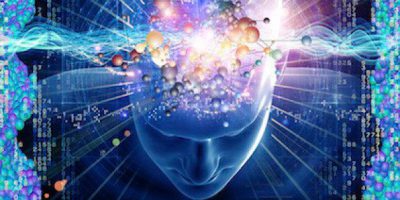
On the Nature of Reality

Simply put, reality is experiencing the world in real-time,  the here and now and “the place” where we interact with it.  It is the state of things as they are when we encounter them, as opposed to how they may appear or can be imagined. Reality is the basis for everything that we believe to be true about the world. (Well, at least, it ought to be!)

Determination and acceptance of what is real is derived from our interaction with the world and in the first instance a product of our minds in consideration of the information delivered to it by our sensory experiences. This makes our understanding of what is real very much a function of what we have brought to the fore in terms of our sensory organs and the intellectual ability to interpret the information they have gathered for us via our sensory experiences.

It goes without saying that if we had been different creatures we would have likely experienced a different world and have interacted with it differently, although I would hold that the difference in interaction would be a matter of degree and not of kind.  As a result our conclusions about the nature of the reality might very well be the same in the sense that we can interact and share a common environment despite qualitatively substantially different experiences.

It follows that  all knowledge  is subjective, and a product of our experiential perception of it, i.e., the only reality we know is entirely of our own making  and that would include any theories we have developed around its nature or origin.

It also follows that reality isn’t limited to what we know about it; instead,  it is limited by what we don’t know about it on the assumption that there is likely so much more to it but just not available to  us us because of what we are in terms of being able to perceive and understand it …

For example, we have developed notions of space and time which work perfectly well in helping us navigate and manage our immediate environment, but these concepts begin to break down – and no longer make any sense – when we apply them to the larger whole and  their logical consequences. They become nonsensical, as we will have to assume such things as the beginning and end of time  and the possibilities of the infinitely large and infinitely small.

As a result the reality of the world we know becomes less and less intelligible the further we move away from the centre – which lies necessarily within ourselves – where the very concept of it came into being when we first opened our eyes and found ourselves immersed in it.

On The Nature of Consciousness


Somehow, our consciousness is the reason the universe is here. (Sir Roger Penrose)

So, what is consciousness?  Consciousness is a way of being in the world that appears to go beyond any known physical properties in the material universe, in the sense that it manifests itself as an enduring phenomenon that cannot be reduced or accounted for by  any physical law or properties other than through association.

While we might use the term  frequently and on a casual basis –  suggesting an implicit understanding of what consciousness is all  about – when we are pushed to elaborate exactly what it is that we are referring to,  we will likely run out of vocabulary when it comes to describing  its defining features.

Nevertheless, we keep trying to come up with some kind of explanatory account for it that goes beyond association  and accommodates it solidly within the  known laws of physics.

The philosopher David Chalmers has speculated that consciousness may be a fundamental property of nature existing outside the known laws of physics, and one might be led to agree with that as to date science has not be able to account for it in any way as a function of a material law of the universe.

But while philosophers and scientists continue to  struggle to make sense of consciousness  and eminent physicists such as Sir Roger Penrose and Archibald Wheeler have begun linking it to the intricacies of Quantum Mechanics, and a concept I have been trying to get my head around in another post that can be found here.

What we can say about consciousness is that, in the first instance, it provides us with the realm or opportunity that we might refer to as sentience and awareness where we are able to  acknowledge the reality our own existence in the here and now, in the sense  that without it we would simply not be here – or anywhere else for that matter.  That is no more than saying ” I think, therefore I am”,  as the philosopher René Descartes once proclaimed  in his 1637 Discourse on Method.

As well, and a presumption no doubt implicit in the previous paragraph, one must be in the realm of the living as a necessary condition for consciousness to be present, as to date consciousness as a phenomenon has only been observed in association with life and the living, be it in man or beast or other forms of life that appear to be capable of exhibiting this phenomenon.

At least, this is how we understand consciousness to be present when making a determination whether someone  or something is conscious  and basing this  on the  ability to respond to  a stimulus of sorts. We should allow for the possibility that some creature, be it man or beast that is presumed to be conscious might be  entirely unable to respond to whatever stimulus because of some form of paralysis or other condition that prevents it from doing so.

What we do not know however is  that being a life form of sorts is also a sufficient condition for consciousness to occur or be present, as minimally as that might be the case.  For instance, trees and plants are alive, but we would typically not attribute  consciousness to them, if only because we have no way of detecting the presence of it. As well,  we do not know what exactly we would be  looking for when we try to detect the presence of it at the level of trees and plants.

Clearly, the absence or presence of consciousness cannot be a function of our ability to detect it, and for that reason it would be more reasonable to give it the benefit of the doubt and  assume that  consciousness is an intrinsic property of life regardless of the kind of life-form we might want to consider for this. I believe it is simpler to hold this view than to postulate  further conditions  that must be met by a  living entity before it can be said to have  consciousness, or to have at least  the capacity for it, e.g., that it must at least have a central nervous system to  be capable of it.

But  my task here is  less concerned about determining at what point living things such as  plants or more advanced organisms might be capable of  consciousness – or when we  might be able to detect it – and more about being able to determine what the nature of consciousness is beyond merely tagging it as an intrinsic function or attribute of life.

In this context  – and given a basic definition of life such as  “the condition that allows a given arrangement of organic matter to utilize its environment to sustain itself, including the capacity for growth, reproduction, functional activity, and continual change until death” –  it would be reasonable to assume that, for any living organism,  none of these capacities would be particularly useful unless there was also an innate capacity to monitor, coordinate and maximize these functions successfully and in the interest of its sense of self-preservation as a living organism.

This leads me to say that  the nature or essence of consciousness is in fact life’s interest in self-preservation, and what I want to refer to as “the will to live”. It is an emergent property of organic matter  that  eventually manifest itself as what we have come to refer to as “consciousness” as it goes up the evolutionary ladder towards  ever more sophisticated ways of being in the world.

The  property’s main function might be to acquire  a growing awareness of itself and its environment, to the point of being able to interact and manipulate the latter directly in relation to itself and presumably in the interest of self-preservation but not necessarily limited to that. Here I like to think that life – as an emergent property of the material universe and by way of its evolutionary nature – has  further goals and objectives in mind (so to speak) that go beyond the need for mere survival and address what I see as the larger question about life: survival for what purpose, i.e., what are we here for, or – for that matter -why should there be any life at all?

As to the question how consciousness resides in life-forms is as much a mystery as to how life resides in matter, but in either case they appear to be emergent properties and – as I suggested earlier –  a function of the degree of organizational complexity of its material  constituents,  when they allow for the emergence of these  properties to the extent that they are able to exhibit them.

All this being said,  it would  perhaps be simpler to hold the view that – rather than seeing consciousness as an emergent property of matter – it is in fact the true nature of reality, i.e., there are no other realities,  and that what we refer to as the physical attributes of the world are merely a manifestation of its complexity and a means to evolve beyond its current status towards a future state the purpose of which we are clearly not able to apprehend.

Going Up In Smoke

I must admit, I am somewhat dumbfounded by this cannabis thing. As an erstwhile Dutchman watching the popularity of pot work its way up from Paris into Amsterdam in the late 50s, I readily admit I had a few joints then but couldn’t decide what the fuss was all about and so that was that.

Cannabis continues to be an illegal drug in the Netherlands. While tolerated – meaning the authorities will turn a blind eye to those in possession of 5g or less – since April of this year, several cities have taken steps to limit the public use of cannabis because of the stench produced by smoking it (one is reminded of a well-seasoned dog turd on fire) as well as the noise generated by its users. The Hague became the first Dutch city to ban it in the city center, the central train station, and major shopping areas.

With this in mind, I am bemused by the anticipatory euphoria towards the imminent legalization of pot in Canada. This includes the gushing enthusiasm displayed by the various media – including the Globe and Mail (Pursuits, August 4th) – in attempting to provide this drug with the sheen of sophistication, by featuring it in a boutique environment, and in the context of stylish cannabis accoutrements and haute dining experiences that have their  dishes spiked (sorry “infused”) with it.

Finally – given all this brouhaha around the matter – as well as the billions being invested in it, I can’t get this picture out of my mind: the possibility of massive clouds of pot smoke billowing over this country once this drug is legal here.  Probably not, but whatever smoke there will be, it will likely also include folks seeing their financial interest in cannabis going that way.

A Play Without A Script

Shakespeare once wrote:

All the world’s a stage,
And all the men and women merely players;

Sometimes I think that we humans behave like actors in a self-directed  play that seemed to have lost track of its script,  and that we  make it up as we go along since that seems to be the only option.

In doing so we  appear to be driven to act and do as we want, but essentially without much of a clue to justify why we are going into the direction we appear to be heading.

For instance, being even a cursory student of human history will show that not acting in the best interest of our species appears to be the hallmark of human interaction over the centuries. The slaughter of millions of our own kinds features prominently in the matter settling disputes among ourselves that could have been resolved peacefully with a modicum of rationality and goodwill and to the benefit of everyone involved.

Moreover, it  has become especially clear that we are most definitely not acting in our own best interest when much of what we do today has had a detrimental effect on the very environment that sustains us as we continue to  rape and pillage the earth’s biosphere, including dumping our garbage in its oceans and poisoning its atmosphere.  Indications are that if we continue the way we are acting now we might well be heading towards our own extinction.

I would like to think that we’re not headed in that direction, but it could be argued that being confronted with one’s own extinction is a necessary step in our development as a species that must know its limitations before it will be able to employ its full potential as a force of creative energy in the universe.

In the meantime this question remains: does the world – and all that it encompasses – have to be about something beyond the mere act of experiencing it?  Couldn’t the world simply exist for its  own sake – and that the very matter of experiencing it through our interactions with it is all that it is capable of delivering – suggesting that to search for a meaning beyond it would be an exercise in futility.

I find that difficult to accept, and not so much for the experience of positive events  that make us happy and  seem to provide the justification for it,  but more because there appears to be  so much more tragedy and despair in this world, through hunger, natural disasters and senseless wars and affecting mainly those who are least able to defend themselves from these misfortunes.  Where is the justification for that?  That doesn’t seem right to me – and where does that sense of right and wrong originate from, if not from the very reason why we are here in the first place? That suggest there is more to life  beyond merely living it, i.e., that there is in fact a script in play and it is up to us to uncover it. This as opposed to merely accepting the status quo and the soul-destroying  inevitability of it.

The Night of Broken Glass

Kristallnacht-1938

This November it will be exactly 80 years ago that a wave of anti-Jewish savagery and destruction broke out across Nazi occupied Europe on November 9 and 10 in 1938.  Known as  the Kristallnacht, or the Night of Broken Glass, after the shards of shattered glass that lined German streets in the wake of the pogrom – broken glass from the windows of synagogues, Jewish-owned homes and businesses were ransacked, plundered or destroyed during the violence,  often by neighbors and acquaintances of the victims. These November pogroms marked the start of the Holocaust.

Hateful, riotous and violent events such as these raise the chilling question how people can be made to turn on their fellow citizens en masse, to the point of destroying their properties and livelihoods, or even by killing them.

Such events do not occur in isolation, of course, and are often years in the making, and typically the outcome of a climate of division, misinformation, mistrust, intimidation, hate-mongering and fear.  At bottom lies the vulnerability of the human race to being manipulated by folks who claim that they have the answers to all their problems, and who are able to convince others of their creed by appealing to the most basic instincts of our species, amongst which greed and fear are the more susceptible  ones.

In addition, their appeal feeds on another intrinsic feature of the human race, namely the need to belong to the herd.  Described by Nietzsche as the obedience of the individual to the mass, blindly and without reflection, and perhaps best characterized by his near-contemporary existentialist writer Kierkegaard, when he said that … we men are constantly in need of “the others,” the herd; we die, or despair, if we are not reassured by being in the herd, of the same opinion as the herd.  And,  as Simone Weil once remarked,  people find comfort in the absence of the necessity to think.

Clearly, such basic human tendencies work directly against the willingness and ability to think about the morality of our actions for ourselves – as individuals – as well as the courage to act accordingly, regardless of diverging mass opinions. This as opposed to being purely driven by instinct,  something that would have urged our animal ancestors to prefer the safety of numbers by remaining within the herd,  for no other reason than being a member of the same species with the need to conform.

That the latter can be a contributing factor in the occurrence of mass violence – including  state sponsored genocide, as in the case of Nazi Germany – can be seen in the context of the herd instinct being alive and well and continuing to thrive amongst the more vulnerable-minded of our species, particularly in the religious and political spheres.  And if our history has shown us anything it is the fact that such outbreaks of mass violence can be initiated by those who have a purpose for it, or,  if they are afflicted with a pathological need to dominate others and the obsession with the exercise of power.

Not easily understood if you are not affected by it – and essentially a delusion about one’s own power or importance – Adolf Hitler rise to power resulting in WWII is perhaps history’s most deadly example of how millions of people can be murdered for no reason other than that someone believing in their own divine purpose and invincibility is able to motivate others to blindly act out their deadly manic or paranoid disorder for them.

This couldn’t happen in our day and age you say? But you only have to watch the large adoring crowds at various Trump rallies and their absolute delight in chanting “Lock Her Up” to understand how the masses can be manipulated and potentially motivated to commit a heinous act.

With the oratory skills of a pulpit bully and employing a 5th-grade  vocabulary largely limited to hollow phraseology such as “it’s gonna be great, it’s gonna be fantastic!”, a large and primarily anti-intellectual crowd for whom truth is a function of what they want to believe as opposed to what is actually the case  – after being told what they want to hear, e.g., how deserving they are, or how wonderful they are  – can be made to focus on an illusionary enemy who is made out to be standing in the way of their entitlements, a promised utopia, and conceivably set afoot from there, and never mind the consequences.

Can Something Come From Nothing?

For some folks the question whether something can come from nothing might appear meaningful in discussions around the creation of the world. For instance,  how did the world come into being, and what was there before it came into being: something else, or was there nothing.

In trying to make sense of such questions  it is easy to get caught up in language games. Words pushing  words – without actually being able to assert anything either concrete or definitive. For instance, if something is not nothing, and nothing is not something – then, presumably, these terms are mutually exclusive, and it would be difficult to use either term, “something” or “nothing”, in some kind of meaningful relationship beyond stating that the one excludes the other on purely logical grounds.

One question that appears meaningful to me in this context is the one that asks: is the concept of non-existence even available to us?  I guess that all depends on how existence is defined in terms of necessary and sufficient conditions or properties – e.g., physical objects require spatial extension – a size and a shape  that allows them to be detectable  as  physical objects – be they solid or in wave form, and if they don’t have these properties we can say that they don’t exist. So – in that sense -the “non-existence”of physical objects would be available to us,

Then there are all sorts of other things that can be said to exists that clearly aren’t physical objects. I’m thinking of things such as mental objects. Unlike objects having spatial extension, they can nevertheless be said to exist in our minds, when we refer to them in terms of thoughts and ideas, or feelings and emotions. While encountering them is different from dealing with physical objects, they are in many ways just as real as physical objects, and accepting their reality is an integral part of our ability to function within the everyday world of our experiences.

Leaving the reality of mental objects off the table for a moment – we are here to consider the possibility or concept of absolutely nothing existing before the world as we know it came in to being.  Clearly, this is a completely nonsensical notion, and either postulating a God-like creator or Mr. Hawking’s singularity as a source of creation will not save the day as both are equally lacking in support  unless – for the latter – you want to suspend the logic of the space-time continuum as a theoretical concept that accounts for everything that can be found in it, space, time, energy and matter except for it being there in the first place.  This is the problem of being a closed system – you cannot get outside of it, to consider it either existing or not.

It seems to me that the answer is no. Nothing – nothing existing – is not available to us as a concept except, perhaps, in some abstract sense, e.g., in terms of the the absence of existence,  as if existence can be reduced to one of more properties that must be present for something to exist, eg., spatial extension,  and having a size and shape where we can approach the concept of non-existence, which – of course – is really a contradiction of terms, and by pointing this out, we have come as close to it as appears feasible, given the rules of language that are there to keep things intelligible to the extent that some kind of discussion it about appears possible. And that should not be a function of the fact that – when we say something like “in the beginning there was nothing” – we have actually implied the existence of nothing at some time or another, as that would clearly be a function of grammar as opposed to making an ontological statement. Clearly, our language is misleading us here.

Why The World Is At War

A recent March 2018 Guardian article by Jason Burke titled “Why Is the World at War” makes the point that “The harsh reality may be that we should not be wondering why wars seem so intractable today, but why our time on this planet creates such intractable wars”.

Burke outlines a number of seemingly never ending regional conflicts, causing no end of misery and death among local populations: Syria, Afghanistan, Yemen, the Ukraine, and the Democratic Republic of Congo, to name the more frequently profiled ones. Often these conflicts follow boundaries that divide clans or castes, not necessarily countries. They lie along frontiers between ethnic or sectarian communities:

In fact, if we look around the world at all its many conflicts, and if we define these wars more broadly, then we see front lines everywhere, each with its own no man’s land strewn with casualties. In Mexico, Brazil, South Africa or the Philippines, there is huge violence associated with criminality and the efforts (by states) to stamp it out .

And so the article goes on to analyze a number of these protracted conflicts in order to get a sense of what lies at the heart of them, in particular as to their history and the seeming inability to get them resolved.

The reasons are clearly many and varied – and to say that they are complex is perhaps an understatement. But as to any kind of overall “why”, the only common element appears to be the persistent inability of our species to get out from underneath the quagmire of basic instincts and desires that appear to feed  the negative human characteristic  we are all too familiar with, such as greed, selfishness,  bullying  and the exploitation and oppression of others,  to name just a few, and all them typically leading to conflict. This as opposed to being guided by more enlightened qualities of human endeavor such as being able to compromise, mediate, cooperate  and share with the realization that all human interests are best served by them.

In the meantime there remains the question of how to address the current states of affairs as outlined in the Guardian article. Essentially, though, they appear unsolvable, except by more of the same, and unless the conflicting parties agree to sit down to discuss a solution beyond trying to kill each other, there is not much left on the table but to continue the mutual bloodshed.

If these conflicts are evidence of something, it is that evolutionary pressures are operation at all levels of existence, and that includes the competition between ideas about what kind of societies we should structure for ourselves, and the principles that underpin them, i.e., social-economically, politically, morally. At the bottom of this struggle we find the Might is Right conundrum, and essentially the Law of the Jungle, bequeathed to us courtesy of our animal past in our participation in the Survival of the Fittest contest and obviously still very much a part of our way of dealing with the world.

When reason – that feature of the human cortex most recently required as a result of an evolutionary upgrade – is subjugated to instinct, the Law of the Jungle continues to prevail and becomes even more destructive, if not to the point of self-destruction, as in the case of potentially trying to annihilate ourselves by throwing nuclear bombs at each other.

The issue here of course is why we would allow reason to be overruled by instinct and  in particular when there are clear reason to believe that in a particular case this would not be in our interest. But the first response here would be to say that these are not matters of black and white, and that we might well confuse the one for the other.

As well, the ability to apply reason is a skill that must be learned – and just because you have the capacity for it in the cerebral  hardware department, all that means is that you have the prerequisites  for being able to act rationally.

However, it should be clear that even after minimal observation of human behavior and the current state of the world that the application of reason  requires training, as well as the insight into what benefits our species in the long term, and I like to think that this would be about more than the fact of our mere  survival. To act instinctively, however, is something we are born with, and built into the biology of our species,  from the very first phases of existence as a distinct organism that needed to be able to look after itself  to ensure its survival.

And so not much is likely to change in the world with respect to these kinds of conflicts until such time that we change our ways and wake up to the fact that we are not the creature that we think we are, i.e., that we must be the creature as defined by our past, and our bloodstained, war-torn history.

Instead we need to respond to the call of what it means to be a rational human being, or at least have the imagination and courage to try to find out what that might be all about without the need to kill each other. And this would mean redefining ourselves in terms of our future, and what we may be able to accomplish as a species motivated by the more enlightened principles of empathy and compassion, as well as the spirit of mutual cooperation  between nations with the realization that the shared stewardship of the earth resources is the only way to guarantee our peaceful coexistence  on this planet.

How we will get to that point is anyone’s guess – and if our species  is actually capable of that much common sense  I don’t know.  Given the state of the world today – and the quality of the leadership that appears to be in charge of the world’s most powerful nations – I am not hopeful that any of this will happen anytime soon.

“Until it begins, war is a matter of choice. After that, it’s shaped by forces and realities which dwarf the individuals who participate.”  (Joshua Rothman writes in the New Yorker in December of 2017 , reviewing Victor Davis Hanson’s “The Second World Wars”)

Mind Over Matter

In a recent  Scientific American article  dated April 19  titled  “Should Quantum Anomalies Make Us Rethink Reality?”  Bernardo Kastrup  muses over the fact that inexplicable lab results may be telling us we’re on the cusp of a new scientific paradigm.

He is writing about the nature of reality, and how it is currently perceived in terms our conceptual understanding, and how the latter predetermines our ongoing observation of the natural  world, to the point that the notion of being able to look at the world objectively – something that should be at the core of all scientific inquiry – may no longer make sense. When I read this,  the first thing that came to mind was something that Nietzsche once said: There is no immaculate perception.

In this context Kastrup invokes Tomas Kuhn’s  idea of the paradigm shift – first introduced in 1962 – when it becomes necessary to start questioning the accepted model of a scientific theory or concept on the basis of an increasing number of observations that are deemed anomalous when they don’t  fit within the prevailing model. You need to read Kastrup’s complete article to see the specific anomalies he is referring to for his argument.

The Kastrup article boils down to the the distinction between mind  and matter – the experiential or mental world and  the material or physical world  – and the  need to question the belief “that nature consists of arrangements of matter/energy outside and independent of mind.”  The anomalies he cites in the article question this independence, and while the issue arises at the Quantum level of observation, the inference is that there are implications for the larger view of the nature of reality.

I am interested in the nature of the distinction between mind and matter, or, if you will, the mental realm and the physical realm. The traditional view of mind and matter is that, while our physical bodies are  part of the material  world, our conscious minds minds  are something over and above the material world, in the sense that consciousness as a phenomenon cannot be explained in terms of its underlying material complexity.  As a result a duality has been introduced which has been less than helpful in trying to understand how the mental realm and the physical realm are related.

The distinction as taken mutually exclusive led Immanuel Kant to postulate the “ding an sich” – or “thing-in-itself” – as something fundamentally unknowable as a cause behind the experiential world, and something that Schopenhauer faulted him for because it would take the concept of cause and effect beyond what it could deliver, logically, in terms being able to infer a cause from an effect.

However, instead of postulating an unknown and in fact  unknowable really behind the world, Schopenhauer himself proposed a different kind of duality, by giving the world an inside and an outside, with the outside being the objective experiential world of our knowledge, and on the inside the true nature or essence of the world. The latter is not directly knowable as object of knowledge, yet we are conscious of its presence within our bodies as something that is over and above our actions and motivations that guide our interaction with the world.

I have some sympathy for the Schopenhauer position, if only because it is a less complex view of of the world. As well, we can reconcile it to some extent within the Spinoza one substance view which holds that both the mental and physical are part of the same substance – God –  and without the  distinction between the inside and outside of matter, but suggesting instead that humans could only apprehend two attributes of this one substance, namely thought and extension.

We are left with the suggestion that there is only one way for us to be in the world, and if there is any duality to it, it is within ourselves and a function of how we see the world and are able to interact with it.  This is the duality that is implicit  in the distinction between subject and object, the observer and the observed, between the  mind and its experiential content. In the end, however, these are  false distinctions, as it is the world looking at the world, creating the illusion of separate and ontologically distinct realms – the mental realm and the physical realm – while in fact both of them are one and the same reality. The conclusion has to be that there is no other reality, thus belying the  notion that “nature consists of arrangements of matter/energy outside and independent of mind”.

Given this line of thought  I suspect that  Mr. Kastrup’s Quantum Anomalies  are features of the mind-matter / subject-object distinction, when – at the QM or subatomic level – there appear to be  limits to what can be observed seemingly  independently from the observer, when the very process of observing bleeds into the object or event  being observed  and has become a case of the mind looking back at itself when it is  no longer being able to hold on to the distinction.

The truth about man is that he is not a pure knowing subject, not a winged cherub without a material body, contemplating the world from without. For he is himself rooted in that world.  (Schopenhauer – The World as Idea)

Enlightenment – How?

In response to Steven Pinker’s  Enlightenment Now: The Case for Reason, Science, Humanism, and Progress – to repeat something  I stated in an earlier post – who can begin to enumerate the number and variety of social economic, health and environmental issues ranging from poverty to homelessness to starvation across the globe? Just recently the NY Times in an article titled The U.S. Can No Longer Hide from Its Deep Poverty Problem showed a tally of those living on $4 a day or less in selected developed countries, and it included 5.3 million people living in the US.  I don’t necessarily want to pick on the US, but with the highest GDP in the world you wonder how this can even be the case when a country is deemed the wealthiest country in the world.

Beyond that there is the disturbing statistic that half of the world’s wealth belongs to the top 1%, while the top 10% of adults hold 85%, and the bottom 90% hold the remaining 15% of the world’s total wealth.  If you believe that these discrepancies are simply a function of some folks working harder and smarter than others, and reaping the benefit of it, then bless you! But you may have to learn something about the celebrated tenets of predatory capitalism and how some people, organizations and certain governments operate in order to accumulate the incredible wealth that they have acquired, if only to ensure the rich are getting richer while the poor are getting poorer.

And how depressing is it when you read about the general well-being of people outside the developed countries and find out that approximately 9 million people die of starvation each year according to world hunger statistics; more than the death toll for malaria, AIDs and tuberculosis combined in 2012. And currently an estimated 130 children or more die every day in war-torn Yemen from extreme hunger and disease according to international aid groups working there.

Add to this the pollution of our life-sustaining  atmosphere air with toxic gasses and poisonous particulates, the contamination of our precious living oceans with eight million metric tons of plastics  each year, the relentless depletion of non-renewable natural resources and the creation of mountains of garbage and putrid waste that we really don’t know what to do with courtesy of our mindless obsessive-compulsive consumerism and you have a picture of a planet that appears to be  in deep trouble no matter how rosy the glasses you are wearing you look at it.

Of course, there is far more going on in the world  that should be of concern if you care about the future of this earth – which is our future, lest we forget – such as people continuing to slaughter each other no matter what. We are reminded daily of the ongoing tribal wars in the Middle East, featuring the long standing tradition of killing each other in the name of some deity or another, e.g., the murderous Taliban sect and today’s equally deadly version of the black plaque known as ISIS. And last but not least we have a nuclear threat mounted by that obdurate dictator living like royalty of the meager avails of his starving nation in South East Asia, all the while advancing the world’s Doomsday Clock to two minutes before apocalyptic midnight, and a situation sadly lacking in amelioration from that chap in the White House.

And speaking of that chap in the White House, who can forget H. L. Mencken (1880-1956) depressing prophesy come true last year,  that  “On some great and glorious day the plain folks of the land will reach their heart’s desire at last, and the White House will be adorned by a downright moron.”

Now I don’t know about you, but as much as I hate to see the current status of the world reduced to these tragic events, I can’t help but think that no amount of positive thinking is able to gloss over these sordid states of affairs with Pinker’s astonishingly naive claim that things are getting better by the day. If global poverty has been reduced and longevity expanded, it is nevertheless within the larger herd of human lemmings hurtling down the cliff toward extinction.

No need to give up all hope, however! Apparently, the great barren expanse of Mars is waiting for us, as all-round wunderkind Elon Musk  will be able to shoot us there in a tin can perhaps as soon a seven years from now. It seems space is  where our future lies as the acolytes of modern  consumerism!  Mars will be the first interplanetary step after we’re done with the earth, and from there we will spread it among the stars, to infinity and beyond. Our greatest gift to the cosmos, indeed!

Artificial Intelligence

Artificial Intelligence has been in the news a lot lately, mainly because more and more people at all levels of society are starting to recognize its potential, in whatever area of human activity. From a briefing paper published by the European Parliament October of 2016:

The ability of AI systems to transform vast amounts of complex, ambiguous information into insight has the potential to reveal long-held secrets and help solve some of the world’s most enduring problems. AI systems can potentially be used to help discover insights to treat disease, predict the weather, and manage the global economy. It is an undeniably powerful tool. And like all powerful tools, great care must be taken in its development and deployment. However, to reap the societal benefits of AI systems, we will first need to trust it.

What kind of trust are we referring to here? This is a very complex question. The more we let AI into our lives, the more likely we are to develop a dependency on it, and the amount we are willing to trust it will be in direct relationship to the willingness to have our lives altered by its outcomes, as the rise of AI will have no doubt a bearing on them, regardless what aspect of life we might be talking about.

It remains an open question, however, if will we be willing  to trust AI when it pushes us into a direction that at first glance appears to be not in our best interest, if only because we might not fully understand the reasons for an AI derived conclusion. From an article in Bloomberg Businessweek titled Artificial Intelligence Has Some Explaining to Do by Jeremy Kahn:

This is what gives AI much of its power: It can discover connections in the data that would be more complicated or nuanced than a human would find. But this complexity also means that the reason the software reaches any particular conclusion is often largely opaque, even to its own creators.

Nevertheless, I believe AI will continue to gain our trust gradually and take an ever greater role in our daily lives. The technology will seduce us with the ability to seemingly give us everything we ask for, leading to our ever greater dependency on it, and leading us to believe that we can take its credibility for granted, and that would be a dangerous thing. At bottom, AI is a machine, and a calculator working with an algorithm (a set of rules governing a deductive process) and any data derived from it is subject to the age old dictum “garbage in – garbage out”.  To safeguard the integrity of a process is one thing, safeguarding the integrity of the data it is working on is a whole different matter.

In addition, we need to worry about that has been referred to as “machine learning”, the ability of an AI machine to “improve” on its own programming in order to overcome its deductive limitations, e.g., allow it to simulate an inductive or inferential process, to make the process seem more “human”, or as smart, if not smarter.   I’m thinking about situations where AI is faced with incompatible observations – or when there is just not enough data – in which case it might be allowed to arrive at some kind of “best guess” scenario by either modifying one of its procedural rules or by introducing some other random factor to settle the issue in order to arrive at a “reasoned” conclusion.

The fact remains that a mechanical analysis cannot find its way out of conflicting data by means of a “gut” feeling, i.e., the appeal to instinct or intuition, or the application of other unique human qualities such as empathy and compassion since they cannot be translated into machine language. At most, a machine might be able to simulate them to an extent based on what it has “learned” about these qualities from the observation of human behavior in a variety of scenarios. And if AI can only simulate human reasoning, that is not the same as replacing it, as for that it would have to plugged into the the very source of what makes us human.,

While this may be good enough for some,  such as the followers of the late  behaviourist psychologist B.F Skinner – who hypothesize that human behaviour is strictly a function of environmental factors, and not driven by thoughts or emotions – I think they are definitely out to lunch on that front.  There is a logical gap between what is as observed as human behaviour and that which motivates it from within, and what it means to be human is the only thing that fits in that space and is able to connect the two,  i.e., the difference between what is seen in the mirror and that which causes the reflection.

The upshot is that the essence of what it means to be human cannot be quantified and reduced to a set of rules governing machine language, and that AI can never be more than an augmentation to human intelligence.  This so we will continue to strive for efficacy over efficiency, to ensure we will choose quality over quantity, and that our continuing development as a species will always be a reflection of that,  uncertain as our future seems at the moment.