Crimes Against Humanity and War Crimes Act – S.C. 2000, c. 24
Russia’s totally unprovoked invasion of Ukraine and subsequent atrocities committed against that country, including the deliberate bombing of civilian targets causing the complete destruction of towns and villages and thousands of deaths among the Ukrainian population brings to mind earlier attempts to bring a country to its knees by targeting its civilian population.
Likely the most devastating example of this tactic was the detonation of two atomic bombs over the Japanese cities of Hiroshima and Nagasaki on 6 and 9 August 1945 by the US that killed between 129,000 and 226,000 people – most of whom were civilians. It led to the almost immediate surrender of the Empire of Japan on 15 August and formally signed on 2 September 1945, bringing the war’s hostilities in that region to a close.
Earlier that year a nearly equally abhorrent example occurred in Europe towards the very end of WW2 in February of 1945, when the capital of the German state of Saxony Dresden was firebombed during a series of joint British and American aerial attacks and which is believed to have caused the death of as many as 25,000 citizens. Exact accounts vary as it is likely many thousand more perished in this murderous fire storm, given the influx of undocumented refugees that had fled to Dresden from the Eastern Front, primarily from Silesia and on the run from Stalin and the Red Army. Tragically, most of the victims were women, children, and the elderly.
Looking back at this, I can’t imagine there could ever be a cause that would justify the wholesale slaughter of innocent men, women and children such as happened in WWII in Japan and Nazi Germany – as much as one might see the cessation of hostilities and the termination of a criminal and murderous regime as the justification for this.
But even if we should be able to conceive of circumstances so desperate that a nation fighting for its survival might see itself as having no other options than having to resort to the mass killing of innocent civilians on the opposing side, it is difficult to imagine that the deliberate destruction of Ukrainian cities and towns and the deaths of thousands of innocent civilians can be claimed by Russia to have been committed as a matter of ensuring Russia’s survival as an independent nation.
More likely, the only matter of survival here concerns Mr. Putin’s pathetic and malignant vision of a renewed Soviet empire, once upon a time a sorry assemblage of impoverished neighbouring vassal states held together by sheer terror under the absolute dictatorship of the murderous Joseph Stalin.
And how ridiculous is this: Russia – being a democracy in name only – “liberating” the independent Ukrainian nation from it democratically elected government by putting it under Putin’s governance, when it could only be seen as another step in realizing the extreme and deadly megalomania of the latter’s ambitions.
The conclusion has to be that Putin’s resort to terrorize and murder the Ukrainian civilian population in order to force its government to capitulate. makes the Russian invasion of that country a criminal act of the highest magnitude, and a crime against humanity by any other name.
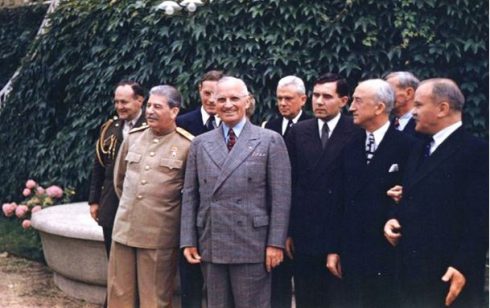
Russia’s unprovoked and devastating war with Ukraine with as many as 12 million refugees on the move in and outside Ukraine brings to mind another massive refugee crisis in Eastern Europe, when at the end of WWII at the July and August 1945 Potsdam Conference on Policy for the Occupation and Reconstruction of Germany an agreement was reached to redraw the borders of Germany and Poland and the Soviet Union.
While the current circumstances involve completely different scenarios in the context of the Russian invasion of Ukraine, it behooves us to highlight once again the incredible inhumanity inflicted on ordinary folks who end up paying the price of warfare through absolutely no fault of their own.
Participants at the Potsdam Agreement. Stalin and Truman seen on the left.
As it turned out, the Potsdam agreement resulted in perhaps the largest documented case of state sanctioned ethnic cleansing on record, and one of the most disturbing events of relatively recent European history. It was a direct result of the US and England giving in to the Soviet dictator Joseph Stalin’s demands to keep the part of Poland he had already annexed earlier under the secret Molotov–Ribbentrop Pact with Hitler in 1939 as well as most of the German province of East Prussia.
Not only would two million Poles be forced to abandon their homes and lands and resettle behind the redrawn Polish/Soviet Union border (the Curzon Line) to the West, the entire ethnic German population east of the Oder-Neisse line was to be expelled and “repatriated” to the remaining German territory west of the Neisse River. The territories affected would be the German provinces of Silesia, Pomerania, and East and West Prussia, as well as sections of Czechoslovakia. This meant that a staggering number of around 13 million ethnic Germans would be forced from their former homelands where many of their families had lived and worked as far back as the 13th century.
While the plan was to allow for “the orderly and humane repatriation of Germans”, this didn’t quite work out that way. Around 5 million people were forced to flee almost immediately ahead of the Soviet red army advance into East Prussia in the manner of a vicious barbaric horde bent on raping, killing and – in general – ransacking everything in their path.
Rape, in particular, was the highlight on the pillager’s menu. Alexander Solzhenitsyn, then a young captain in the Red Army, described the entry of his regiment into East Prussia in January 1945 as follows: “For three weeks the war had been going on inside Germany, and all of us knew very well that if the girls were German they could be raped and then shot. This was almost a combat distinction”.
German Expellees leaving East Prussia
Of the remaining 8 million Germans that were forced to repatriate roughly 1.2 million did not survive the unassisted trek west across their now former homelands and through Polish territory to the relative safety of Allied-occupied German territory on the other side of the Neisse river. The survivors – typically not the very old or the very young, and mostly ordinary farm or small town folk who had done nothing more than toil ceaselessly for a living from dawn to dusk their entire lives – told of months and weeks of incredible suffering. They were habitually beaten, robbed of the few possessions they carried with them, the women raped repeatedly. Thousands of expellees committed suicide, not able to withstand the absolute barbarity inflicted on them any longer.
Expellees Leaving East Prussia
Looking back at this ignominious event some years later, the great 20th century humanitarian Albert Schweitzer, in his speech accepting the Noble Peace Prize in Oslo in 1954, said:
“The most grievous violation of the right based on historical evolution and of any human right in general is to deprive populations of the right to occupy the country where they live by compelling them to settle elsewhere. The fact that the victorious powers decided at the end of WWII to impose this fate on hundreds of thousands of human beings and, what is more, in a most cruel manner, show how little they were aware of the challenge facing them, namely, to re-establish prosperity and, as far as possible, the rule of law.”
When it comes to managing the vaccination process in light of the COVID-19 pandemic, it could well be that rules will be put in place to restrict the movement of un-vaccinated persons in the interest of public safety. The operative word is “could”, as at the moment there is a lot of discussion going on that front.
I can see situations where being vaccinated will be mandatory just to ensure that people don’t turn themselves into a lethal weapon and unwittingly end up killing someone because they are COVID positive – although they don’t know this and are a-symptomatic for the virus – and then give it to someone else who might die from it. This might happen in situations where social distancing isn’t an option – such as on airplanes – or when a population group is particularly vulnerable such as senior care homes where the vast majority of deaths (80% in Canada) have occurred.
It might be said that such restrictions infringe on personal rights and freedoms, but I see this more as just another way to ensure each other’s safety, e.g., such as restricting vehicles to speed limits or one-way traffic or mandatory stop signs so we don’t all end up killing each other when driving our cars.
Reasonable people with some sense of social responsibility should not take issue with this, but it is clear that not everyone is that way inclined or appears to have evolved to the point that they are capable of thinking that way.
To take this latter point a little further, no doubt that in the end, when all this COVID trouble is over – here’s hoping! – there are going to be people who will proudly proclaim that they were able to survive this plague without being vaccinated or, for that matter, without wearing a mask or social distancing, so what was the big fuss all about?
However, it is less likely that they survived the pandemic unscathed regardless of their non-adherence to recommended public safety measures in light of COVID. More likely, it was the fact that the vast majority of people around them did follow the recommended procedures such as masking up and getting vaccinated and so prevented the anti-vaxxers from becoming infected with this potentially deadly virus even if they themselves were infected with it.
No, you couldn’t prove that of course, but you shouldn’t have to as this is merely an appeal to reason – and it is an unfortunate fact that, from the looks of it, not everyone is in possession of this faculty, and so they will not be able to get the point.
Oxford Languages defines phenomenon as “a fact or situation that is observed to exist or happen, especially one whose cause or explanation is in question.” That is to say, one might be tempted to ask themselves: did this really happen? Or: how could this have been possible?
I’m looking at this in the context of the 45th president of America now having left the White House, as reluctantly as that would have been the case. He rejected the outcome of a democratic election by declaring it to be fraud, and going as far as inciting an insurrection by urging a viscous mob to violate and ransack the US Capitol, and trying to justify this with the – since deleted – tweet on January 6, stating that “these are the things and events that happen when a sacred landslide election victory is so unceremoniously & viciously stripped away.”
The fact that he or his supporters could not produce one shred of credible and verifiable evidence in support of that bizarre and outrageous claim is just one more reason to refer to his turbulent and abysmally divisive four year term as the head of the USA as a unique phenomenon that requires some exploration.
I’ve written enough about this now ex-president in earlier posts to make it clear that, yes, I have an intense dislike for him – and for all the reasons that are perhaps best summarized by something his former National Security Advisor John Bolton once said about him: he has a hole where his character should have been.
If the 45th president of the United States has demonstrated anything during his noxious reign, it is the fact that he appears to be totally devoid of humanity. By the time he left office on January 20th, over 400,000 Americans had been killed by current pandemic, yet one would have a hard time recalling even one instance in which he publicly expressed genuine empathy towards the families affected by the tragic loss of their loved ones.
Nor did he demonstrate at any time the kind of resoluteness and determination required to address this deadly pandemic with the sense of urgency that one would expect from the leader of a country that is being ravaged by it. The conclusion has to be: he couldn’t care less! After all – be it one or 400,00 dead Americans – they are of no use to him, i.e., they will not be able to pledge fealty to him, let alone vote for him. At most they are an embarrassment for having died in such numbers during his term in office, to the point that when his presidency came to an end the USA had the highest number of novel corona-virus deaths in the world
Throughout his career in private business and during the last four years as a politician it has become very clear that the only person he cares about is himself. Add his inability to admit mistakes by always blaming others and deliver false and misleading claims on just about any subject should that serve his purpose: you have the textbook definition of a sociopath!
While he might seem to care about those who support him and appear to be loyal to him, the moment that seems no longer the case you may as well not exist, i.e., you are of no value to him, as many of his former supporters have found out. A case in point would be the situation his ever-loyal vice-president found himself in on January 6, 2021, when Mike Pence decided to uphold his country’s constitution and certify the election results – as he was legally required to do – instead of complying with Trump’s demand to throw them out so he could stay in office. More recently it appears his ever loyal legal sidekick Rudolph Giuliani has now been given the heave-ho, presumably for services perhaps not so successfully rendered.
So the question remains: how was it possible for a sociopath such as Trump to be elected as the 45th president of the US? I don’t believe I can offer any kind of unique insight into this – for me – baffling phenomenon but the short answer appears to be: he benefited from the significant and historically longstanding divisions within the country, by appealing to the disgruntled hard hearted side of the political spectrum and become their chosen champion to rebuild the USA in their image.
Moreover, he was able to transformed the Republican party from a political organization into a cult of personality that would endow him with a sense of reverence seldom seen within Western politics. The upshot was that he could do no wrong; he could count on their absolute support for whatever action he would consider necessary – legally or illegally – to make the country see things his way.
That he was able to accomplish this over a relatively short period of time is remarkable, but it would be a big mistake to credit him with any kind of political savvy to make this happen. Instead, it was a case of being in the right place at the right time. Never short on ambition, his crude and abrasive in-your-face personae became the perfect medium to personify and give voice to the spiteful and less generous side of human nature on behalf of those on the political right wanting to express their resentment and anger with their country’s status quo.
Trump and the political right rise to power must be seen within the context of many Americans having been manipulated to perceive the looming threat of “socialism” during the eight years of the Obama administration. Despite being among the top world economic powers, the US remains the sole industrialized nation in the world without universal health care coverage. The Affordable Care Act (ACA) – nicknamed Obamacare – aimed to provide affordable health insurance coverage for all Americans – it would be portrayed as another major step towards socialism by those who opposed it.
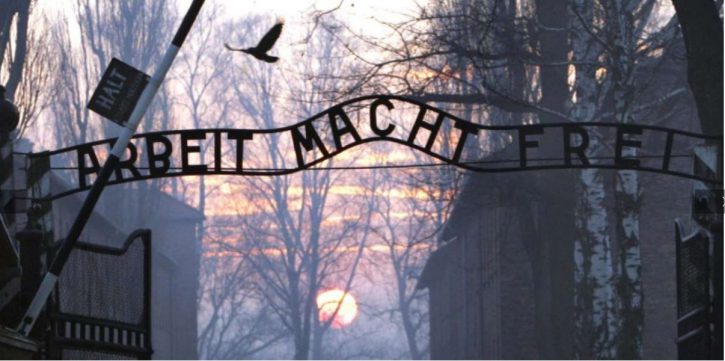
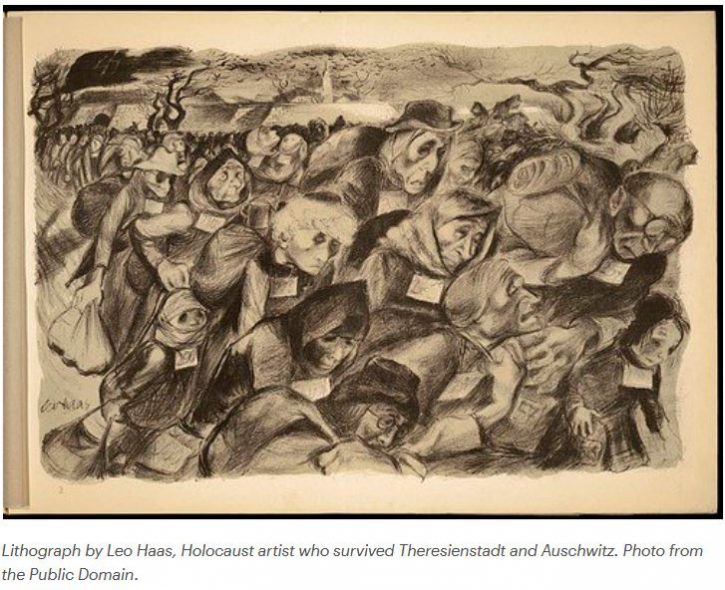
In a few weeks it will be International Holocaust Remembrance Day, and the anniversary of the liberation of the Auschwitz death-camp on January 27, 1945, by the Soviet army. There are many things that continue to disturb me when I think about this period in time again, in addition to the unimaginable evil of it: a state run people extermination program …
There continue to be folks today – imbeciles would be a good name for them – who deny that anything like the Holocaust actually happened. Typically, they will have their own demented ideological agendas that will prevent them from acknowledging the sickening truth of this event, but the well-documented fact remains that on January 20, 1942, in the Berlin suburb of Wannsee, 15 high-ranking Nazi Party and German government officials got together under the leadership of Reinhardt Heydrich, chief of the Reich Main Security Office (including the Sicherheitsdienst (SD), Gestapo, and Kripo) to discuss and coordinate of what they called the “Final Solution of the Jewish Question“.
While the official minutes of this this meeting did not reflect the actual ways and means of the implementation of this state sanctioned policy – we know from actual testimony provided by Adolf Eichmann who was present at the meeting that an agreement was reached to pursue the annihilation of all Jewish people, and that this strategy was subsequently implemented with deadly efficiency, resulting in the murder of perhaps as many as 6 million Jewish people. This includes approximately 1 million Jews just in the Auschwitz complex alone (including Birkenau, Monowitz, and subcamps).
And so it happened that – while Nazi Germany was at war – at the outset life went on more or less as normal for the majority of the German population, but some of their neighbours were forced from their warm beds in the very early morning hours, given 15 minutes to get ready, fathers, mothers, their little children, grandparents, entire families, generations, standing there in front of their homes, in the gray morning light, shivering, frightened, crying, a small bag of belongings clutched under their arms, to be trucked away to local railway stations, then transported in unheated goods trains in the middle of winter – packed so tightly together – there was no room to sit down during a journey lasting often several days. Pitch dark inside, with a bucket or hole in the floor for a toilet, men, women, young and elderly, children, babies, women expecting, giving birth, and all this indescribably suffering had to be endured by thousands of people just so they could be gassed to death at a distant location.
From a 1943 secret report by a German army officer that was smuggled to the Dutch Resistance, for further distribution:
The trains with the victims arrive from all the occupied territories of Europe. They are made up of cattle wagons whose windows are barred with barbed wire, in each of the wagons there are 120 people. Depending on the weather, about 90 % arrive alive, although more than once last summer, 50 % were already dead from lack of water. After the wagons arrive at the camp, the people are whipped out and into the surrounding barracks, and locked in. The next day or several days later, depending on arrivals, 700 to 800 people are pushed together in to a courtyard. They are told to undress completely, the clothes must be put carefully in piles and the shoes lined up. Completely naked, men, women, children are pushed along a passage between two dividers of barbed wire. Then Ukrainian criminals begin to cut and shave the women’s and men’s hair. The hair is collected carefully because it is used to seal the joints [Dichtungen] of the submarines [U-Boot]. For long hours, the poor people must stand in the biting cold or the burning heat. As soon as some fall, worn out by the harsh cold or the burning heat, the henchmen lash the naked bodies of these poor people with the whips. The pain and the suffering that takes place in these corridors defy description. Mothers try to warm their infants against their own naked bodies. There is hardly any talking, only the eyes of the poor people express a nameless suffering and dulled resignation. This corridor leads to an iron door of a stone building. The door is opened and the 700-800 people destined for death are whipped inside until they are squeezed like herring in a barrel and unable to move. A three years old boy who tries to run away is caught and whipped back inside. Then the doors are hermetically closed. Outside the building, a large tractor is turned on, its exhaust fumes are pumped inside the building by a small window, I could see the effects on the victims inside. Packed in, the poor people were standing and waiting for their last moment, there was no panic, no cries, only a low murmur that could be heard from outside, as though a collective prayer rose towards the sky. One hour later, all were dead. Sliding windows were opened from the outside for the carbon monoxide to be evacuated. A half hour later, some Jews came – they owe their life to this dismal work which follows – to open a door in the back wall and drag out the bodies of the gassed people outside, before carrying them to the pits full of lime prepared for this task. They must remove rings from the fingers and open mouths to pull out gold teeth if there are any. Each installation keeps statistics of the number of killings [Tötungen]. Every day, in other words, every 24 hours, three or four killings[Tötungen] take place. This means that for the four installations [Anstalten], 8 000 to 9 000 deaths per day. In all, 6 million and a half people have already been killed in this way, including 4 million Jews and 2 and 1/2 “institutionalized individuals” or so-called “Deutschfeindlichen”. The program includes 16 million and a half people, in other words, all the Jews in the occupied territories and all the Polish and Czech intellectuals. In high places, there is currently an emphasis on rapidity and it is planned to use a more efficient method of killing. Cyanide gas has been suggested but apparently it has not been used yet, so the killing continues to take place in the cynical manner described above.
(March 25, 1943)
The ultimate indignity to human life – but there really are no words in any language that could capture in any way the degree of terror, horror and pain that was inflicted on so many innocent men, women and children by the relatively handful of truly murderous individuals that made up the Nazi upper hierarchy.
Most disturbing to me is the fact that this unbelievable sick and demented initiative was perpetrated by the leadership of a nation steeped in cultural significance as far as western civilization is concerned. And here we have Reinhard Heydrich – the Chair of the 1942 Wannsee conference – himself a talented classical violinist and son of a composer and professional opera singer, born into a family of social standing and substantial financial means, and often described as the main author of the Holocaust and the darkest figure within the Nazi elite. Hitler christened him “The Man with the Iron Heart”(*)
Oh – and before I forget – the Holocaust happened to certain people only because they were Jewish – but that seems hardly relevant, does it? I mean, how could such a factor be relevant? Unless, perhaps, you were in a country ruled by a mentally deranged homicidal megalomaniac who used its powerful army to act out his sick and deadly fantasies. No, it is the fact that this could have happened at all – where it happened, when it happened and how it happened – these the only things that matter here. How this could have happened – I don’t think I will ever be able to figure this out at all.
August 1945 -A boy averts his eyes while walking by the starved and emaciated corpses being extracted from the Bergen-Belsen concentration camp following the defeat of the Nazi empire.
(*) It is perhaps worth mentioning that Mr. Heydrich’s iron heart stopped beating at the occasion of his death a few months after the Wannsee conference as the result of an attempt on his life on 27 May 1942 by a British-trained team of Czech and Slovak soldiers who had been sent on behalf of the Czechoslovak government-in-exile to assassinate him in an operation named Operation Anthropoid.
I have stated earlier that there is a pathetic streak of gullibility running through the human race and referred to it as “a debilitating if not fatal flaw by any other name, but seemingly so deeply embedded in our DNA that I’m not sure how we will ever get rid of it”. It is our species greatest weakness that leaves us wide open to all kinds deception and deadly mischief: the willingness to accept something as being absolutely true without one shred of verifiable evidence.
It is hard not to see our species as being defined by this fatal flaw! In particular the claims and beliefs of organized religion – which should have been dismissed a long time ago – that have lead to centuries of religious strife that resulted in countless of lives lost for no reason other than the competition between such beliefs and the vested interest that the various religious denominations had acquired in them.
Gullibility can be even deadlier – to the point of voluntary self destruction – as in the case of religious cult membership, one tragic example being the dead by suicide of more than 900 Americans, members of the People Temple cult in Jonestown, Guyana on November 18th, 1978, at the urging of their demented leader the “Reverend” Jim Jones.
Then, a more recent example that even the most bizarre and unsubstantiated beliefs can have deadly consequences for those that accept them as absolute truth happened in 1997, when members of Heaven’s Gate, a religious cult, believed that as the Hale-Bopp comet passed by Earth, a spaceship would be travelling in its wake—ready to take true believers aboard. Several members of the group bought an expensive, high-powered telescope so that they might get a clearer view of the comet. They quickly brought it back and asked for a refund. When the manager asked why, they complained that the telescope was defective, that it didn’t show the spaceship following the comet. A short time later, believing that they would be rescued once they had shed their “earthly containers” (their bodies), all 39 members killed themselves. (from a July 2020 article in the The Atlantic)
Today the practice of blindly believing the unsubstantiated is running rampant on the internet. Donald J. Trump supporters take note: he lost the election by more than 7 million validated votes. But since you believe that DJT would have been the obvious person to vote for, more or less guaranteeing a landslide victory, you have difficulty believing he lost the election. So when you hear claims that the election was rigged, you will want to believe that, even when there is no factual evidence in support of it.
This is an epistemological problem, and some will refer to this as examples of cognitive dissonance, defined as the motivational mechanism that underlies the reluctance to admit mistakes or accept scientific findings. Once we form an opinion on a particular topic, we refuse to believe anything contrary to our beliefs; even going as far as to reject factual information to rationalize our own opinion.
The question is, how did our species get as far as it has with this obvious flaw – something I consider an absolutely critical flaw, and responsible for much of the evil that people have inflicted onto themselves and others over the centuries.
Men never do evil so completely and cheerfully as when they do it from religious conviction. (Blaise Pascal, 1623-1662)
First used as the title of a 1948 photograph of an American tourist in Havana, the term “Ugly American” refers to a stereotype depicting a certain type of American citizen as exhibiting loud, arrogant, demeaning, thoughtless, ignorant, and ethnocentric behaviour mainly abroad, but also at home. The phrase entered popular culture as the title of a 1958 book by authors William Lederer and Eugene Burdick. In 1963 it was made into a film starring Marlon Brando.
Following the highly divisive reign of the US administration over the last four years I would like to broaden the original characterization of the “Ugly American” personae beyond the already listed traits of “loud, arrogant, demeaning, thoughtless, ignorant and ethnocentric behaviour” and include some of the especially ugly traits frequently exhibited by its current president who is about to leave office after losing the 2020 presidential election by more than six million votes.
While is true that by expanding the definition we are less likely to refer to a stereotype and more to a unique individual, I feel that it is nevertheless a useful exercise to illustrate how truly ugly and unsavoury an individual can be and especially in a position of power and influence and effecting millions of people that find themselves at the receiving end of it.
The list of deplorable personal qualities that can be attributed to this exacerbated version of the Ugly American persona is too long to get a decent outline here but there is a summary in the Washington Post of November 12 by Michael Gerson that goes a long way in stating what is wrong with the current occupant of the White House. It features some of the more nefarious traits exhibited by Donald J. Trump while demonstrating his complete and unique unsuitability to take on the mantle of the 45th president of the United States back in 2016:
We see a dishonest president, spinning lie after lie about the electoral system. A selfish president, incapable of preferring any duty above his own narrow interests. A reckless president, undermining the transition between administrations and exposing the country to risk. A vain president, unable to responsibly process an electoral loss. A corrupt president, willing to abuse federal power to serve his own ends. A spiteful president, taking revenge against officials who have resisted him. A faithless president, indifferent to constitutional principles and his oath of office.
In short, this catastrophically flawed individual should have never been allowed to take the helm of a country, and especially not an influential and powerful country such as the United States.
Not surprisingly, the fact that it did happen has damaged the country in more ways than one. His demonstrated admiration for totalitarian leaders such as Putin has had a debilitating effect on the country’s democratic institutions by riding roughshod over its civil service and by the appointment of cronies and other assorted lackeys and sycophants. This includes members of his extended family in key position of government, apparently on condition of absolute loyalty to him alone. I would also include the somewhat sinister figure of the vice-president, his faithful apologist and a staunch champion of the white religious right. If you smell a contradiction here, you might be right – it’s either that, or in the interest of political expediency that Christianity has been redefined to allow for pathological liars such as the current president to be absolved from their sins.
We should also not be surprised that there are significant repercussions internationally, when the impact of his fickle reign continues to be felt around the world due to the unpredictably of his actions. A notable decline in America’s prestige abroad since he took office in 2017 has negatively affected the US’ relations with both friends or foes while introducing a great deal of uncertainty regarding the status of various pending international agreements related to trade, defense, climate and health.
Donald Trump at Trump National Golf Club in Sterling, Virginia, on 21 November. Photograph: Manuel Balce Ceneta/AP
And with respect to health, his decision to abandon the World Health Organization during the height of the current COVID-19 pandemic is nothing more than a cynical move to punish the WHO for his own failure to address the seriousness of the pandemic at the outset by not providing the critical national leadership it called for. The result has been that the US incurred 20% of all pandemic related deaths worldwide while representing only about 4% of the total world population. As the pandemic rages on, at the time that I write this Americans are dying at the rate of nearly one every 60seconds , for a total now approaching 280,000 since the disease was first detected in the country.
Furthermore, the most shameful aspect from a national leadership point of view is his total lack of empathy toward those members of society that have suffered greatly as a result of the pandemic and the hundreds and thousands of Americans that have lost one or more family members as a result of it.
It seems this president can find more time to play golf than provide some badly needed national leadership in fighting the virus that is running amok in his country. At the recent G20 summit he skipped the G20 summit’s “Pandemic Preparedness” event on November 21st to visit one of his golf clubs on the same day that a record 195,500 new Covid-19 infections were reported in a 24-hour period in the United States, according to Johns Hopkins.
But if there is one thing in particular that should be held against this president it is his treasonous effort to take advantage of the already deep divisions in his country, and in particular between Democrats and Republicans. And I say “treasonous” because if you are the duly elected leader of a country – you are obliged to represent ALL of your citizens regardless of whether they voted for you or not and do everything in your power to encourage the middle ground between them. Anything else ends up weakening the country even further, to the point of shutting down dialogue between the opposing ideologies, making any kind of cooperation just about impossible and paralyzing its government.
And so he has been playing the “us and them” blame game from the day he was installed in office. This proved to be perfect recipe for various social unrest much of which has already materialized in various cities around the country. Initially peaceful demonstrations for Black Lives Matter following the deaths of George Floyd and Breonna Taylor were seized upon by those elements in society with alternate agendas more focused on looting and the destruction of private and government property.
Today there are the shenanigans around the presidential election process, and his delusional and utterly baseless claim that there was massive voting fraud that will remove him from office as of January 20th. To date not one shred of evidence has been presented regarding the alleged voter fraud, and we’re looking at a situation so absurd that is making the US the laughing stock of the world. The worst of it is that the majority of Republicans voters – including state legislators, senators and the like – continue to support him in this efforts to get the election results overturned due to fraud, and going as far as to urge his supporters to send him money to help fund his fruitless attempts to overturn the election.
In Franz Kafka’s (very) short 1908 story “ThePassenger” he writes:
I am standing on the platform of the tram and I am entirely uncertain as to my place in this world, in this town, in my family. Not even approximately could I state what claims I might justifiably advance in any direction. I am quite unable to defend the fact that I am standing on this platform, holding this strap, letting myself be carried along by this tram, and that people are getting out of the tram’s way or walking along quietly or pausing in front of the shop windows. Not that anyone asks me to, but that is immaterial.
Kafka is experiencing an existential disconnect, the acute realization that you are partaking in an event of which you don’t why or where it originated or where it is going in terms of its purpose or destination as well as your own role in all of this. My take on this is that we might encounter such a disconnect when we take a step back from the immediacy of our daily lives and try to place them within the larger reality of the world we live in.
What is the distinction, and how do we run into it? I think the distinction is a function of contrasting the comings and goings of our daily lives as defined by our present and our past against the cosmic spectacle we appear to be immersed in – given that we are an intricate part of it – but unable to articulate the significance of this in any meaningful way.
More specifically, when you look at all of human history and the types of activities that have preoccupied our species since the beginning of time – including the trail of war and other forms of mindless savagery that has been left behind as we have proved and continue to prove to be our own worst enemy – you have to wonder what this human saga is all about, as when you think about this for a minute the entire human effort as a whole makes absolutely no sense at all.
Now something started all this, and our sciences have told us as much: the cosmos exploded, the earth cooled, the slimy bottom spawned, life evolved and here we are. But, to what avail? I think that is a reasonable question, and it should be staring us in the face all the time, yet we seem to go on as if none of this is of any consequence even if we did know the answer.
I think that way down deep this is an issue for all of us, and is subsumed in the human psyche, but that only some of us are willing to confront, or – for that matter – are able to experience as an existential issue at some level or another and that, yes, continues to stare us directly in the face all the time.
“The more the universe seems comprehensible, the more it also seems pointless. … “So says renowned physicist and Nobel Laureate Steven Weinberg in his 1977 book “The First Three Minutes: A Modern View of the Origin of the Universe)”
In general, we humans like to think that things happen for a reason, either accidentally or on purpose – whatever the case may be. At least, that is the way we usually think about the world based on our very experience of it. Seeing the world in this manner allows us to understand the interaction between things and events while enabling us to manage our lives around them with some degree of predictability.
So what about the universe? Would it not be reasonable to expect there was some reason for it to be here as well? I’m kind of two minds about that.
First of all, it is quite a conceptual leap to jump from considering the status of some event or another in the world to considering the status of world itself. Is the world just another event in the sense that we should be able to look at it from either end, i.e., consider the likely cause of it and the effect that it has on other things in the world? Can the world be seen as an event beyond all the things that take place in it? (look up: Gilbert Ryle’s category mistake)
Since the world is both logically and physically necessary for anything to take place, I don’t believe you can put it in the same category of events that take place in the world. As such it occupies a class or category all its own. (I think I’m running into a version of Russell’s set paradox here, but let’s not go there … )
For anything to happen, the world must have happened – that much seems clear. But – as far as we know – the world appears to have happened on its own account, i.e., it is simply here – full stop. It is the container that contains everything else, but itself it is not contained other than by itself. Such is the mystery of the world.
Now one could argue that we just don’t know that the world isn’t part or the result of another event that brought it about, i.e., the world is a transitory event that came into being as a result of “the big bang” – which is the prevailing view at the moment, and so on, and end up in an infinite regress of events preceding events, and then only because we cannot accept that events can appear out of thin air or materialize from within a material empty vacuum for that matter,
Our language is the limiting factor here because it is the language of the living and breathing mortals that we are. We cannot get beyond the logic derived from our species’ experiential involvement with the world and make sense of events that seem to go beyond that.
But what if the point of the universe being here is simply just that: to be here for what it is, i.e., to exist for its own sake? That we may be able to make sense of this might depend on what sense or meaning we are able to attach to our lives, as by extension we would then be valuing the point of universe being here as well.
If we think about our place in the world this way, well-known 20th century existentialists such as Sartre and Camus would be wrong classifying life as essentially meaningless and – among other things – attributing the absurdity of our predicament to a cold and indifferent universe that remains silent on such things, given that only human beings are able to attach meaning or value to something. The conclusion has to be that meaning comes from within life, from experiencing life as meaningful, and not from having it derived from a source external to it.
It would follow that no feature of the universe will likely make sense unless it is viewed in the context of providing the ground for some aspect of meaningful human activity that could otherwise not have taken place. The logic may sound counter-intuitive but I believe that this is the only way out of the absurdity paradox that Albert Camus entertained when considering the fact that human beings inevitably seek to understand life’s purpose:
“Camus takes the skeptical position that the natural world, the universe, and the human enterprise remain silent about any such purpose. Since existence itself has no meaning, we must learn to bear an irresolvable emptiness. This paradoxical situation, then, between our impulse to ask ultimate questions and the impossibility of achieving any adequate answer, is what Camus calls the absurd. Camus’ philosophy of the absurd explores the consequences arising from this basic paradox. (Stanford Encyclopedia of Philosophy)”
The question remains then how the seemingly puny human could conceivably value the existence of the mighty universe simply by finding meaning in their everyday lives. I think it boils down to the distinction between quantity and quality, and between form and function in the context of an evolving universe.
As such it wouldn’t matter how old or how large and complex the world is, given that the significance of that could only be expressed by how well we would be able to experience the quality and depth of being at the receiving end of this spectacularly creative effort, and then solely with the sensibility and reasoning that has been given to us as a result of merely being a part of it. Everything beyond it is more or less irrelevant, in the sense that -as spectacular as that may be – it is at most a set decoration, the backdrop against which we play out the destiny of our species and of which we have for the moment absolutely no clue.
Given what we think we know about the age of the universe, planet earth and the myriad of creatures that have and are continuing to inhabit it since life first appeared, we have arrived only recently as a species uniquely capable of reflective thought and reasoning. With it – I suggest – came the potential to make something of ourselves beyond being just another species for which the need to survive and ensure the continuation of its genus appear to be its main objectives..
On that premise we find ourselves at the receiving end of the implicit obligation to go beyond these basic needs, and not only because we can envisage ourselves of being capable of accomplishing much more than that, but also, surely, because we would not want to see ourselves being limited by them.
But given the state of the world today, for many the potential to distinguish ourselves beyond being just another creature on this planet appears to have been reduced to some self-aggrandizing exercise in unlimited exploitation, boundless consumption and mindless procreation, and that at great cost to ourselves and our future. As a matter of fact, we seem to have taken the first steps towards our own extinction by continuing to undermine the very environment that spawned and nurtured us and allowed us to thrive as a species.
Alternatively – and yes, there is always an alternative, in particular to just being unimaginably shortsighted! – we could use our collective brain-trust to decide what kinds of uniquely human qualities we ought to prioritize in order to truly benefit us all and start acting accordingly.
I can think of a few: Imagine a world-wide society built on mutual trust and respect, featuring such things as a sustainable waste-free economy, free education, healthcare, equal opportunity regardless of race , age or gender, the pursuit of arts and sciences, and being free from famine, disease and crime. In other words, not much we are familiar with today, but something worth pursuing, don’t you think?
Easier said than done, without question; in fact some will say that such an utopian state of affairs will be impossible to achieve given what history has shown us to date about human nature. True, is difficult to see any such potential reflected in the daily course of our lives. Not only does it seems near impossible to quantify them beyond being either mundane – and at any rate less than profound – or positively evil, and that would include much of human kind’s murderous, bloodstained past and all of our self-destructive activities such as our relentless attacks on the earth’s critical life-sustaining biosphere.
The problem of course is that we seem to be lost and absolutely hapless when it comes to understanding our place in the world. In the mid 1600’s the Dutch philosopher Baruch Spinoza wrote that people find themselves with needs and desires without understanding the reasons why they want and act as they do. Lacking this knowledge about themselves and their place in the world creates the illusion that they can do as they please, and which is a source of much grief when they act against their own interest because they don’t seem know any better.
Nevertheless, it is the implicit promise of our cosmic DNA, our origins, that will continue to urge us along this uncertain path towards a future we might one day be able to imagine what that would look like if we develop the ambition, courage and intellectual wherewithal to conceive the realization of it. And why shouldn’t we be able to: are we not the descendants of a magnificent cosmic event and all the spectacular creative energy that lies within and is necessarily represented within every particle of our being?
I say “necessarily” because how could it not be? We aren’t some accidental and aberrant event over and above the phenomenon of the universe: we ARE the universe, nothing more and nothing less. Now, if we only knew what that meant, but that is what life is all about, isn’t it? And clearly, this is the larger context we should be taking our cues from when we plan our future – as little as we are able to grasp of it at the moment.
For this we need to be able to turn ourselves inside out, by prioritizing the spiritual over the physical and embracing those values that are clearly larger than the largely material ones we appear to be pursuing today. Instead we ought to be pursuing empathy, compassion, trust and a respect for life in recognition of the incredible accomplishment that life represents as a cosmic effort to redefine itself for whatever purpose it has in mind – as much as we cannot even begin to think what that purpose may be although I suspect it might have something to do with establishing order over entropy and light over darkness in pursuit of total harmony.
However – and as much as I hate to admit this – my greatest fear is that this kind of enlightened future is in fact not available to us as, when we may not have moved far enough up the evolutionary ladder to be able to visualize it – or event want it ! – and to start changing our ways collectively to make it a reality.
As such, life is likely to continue to be the absolute tragedy it is, for our life-giving planet and for so many of our species today.

 Of the remaining 8 million Germans that were forced to repatriate roughly 1.2 million did not survive the unassisted trek west across their now former homelands and through Polish territory to the relative safety of Allied-occupied German territory on the other side of the Neisse river. The survivors – typically not the very old or the very young, and mostly ordinary farm or small town folk who had done nothing more than toil ceaselessly for a living from dawn to dusk their entire lives – told of months and weeks of incredible suffering. They were habitually beaten, robbed of the few possessions they carried with them, the women raped repeatedly. Thousands of expellees committed suicide, not able to withstand the absolute barbarity inflicted on them any longer.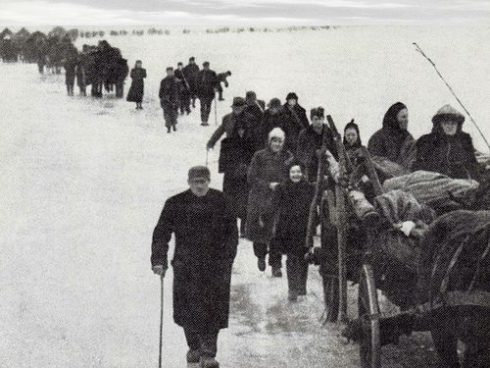


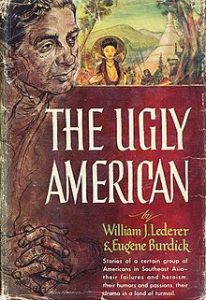 First used as the title of a 1948 photograph of an American tourist in Havana, the term “Ugly American” refers to a stereotype depicting a certain type of American citizen as exhibiting loud, arrogant, demeaning, thoughtless, ignorant, and ethnocentric behaviour mainly abroad, but also at home. The phrase entered popular culture as the title of a 1958 book by authors William Lederer and Eugene Burdick. In 1963 it was made into a film starring Marlon Brando.
 Today there are the shenanigans around the presidential election process, and his delusional and utterly baseless claim that there was massive voting fraud that will remove him from office as of January 20th. To date not one shred of evidence has been presented regarding the alleged voter fraud, and we’re looking at a situation so absurd that is making the US the laughing stock of the world. The worst of it is that the majority of Republicans voters – including state legislators, senators and the like – continue to support him in this efforts to get the election results overturned due to fraud, and going as far as to urge his supporters to send him money to help fund his fruitless attempts to overturn the election.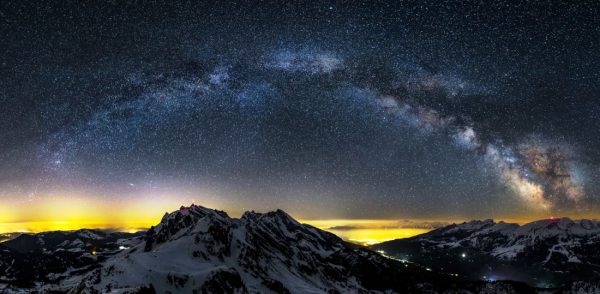

 Lost Planet