Before The Law

Franz Kafka’s Before the Law is  a deliciously ambiguous parable that is part of his 1925 novel  The Trial –  about a man from the country who goes to the king’s castle in order to gain entry before the Law.  (Kafka doesn’t explain  what he means by “the Law” – and there is little consensus on this point – but I take it to mean “the Law” as in the authority as to why things must be as they are, and in this context the King would be the ultimate authority here …)

And so he is granted permission to appear for the Law, and is led to a gate that leads to it. While the gate appears to be open, there is a gatekeeper preventing him entry and who tells him that he cannot grant him entry at the moment. The gatekeeper gives him a stool and allows him to sit down by the side of the gate.

There he waits for days, weeks, then months, all the while asking and negotiating with the gatekeeper to let him through. And although the gatekeeper continues to suggest that entry continues to be a possibility – but not just yet – eventually years go by and he ends up waiting his entire life, to no avail, never gaining entry.

Then, when he is about to die, he wonders why he was the only person waiting at this gate seeking entry before the Law. The gatekeeper tells him that, “Here no one else can gain entry, since this entrance was assigned only to you. I’m going now to close this gate”.

Kafka has the unique gift of being able to capture a critical insight into the larger human condition and weave it with great literary skill into an allegory that gives it away – but not quite. As a result, we can’t always be sure of what aspect of our lives he is writing about. Countless interpretations have been provided by those who have studied Kafka’s writings over the years, intrigued by his efforts to challenge us beyond the usual boundaries of our thinking about the world and the role we play within it.

What I believe what he wrote about here is, once again, his own acute experience of being in the world without an apparent reason, and feeling compelled to make the assumption that there has to be an aspect of our existence that provides the justification for it.  And while this reason may be staring us directly in the face from the very day that we were  brought into this world, how will we ever gain access to  it?

And so it appears that – while having evolved towards the capacity of being able to consider a reason for being, as in the question “I want to know why I am here, and for what purpose?” – being allowed to confront this question is no guarantee that you will be able to get it answered even if you are willing to dedicate a lifetime to it! At the same time, this is very much an individual question, in the sense that it is meaningful only for those who feel the need to pursue the answer for it.
The Human Body is Largely not Human

This was a headline in the Scientist of June 13, 2012. The corresponding article by Ed Young based on The Human Microbiome Project Consortium, Structure, function and diversity of the healthy human microbiome (Nature, 486: 207-214, 2012) went on as follows:

The human body is largely not human. It contains trillions of microbes that outnumber our own cells 10 to 1, affecting our health and behavior. Now, an international consortium of around 200 scientists has mapped this diverse microbial community at an unprecedented level of detail, and shown just how much it varies from person to person.

Presumably, the main surprise was how these massive bug populations vary in makeup between individuals, while by and large fulfilling the same tasks for each person:

In cataloguing the healthy human microbiome, the HMP (Human Microbiome Project) has already yielded some surprises. For example, although each body part is characterised by some signature microbial groups, no species was universally present across every volunteer …

For me – if these observations shows us anything – it is the incredible creativity within the evolutionary process to make things work at the living organism level, as well as the symbiotic nature of life, i.e., no life-form is independent from some other form of life.

And as well as we might be able to catalog life by means of discerning distinct or discrete entities, in the end all life is as one and the living entity that is our planet Earth.

Creatures Made Of Stardust

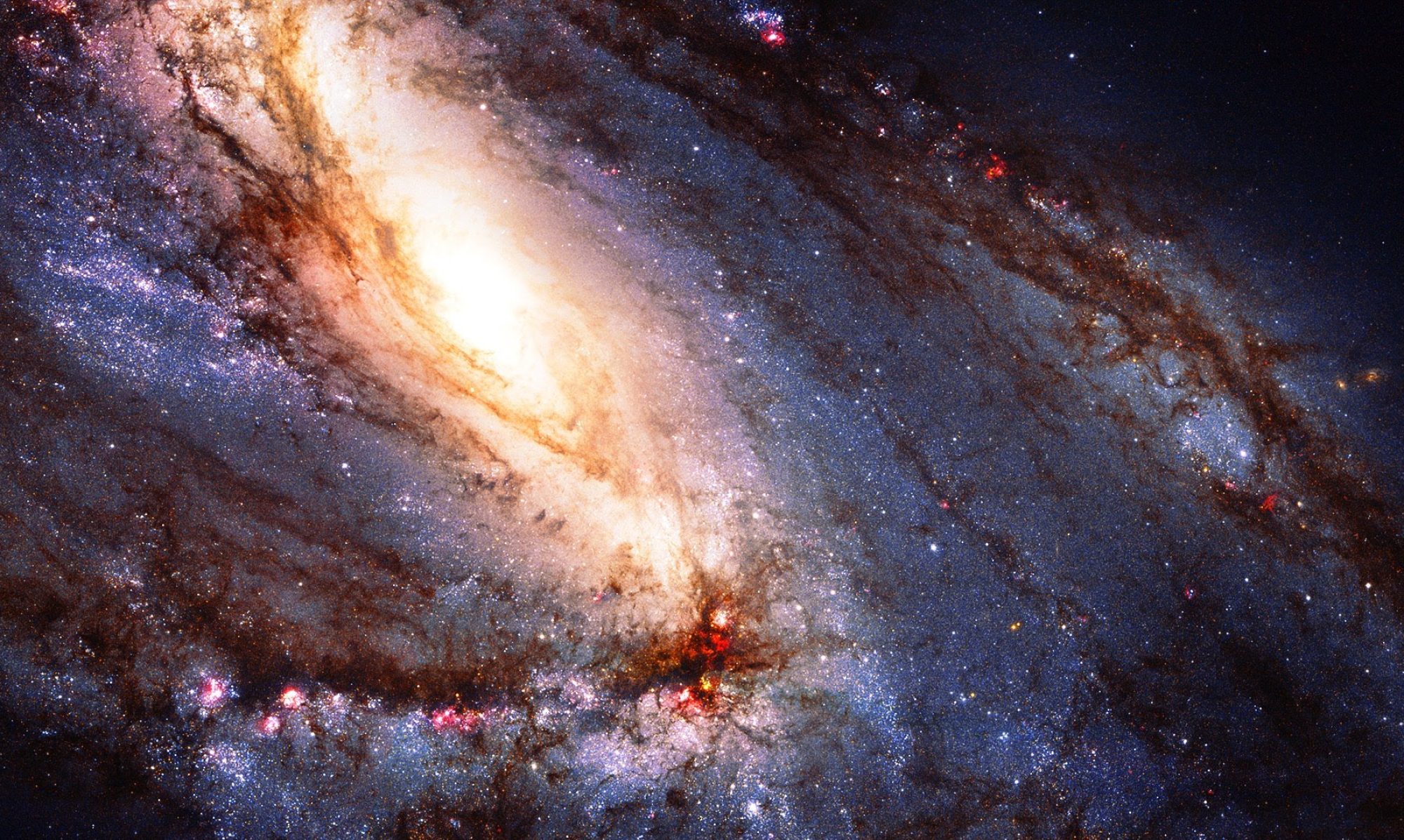
This realization strikes me every so often, and continues to fill me with awe: as this is what we are in the larger scale of things, in addition to being a creature made of flesh and blood here on earth! You just have to step back a bit to realize this, but when I look up to see the stars at night, I know we are made from the same magical stuff , and that we are related – In fact, these stars are our ancestors!

This also tells me that I relate to them not only as just another instance of cosmic being, but also as an instance of cosmic evolution the purpose of which is not yet understood.

But  how do you reconcile the existence of the most distant star with our own existence, when we’re essentially made of the same stuff – stardust – yet cannot begin to explain why either exists in the first place?

Which brings me once again to my favorite subject: where is evolution taking us? Already, from stellar dust to the present day human being – we have been on quite a journey!

Are we there yet?  I don’t think so … because we will know when we get there.  My worry is, we have so much further to go on the evolutionary plane,  we will get lost a million times before we will have even an inkling in which direction we should be heading.  In the meantime, we appear to be little more than a pathetic collection of lost souls as evidenced by the content of the world news media every day.

Every Time a Child is Born

Every time a child is born the human race gets another chance to discover some aspect of existence that goes beyond the needs of basic survival and is part of the larger context of which we are an intricate part but at the present time is entirely unknown to us.

That is to say – this context stares us directly in the face but we are unable to recognize it because we are looking at it from the outside in, as opposed to from the inside out.

It would be like looking at yourself in a mirror and assuming that this – the reflection – is who or what you are, as opposed to realizing that you are much more than that, and that your true substance lies within you and is waiting to be discovered by you.

Creatures of Flesh and Blood

The Human Body
The Human Body

So, yes, that is what we are, basically – but am I alone in thinking that this is little more than arrangement that happens to work for the moment, insofar this appears to be a somewhat hastily coddled together assembly of organs and bodily functions designed to last only for a period of time after which it will gradually disintegrate and plow itself back into the fertile ground that it originated from – a clear case of built-in obsolescence, if you ask me – but not after having had an opportunity to replicate itself. And what a clever way to ensure successive iterations of the human creature will have an opportunity to evolve as necessary in response to the ever changing conditions on mother earth.

Looking at the human body in detail, one has to be impressed at the incredible complexity of this arrangement, yet at the same time get a sense of looking at an ad hoc composition of sorts to make things work – or: how to do things the hard way, and all this to accomplish what? The capacity for conscious, reflective thought: I think, therefore I am – but for what reason?

And if anything should come to mind about this, wouldn’t it be the tremendous evolutionary pressure behind the event of  bringing us about,  as well as for us to justify the incredible creative effort that has gone into this process? I think so, but given the history of the human race to date, it might well take us countless millennia to make something of it – whatever that might look like. I have no idea.

The Human Experience is a Cosmic Experience

In an earlier post I made the bold and seemingly outrageous statement that “… it will become apparent to us that our true (human) significance and destiny are entirely tied up with the meaning and purpose of the universe “, and I promised to get back to that point to see if I could actually make some sense of that idea. So here goes at least some of it.

The first point I would like to make is that it is unimaginable to me that we see the meaning of the event of ourselves as something over and above the event of the cosmos.  As such, the cosmos is intrinsic to our being, and vice versa – we cannot be separated.

It follows too that – while it may have taken the world some time to bring us on to the scene – we have always been here, in principle, from the very start, as a potential event that was eventually realized as an expression in physical matter.

Secondly, the incidence of our physical existence is not a function of when, where or how, but of why we are here. I know this notion flies in the face of those who believe that everything that exists beyond the most elementary particle of matter is strictly a function of the random action of such particles, with no rhyme or reason in mind – other than of course the seemingly innate ability of matter to organize themselves into progressively more organized structures which – in its most complex formation – are able to exhibit life, prescience and consciousness as new properties not seen before. This is of course a bit of a problem for the random motion folks who’s fear of metaphysics – the “why?” beyond the mere matter of cause and effect  – must be a product of random thoughts as opposed some kind of structured logical thinking.

I think that the reason why we are here is the same reason as to why the world is here – or, for that matter – why there is anything here at all. Well, at least it means we have only one why to worry about …

It is easy to be intimidated by the sheer scope of the physical universe, it age and its size, but as incomprehensible as that may be  – it would be wrong to attach a significance to that beyond the fact that it simply is what it is. Its true meaning will be completely independent from and over and above its physical attributes, in the sense that it will be larger than the sum of its parts.

This makes our experience of the physical aspects of our existence less relevant, and that beyond the point of being able to survive them, we can  – to a certain degree – take them for granted, i.e., we wouldn’t be what, how and where we are without them.

Thus, what we will conclude about ourselves is not going to be strictly a function of our physical interaction with the world, but what we discover about ourselves as we interact with our environment and, more importantly, with each other, i.e.,  what we mean to each other, how we treat each other, or are able to work together towards common goals, and how we arrive at such goals. And – ultimately – from what we want from life in terms of accomplishments during the short time that we are here as members of the human species, as well as what our history will show us about ourselves as a species.

The Gospel According to Teflon Tony

I have been amused – somewhat – by the recent encounter between former British Prime Minister Tony Blair, and a frequent writer on atheism, Christopher Hitchens, on the resolution: “Be It Resolved that Religion is a Force for Good in the World.” Part of the Munk Debates, it took placed on Friday, November 26th at Roy Thomson Hall in Toronto.

I heard some of it on CBC the other day, and enough of it to feel comfortable with my view that Blair’s position is a sham, while befitting him as well as any of his previous untenable positions similarly devoid of true substance during his life as a politician, but nevertheless staunchly defended by him. Well, there is his view on the invasion of Iraq – and repeated consistently right up to the present moment, in that the invasion was “absolutely the right thing to do”, etc.

I must admit, not having a particular favorable view of Blair as a result of his political life – slick, if not oily, are the words that come to my mind – I am immediately suspicious of what he says, and why he would say them. Now knowing that his earnings since leaving Downing Street and hitting the lecture circuit are calculated to have topped £12 million, and in 2008 that figure represented more than six times his previous lifetime income, it is clear that his most outstanding skill is to speak convincingly about matters he is absolutely wrong about while claiming them to be absolutely true, and getting lots of money for it. In particular, his always somewhat evangelical speaking style has suited him well – and especially now, when he is trying to claim that religion isn’t the scourge that some of us make it out to be, and that it is a force of good in the world.

Christopher Hitchens does his usual good job of dispelling the metaphysical fog around religion, and exposing it for what it really is: an irrational state of mind too often met with deadly consequences, particularly between those who have competing versions of it. And as history has shown to those who are free to see this for themselves: the human race would be better of without it. This, of course, is a view to which I wholeheartedly subscribe.

Blair, on the other hand, is grasping at straws while trying keep his head above the usual quagmire of religious conundrums. He claims that, while religion has done bad things, such acts – atrocities, etc. – have been committed by non-religious folks as well, and can therefore not be blamed on religion exclusively – (Hitchens doesn’t claim that, BTW) – but that in many instances people have been driven or inspired to do good things because of their religious beliefs. Therefore “Religion is a Force for Good in the World”, according to Blair. Hitchens then goes on to show that people have done good and noble things without being religious – therefore, you can’t be sure that it when good and noble acts are committed they were part of a sense of common humanity that people were tapped into.

So, the bottom line for me would be the fact that while we would experience good acts and bad acts with and without religion, doing away with religion would remove an historically significant source of death and destruction in the world. And as I have claimed a number of times in earlier posts, one might claim that these kinds of actions have nothing to do with the religious beliefs themselves – and that they are misused when wielded as weapons of murder and destruction. No – it is precisely the unsubstantiated and irrational nature of these beliefs that allows them to be used in this manner. When you think you have the creator and eternity on your side – all your actions are justified; you cannot be wrong! Until we shake off the influence of these dangerous beliefs, our species will continue to be murdered for them.

Religion is an insult to human dignity. With or without it you would have good people doing good things and evil people doing evil things. But for good people to do evil things, that takes religion. (Steven Weinberg, 1999)

Man is the Future of Man

The idea that – in the absence of God or a creator – we will be the exclusive authors of our own fate was a favorite topic for existentialist philosopher Jean-Paul Sartre (1905-1980). Quoting fellow author Francis Ponge in saying that “Man is the future of man” –  that this is absolutely true so long as you don’t believe there is a God out there who has already a future laid out for us,  and he knows exactly what that is, for then it would no longer even be a future.

That is what I mean when I say that man is condemned to be free. Condemned, because he did not create himself, yet is nevertheless at liberty, and from the moment that he is thrown into this world he is responsible for everything that he does. (Existentialism is a Humanism, by Jean-Paul Sartre, 1945)

You might want to question Sartre’s use of the word “condemned” here – because of its strong negative intent, as well as the sense of melodrama that it would seem to convey. But, presumably,  that is exactly what he had in mind.

Instead,  he might have said that –  contrary to all other creatures on earth that do not have a choice in the matter –  we have been given the freedom to determine our own destiny.

And surely, that has to be a preferable state of being in spite of the daunting challenge that this presents us with. This would include not being paralyzed  by the weight of the obligations that follows from this predicament;  something we can run – but not hide from.

Directly or indirectly, we will be confronted by this challenge at every decision we make on behalf of ourselves, and – by extension – on behalf of anyone else in this world.

Why Is There Anything Here At All?

For anyone who might have stumbled across this blog and stayed long enough to read some of it, they may have noticed that there appear to be a number of reoccurring themes in circulation throughout much of it.

And that is absolutely true.  I need to revisit these themes or premises on an ongoing basis; first of all, to ensure I am not straying from what I believe is absolutely true and fundamental about being a human being in this world.  Let me share what is for me most fundamental one of all, and while this theme underpins just about all my thinking for about as long as I can remember,  it was not until I read Franz Kafka (1883-1924) that I came across the perfect passage to give expression to it:

I am standing on the platform of the tram and I am entirely uncertain as to my place in this world, in this town, in my family. Not even approximately could I state what claims I might justifiably advance in any direction. I am quite unable to defend the fact that I am standing on this platform, holding this strap, letting myself be carried along by this tram, and that people are getting out of the tram’s way or walking along quietly or pausing in front of the shop windows. Not that anyone asks me to, but that is immaterial. (Franz Kafka – from The Passenger – 1908)

In short, we human beings have absolutely no idea why we are here or what we are doing here. We are the first and only creature on this planet that is actually capable of approaching the notion of “why”,  as in – “Why are we here at all?” – although very few actually take the time to consider it a worthwhile question.  Yet for me, this question should permeate every living breath we take and underscore every decision we make, in the sense that whatever the answer might be, it ought to figure prominently in the course of all human endeavor.

But this is not the case today as we are either not ready or willing to accept the responsibility that comes with the attempt to answer that question-  since nothing else is going to do that for us!  The critical question here is if we have the courage to take this on, since to decide  for oneself is to decide for everyone else also – are we not all in this together?- and so decide the very future of the human race.

In fact, it is my belief that being able to ask “why” and attempting to provide and answer to it  is in fact the sole reason why we are here as we are, and that all of evolution has added up to this point. And  this is not just about us as a species but about  all of the cosmos as we represent every particle of it  in our bodies when we are finally in a position to ask “Why?” – as in – “Why is there anything here at all?”

No More Crucifixes In Classrooms In Italy

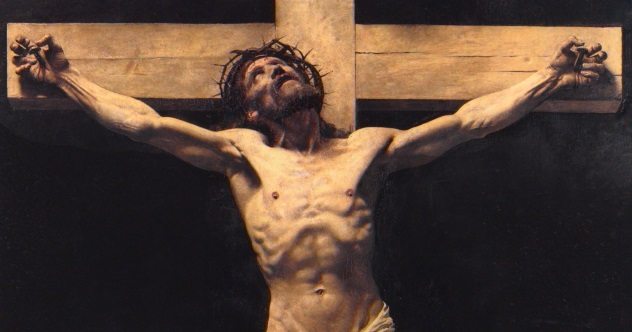
crucifixion image
The Crucifixion of Christ

The European Court of Human Rights has ruled against the use of crucifixes in classrooms in Italy. It said the practice violated the right of parents to educate their children as they saw fit, and ran counter to the child’s right to freedom of religion.

As expected, the Vatican objected vigorously – no doubt seeing this as an encroachment on their corporate mandate  – if not very lucrative business that continues to milk its customers with the promise they are able to save their sinful souls from being condemned and dragged off to hell. ( Where is that place, anyway?)

A Vatican spokesman told Italian TV: The crucifix has always been a sign of God’s love, unity and hospitality to all humanity.

Well, with respect to that particular statement – and in particular the reference to God’s love –  one might well want to take a good look at a crucifix.  It seems to me it seems to depict the horrible suffering and barbaric death of an individual nailed to a wooden cross.

How could anything so cruel and abhorrent be central to any religion where the subject in question is supposed to be the son of an all powerful deity, and “a loving God”? Obviously his love does no extend to his own son since what father would have allowed his own son to suffer such a savage and excruciatingly painful death while supposedly having the power to stop it at any time?

And so the real question is: how could God have allowed this to happen?  The answer is  – as Nietzsche put it once  ” downright terrifying in it’s absurdity: God gave his Son for the forgiveness of sins, as a sacrifice.  The guilt sacrifice, and that in its most repulsive and barbaric form, the sacrifice of the innocent man for the sins the guilty! What atrocious paganism!”

I guess for some folks the Dark Ages clearly aren’t over yet as they continue put their faith in this bizarre tale of human sacrifice and the baroque and antiquated institution that perpetuates this kind of barbaric pagan mythology.