A Play Without A Script

Shakespeare once wrote:

All the world’s a stage,
And all the men and women merely players;

Sometimes I think that we humans behave like actors in a self-directed  play that seemed to have lost track of its script,  and that we  make it up as we go along since that seems to be the only option.

In doing so we  appear to be driven to act and do as we want, but essentially without much of a clue to justify why we are going into the direction we appear to be heading.

For instance, being even a cursory student of human history will show that not acting in the best interest of our species appears to be the hallmark of human interaction over the centuries. The slaughter of millions of our own kinds features prominently in the matter settling disputes among ourselves that could have been resolved peacefully with a modicum of rationality and goodwill and to the benefit of everyone involved.

Moreover, it  has become especially clear that we are most definitely not acting in our own best interest when much of what we do today has had a detrimental effect on the very environment that sustains us as we continue to  rape and pillage the earth’s biosphere, including dumping our garbage in its oceans and poisoning its atmosphere.  Indications are that if we continue the way we are acting now we might well be heading towards our own extinction.

I would like to think that we’re not headed in that direction, but it could be argued that being confronted with one’s own extinction is a necessary step in our development as a species that must know its limitations before it will be able to employ its full potential as a force of creative energy in the universe.

In the meantime this question remains: does the world – and all that it encompasses – have to be about something beyond the mere act of experiencing it?  Couldn’t the world simply exist for its  own sake – and that the very matter of experiencing it through our interactions with it is all that it is capable of delivering – suggesting that to search for a meaning beyond it would be an exercise in futility.

I find that difficult to accept, and not so much for the experience of positive events  that make us happy and  seem to provide the justification for it,  but more because there appears to be  so much more tragedy and despair in this world, through hunger, natural disasters and senseless wars and affecting mainly those who are least able to defend themselves from these misfortunes.  Where is the justification for that?  That doesn’t seem right to me – and where does that sense of right and wrong originate from, if not from the very reason why we are here in the first place? That suggest there is more to life  beyond merely living it, i.e., that there is in fact a script in play and it is up to us to uncover it. This as opposed to merely accepting the status quo and the soul-destroying  inevitability of it.

Can Something Come From Nothing?

For some folks the question whether something can come from nothing might appear meaningful in discussions around the creation of the world. For instance,  how did the world come into being, and what was there before it came into being: something else, or was there nothing.

In trying to make sense of such questions  it is easy to get caught up in language games. Words pushing  words – without actually being able to assert anything either concrete or definitive. For instance, if something is not nothing, and nothing is not something – then, presumably, these terms are mutually exclusive, and it would be difficult to use either term, “something” or “nothing”, in some kind of meaningful relationship beyond stating that the one excludes the other on purely logical grounds.

One question that appears meaningful to me in this context is the one that asks: is the concept of non-existence even available to us?  I guess that all depends on how existence is defined in terms of necessary and sufficient conditions or properties – e.g., physical objects require spatial extension – a size and a shape  that allows them to be detectable  as  physical objects – be they solid or in wave form, and if they don’t have these properties we can say that they don’t exist. So – in that sense -the “non-existence”of physical objects would be available to us,

Then there are all sorts of other things that can be said to exists that clearly aren’t physical objects. I’m thinking of things such as mental objects. Unlike objects having spatial extension, they can nevertheless be said to exist in our minds, when we refer to them in terms of thoughts and ideas, or feelings and emotions. While encountering them is different from dealing with physical objects, they are in many ways just as real as physical objects, and accepting their reality is an integral part of our ability to function within the everyday world of our experiences.

Leaving the reality of mental objects off the table for a moment – we are here to consider the possibility or concept of absolutely nothing existing before the world as we know it came in to being.  Clearly, this is a completely nonsensical notion, and either postulating a God-like creator or Mr. Hawking’s singularity as a source of creation will not save the day as both are equally lacking in support  unless – for the latter – you want to suspend the logic of the space-time continuum as a theoretical concept that accounts for everything that can be found in it, space, time, energy and matter except for it being there in the first place.  This is the problem of being a closed system – you cannot get outside of it, to consider it either existing or not.

It seems to me that the answer is no. Nothing – nothing existing – is not available to us as a concept except, perhaps, in some abstract sense, e.g., in terms of the the absence of existence,  as if existence can be reduced to one of more properties that must be present for something to exist, eg., spatial extension,  and having a size and shape where we can approach the concept of non-existence, which – of course – is really a contradiction of terms, and by pointing this out, we have come as close to it as appears feasible, given the rules of language that are there to keep things intelligible to the extent that some kind of discussion it about appears possible. And that should not be a function of the fact that – when we say something like “in the beginning there was nothing” – we have actually implied the existence of nothing at some time or another, as that would clearly be a function of grammar as opposed to making an ontological statement. Clearly, our language is misleading us here.

Mind Over Matter

In a recent  Scientific American article  dated April 19  titled  “Should Quantum Anomalies Make Us Rethink Reality?”  Bernardo Kastrup  muses over the fact that inexplicable lab results may be telling us we’re on the cusp of a new scientific paradigm.

He is writing about the nature of reality, and how it is currently perceived in terms our conceptual understanding, and how the latter predetermines our ongoing observation of the natural  world, to the point that the notion of being able to look at the world objectively – something that should be at the core of all scientific inquiry – may no longer make sense. When I read this,  the first thing that came to mind was something that Nietzsche once said: There is no immaculate perception.

In this context Kastrup invokes Tomas Kuhn’s  idea of the paradigm shift – first introduced in 1962 – when it becomes necessary to start questioning the accepted model of a scientific theory or concept on the basis of an increasing number of observations that are deemed anomalous when they don’t  fit within the prevailing model. You need to read Kastrup’s complete article to see the specific anomalies he is referring to for his argument.

The Kastrup article boils down to the the distinction between mind  and matter – the experiential or mental world and  the material or physical world  – and the  need to question the belief “that nature consists of arrangements of matter/energy outside and independent of mind.”  The anomalies he cites in the article question this independence, and while the issue arises at the Quantum level of observation, the inference is that there are implications for the larger view of the nature of reality.

I am interested in the nature of the distinction between mind and matter, or, if you will, the mental realm and the physical realm. The traditional view of mind and matter is that, while our physical bodies are  part of the material  world, our conscious minds minds  are something over and above the material world, in the sense that consciousness as a phenomenon cannot be explained in terms of its underlying material complexity.  As a result a duality has been introduced which has been less than helpful in trying to understand how the mental realm and the physical realm are related.

The distinction as taken mutually exclusive led Immanuel Kant to postulate the “ding an sich” – or “thing-in-itself” – as something fundamentally unknowable as a cause behind the experiential world, and something that Schopenhauer faulted him for because it would take the concept of cause and effect beyond what it could deliver, logically, in terms being able to infer a cause from an effect.

However, instead of postulating an unknown and in fact  unknowable really behind the world, Schopenhauer himself proposed a different kind of duality, by giving the world an inside and an outside, with the outside being the objective experiential world of our knowledge, and on the inside the true nature or essence of the world. The latter is not directly knowable as object of knowledge, yet we are conscious of its presence within our bodies as something that is over and above our actions and motivations that guide our interaction with the world.

I have some sympathy for the Schopenhauer position, if only because it is a less complex view of of the world. As well, we can reconcile it to some extent within the Spinoza one substance view which holds that both the mental and physical are part of the same substance – God –  and without the  distinction between the inside and outside of matter, but suggesting instead that humans could only apprehend two attributes of this one substance, namely thought and extension.

We are left with the suggestion that there is only one way for us to be in the world, and if there is any duality to it, it is within ourselves and a function of how we see the world and are able to interact with it.  This is the duality that is implicit  in the distinction between subject and object, the observer and the observed, between the  mind and its experiential content. In the end, however, these are  false distinctions, as it is the world looking at the world, creating the illusion of separate and ontologically distinct realms – the mental realm and the physical realm – while in fact both of them are one and the same reality. The conclusion has to be that there is no other reality, thus belying the  notion that “nature consists of arrangements of matter/energy outside and independent of mind”.

Given this line of thought  I suspect that  Mr. Kastrup’s Quantum Anomalies  are features of the mind-matter / subject-object distinction, when – at the QM or subatomic level – there appear to be  limits to what can be observed seemingly  independently from the observer, when the very process of observing bleeds into the object or event  being observed  and has become a case of the mind looking back at itself when it is  no longer being able to hold on to the distinction.

The truth about man is that he is not a pure knowing subject, not a winged cherub without a material body, contemplating the world from without. For he is himself rooted in that world.  (Schopenhauer – The World as Idea)

Artificial Intelligence

Artificial Intelligence has been in the news a lot lately, mainly because more and more people at all levels of society are starting to recognize its potential, in whatever area of human activity. From a briefing paper published by the European Parliament October of 2016:

The ability of AI systems to transform vast amounts of complex, ambiguous information into insight has the potential to reveal long-held secrets and help solve some of the world’s most enduring problems. AI systems can potentially be used to help discover insights to treat disease, predict the weather, and manage the global economy. It is an undeniably powerful tool. And like all powerful tools, great care must be taken in its development and deployment. However, to reap the societal benefits of AI systems, we will first need to trust it.

What kind of trust are we referring to here? This is a very complex question. The more we let AI into our lives, the more likely we are to develop a dependency on it, and the amount we are willing to trust it will be in direct relationship to the willingness to have our lives altered by its outcomes, as the rise of AI will have no doubt a bearing on them, regardless what aspect of life we might be talking about.

It remains an open question, however, if will we be willing  to trust AI when it pushes us into a direction that at first glance appears to be not in our best interest, if only because we might not fully understand the reasons for an AI derived conclusion. From an article in Bloomberg Businessweek titled Artificial Intelligence Has Some Explaining to Do by Jeremy Kahn:

This is what gives AI much of its power: It can discover connections in the data that would be more complicated or nuanced than a human would find. But this complexity also means that the reason the software reaches any particular conclusion is often largely opaque, even to its own creators.

Nevertheless, I believe AI will continue to gain our trust gradually and take an ever greater role in our daily lives. The technology will seduce us with the ability to seemingly give us everything we ask for, leading to our ever greater dependency on it, and leading us to believe that we can take its credibility for granted, and that would be a dangerous thing. At bottom, AI is a machine, and a calculator working with an algorithm (a set of rules governing a deductive process) and any data derived from it is subject to the age old dictum “garbage in – garbage out”.  To safeguard the integrity of a process is one thing, safeguarding the integrity of the data it is working on is a whole different matter.

In addition, we need to worry about that has been referred to as “machine learning”, the ability of an AI machine to “improve” on its own programming in order to overcome its deductive limitations, e.g., allow it to simulate an inductive or inferential process, to make the process seem more “human”, or as smart, if not smarter.   I’m thinking about situations where AI is faced with incompatible observations – or when there is just not enough data – in which case it might be allowed to arrive at some kind of “best guess” scenario by either modifying one of its procedural rules or by introducing some other random factor to settle the issue in order to arrive at a “reasoned” conclusion.

The fact remains that a mechanical analysis cannot find its way out of conflicting data by means of a “gut” feeling, i.e., the appeal to instinct or intuition, or the application of other unique human qualities such as empathy and compassion since they cannot be translated into machine language. At most, a machine might be able to simulate them to an extent based on what it has “learned” about these qualities from the observation of human behavior in a variety of scenarios. And if AI can only simulate human reasoning, that is not the same as replacing it, as for that it would have to plugged into the the very source of what makes us human.,

While this may be good enough for some,  such as the followers of the late  behaviourist psychologist B.F Skinner – who hypothesize that human behaviour is strictly a function of environmental factors, and not driven by thoughts or emotions – I think they are definitely out to lunch on that front.  There is a logical gap between what is as observed as human behaviour and that which motivates it from within, and what it means to be human is the only thing that fits in that space and is able to connect the two,  i.e., the difference between what is seen in the mirror and that which causes the reflection.

The upshot is that the essence of what it means to be human cannot be quantified and reduced to a set of rules governing machine language, and that AI can never be more than an augmentation to human intelligence.  This so we will continue to strive for efficacy over efficiency, to ensure we will choose quality over quantity, and that our continuing development as a species will always be a reflection of that,  uncertain as our future seems at the moment.

Evolution in Transition

the -human-brain

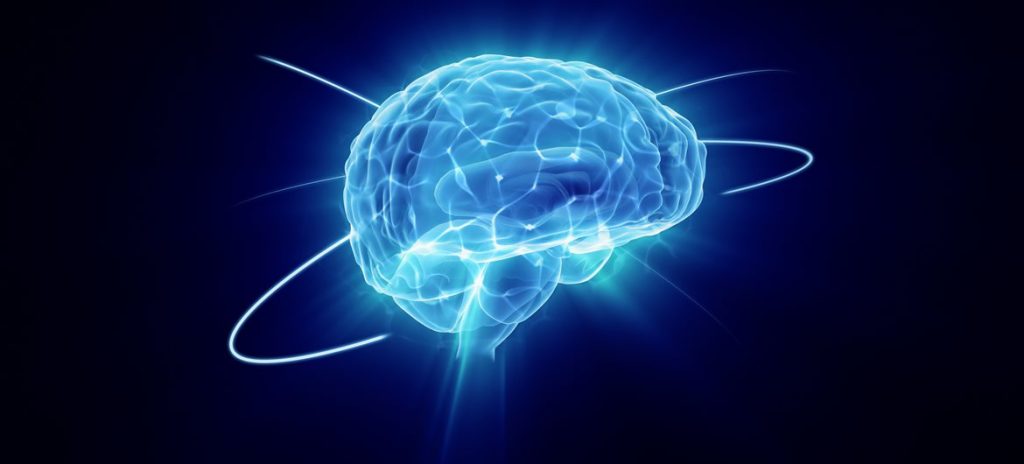
Neuroscientists have described the human brain as the most complex biological structure in the known universe, containing hundreds of billions of cells, and trillions of connections controlling every thought, feeling, movement and function of our bodies.

If this proves anything, it would be the fact that – outside of explanations invoking religious mythology – the evolution of matter was able to bring something as intricate and organizationally complex as the human brain about through a teleological process that appears to be internal to it.

And when I say “internal” I mean this in the sense that the drive to evolve is a property of the material universe that will manifest itself in the presence of conditions that would allow for it.

As such evolution utilizes the seemingly randomness of cosmic events to arrive at ever higher levels of organizational complexity through a process of trial and error to find the required material stability  and biological survivability that would allow it to achieve its desired objective, whatever that might be.

In that context I see the arrival of the human species as the introduction of a critical transitional period and the next phase of cosmic evolution that pushes  life beyond the mere acts of  survival and propagation, and  allowing it to venture further into the realm of consciousness  and expanding its content in terms of knowledge and ideas.

Homo Sapiens straddles the Past and the Future. What I am referring to here is our species’ precarious status as a creature that has one leg still firmly in the animal kingdom – our past – while the other is in a future we know little or anything about. And so we are acting accordingly, with no clear idea of what is expected of us, making us inherently unpredictable if not an unstable life form at best, as evidenced by its self-destructive tendencies, including suicide, homicide,  genocide, and undermining  its own life-sustaining environment.

But there is one type of human activity where we have clearly gone beyond our animal traits and can claim some considerable accomplishments since our arrival as a brand new species:  the areas of science and technology.  Our successes on this front may well be proof that our relatively recent arrival on the cosmic scene constitutes the transition of matter’s evolutionary prowess from a strictly internal process to an external one as we apply our sciences and technologies to just about all aspects of our material existence.

We can point to the ingenuity of our species to manipulate and restructure  aspects of our material reality  into ever increasing levels of organizational complexity, such that – through us – the cosmos, nature, life – has achieved a quantum leap in  creative productivity and is now able to push its evolutionary objectives – whatever they may be – over significantly shorter time frames. In this sense, human beings function as nature’s evolutionary agents and enablers, pushing these objectives along an ever increasing pace for no other reason than that it seems to be the natural thing to do …

The World is Larger than the Sum of its Parts

As I stated up front – in so many words – I’m writing this primarily for myself in the attempt to figure out what the world is all about beyond the twists and turns that life can throw our way, and beyond the  typical humdrum of daily tasks that – while not necessarily meaningless in themselves –  tend to obscure the larger existential questions, and so, by extension, what life might conceivably mean to everyone else.

I know that sounds rather presumptuous, but given that each of us is just one of many – and, when it comes down to it, not all that different from each other when it comes to what we bring to the table to take on the challenges of everyday life. That is to say, how different can we be in our overall approach to life, when as members of one species we are primarily driven by our shared biology, and the differences between us are no more than varieties on a theme, i.e., they are differences of degree, and not of kind.

Beyond that, there are the circumstances of our birth such as the place and social-economic environment that we grow up in including our culture –  that help shape us into the individuals that we are today.  That this will leave each of us as distinct and unique individuals with needs and desires and expectations from life possibly as different between two people as day and night is undoubtedly true, yet at the same time the differences again are a matter of degree, and not of kind.

And if I can shed some light on the meaning and purpose of life for myself by sharing my thoughts about it, perhaps this might help someone else to start thinking about what life means to them, and add some definition or context or value to their outlook on life in a world that, in my humble opinion,  is going down the wrong path in terms of pursuing the best possible future for our species.  This is not to say that I think the human race is irrevocably going to hell in a handcart, although there are many among us who appear to be doing their best to make this happen.

I’m thinking of the massive environmental damage being inflicted on our precious planet on a daily basis, and beyond that: who can begin to enumerate the number and variety of social  economic and health issues ranging from poverty to homelessness to starvation across the globe? Just this week the NY Times in an article titled The U.S. Can No Longer Hide From Its Deep Poverty Problem showed a tally of those living on $4 a day or less in selected developed countries, and it included 5.3 million people living in the US.  I don’t necessarily want to pick on the US, but with the highest GDP in the world you wonder how this can even be the case when a country is deemed the wealthiest country in the world.

Then there is the disturbing statistic that half of the world’s wealth belongs to the top 1%, while the top 10% of adults hold 85%, and the bottom 90% hold the remaining 15% of the world’s total wealth.  If you believe that these discrepancies  are simply a function of some folks working harder and smarter than others, and reaping the benefit of it, then bless you, but you may have to learn something about how some people, organizations and certain governments operate in order to produce the incredible wealth that they have accumulated.

So against these things  – and with the brazen assumption that there is a lot more going on in the world than meets the eye –  I am introducing “the larger context”,  which, I postulate, naively as it may be,  is the true meaning  or intent behind the world. It is the reason for it being there in the first place,  including our very own presence in it, and something I hope we will  be able to get a glimpse of once we look  beyond the nonsensical content of religious dogma  (of whatever flavor) and the unsupported and hence unintelligible notion that someone or something else is in charge of our world beyond ourselves.

Why do I think there is ” a larger context” or  “true intent” to life that we are currently not aware of?  Only because we are the offspring of the greater cosmos, and as such contain its “DNA” within every particle of our being.  We are in fact one entity! As a result, what motivates it likely motivates us, either directly or indirectly,  and then at  a level where we would be capable of initiating some course of inspired action commensurate with the evolutionary achievement that we currently represent. However, at the moment one might be hard pressed to think much of that,  given the aforementioned sorrowful status of the world today, and that would include the questionable quality of  leadership of some of the most powerful nations in the world at the moment..

But it is without question that our evolutionary path shows that the cosmos is on a mission, and to date we  appear to be that mission; it is just that we don’t yet know what that mission is about. But it would be unreasonable to think that this is a multi-billion year mission of self-annihilation, given the kludge that we are currently making of it, although I hate to think that we are  doomed to end up that way because we haven’t evolved enough in the grey matter department to be able to take care of it.

And so my hope is that by  gaining even an inkling of  understanding of the world’s greater purpose, on the assumption there is one  – oh, and what an assumption – we might eventually be able to abandon the current seemingly runaway path of self-destruction by rising to the occasion and take ownership of our destiny by determining as best we can what our role should be in this fantastic cosmic adventure that we have only  just woken up in.  Evolution is providing us with some pointers here, but we need to be able to understand a lot more of what has moved us along its path to the present moment  before we can start making more  sense of it.

In the end, much of this is about not being able to see the forest for the trees, or, for that matter,  the universe for the stars, when, usually, the whole is larger than the sum of its parts –  and so is the world; we’re just not seeing it at the moment, and my greatest fear is that we might never be able to.
The Substance of the World

Baruch Spinoza was a Dutch philosopher of Portuguese-Jewish extraction who lived from 1632-1677. Spinoza  strongly rejected the notion of a providential God – the God of Abraham Isaac and Jacob, in complete control of all things; he claims that the Law was neither literally given by God nor any longer binding on Jews.  Not surprisingly, this conception of God got him thrown out of the Amsterdam orthodox Jewish community for good when they excommunicated him in 1656.

When Spinoza writes about God, it is not in the anthropomorphic sense of a God as usually portrayed by the Christian-Judaeo or Muslim varieties of religious scripture, i.e., very much like a person with human-like traits,  an authoritarian or father figure perhaps.  Someone who seems to take an active and personal interest in what the creatures he created here on earth are up to.

(And, it should be noted, demonstrating a personality  featuring some of the more regrettable human traits I can think of, such as being  narrow minded, vain, jealous, as well as being vindictive and vengeful! Anyone familiar with the Old Testament will know exactly what I am referring to!)

Does this mean that Spinoza was an atheist?  Not really, since he holds that God is the one and only unique and indivisible substance that the universe is made of. There are no other substances. The view is a bit more complex than that, and involves perceiving this substance through a variety of distinct attributes – such as Thought and Extension – but not its basic premise.

It is interesting to note that Albert Einstein – also once accused of being an atheist – followed Spinoza in rejecting the  anthropological concept of God,  saying,  instead,  that he believed in “… Spinoza’s God, who reveals himself in the lawful harmony of the world”.

So the point would be that, if God is everything, and everything is God,  this will render the concept of a distinct metaphysical entity over and above the world – the great creator –  logically and semantically empty (i.e., meaningless) since it doesn’t signify anything over and above the totality of the cosmos, and the name “God” ends up being just another label for it.

In Pursuit of a Greater Good

It is difficult not to get seriously depressed by the kind of news you get today, such as reports about the absolute savagery in the ongoing civil war in Syria by survivors of a deadly attack in Khan Sheikhoun describing chemical bombs being dropped from planes, while directly contradicting the government’s version of events. But then, on occasion, you can find something at the opposite end of the spectrum that will lift your spirit and bolster your faith in people once again because it shows an astonishing degree of enlightenment in thought and action, even so since it was expressed as early as 2000 BC by the ancient Persian Zoroaster faith in a hymn from the Farvardin Yasht:

We worship this earth, we worship those heavens: we worship those good things which stand between the earth and the heavens and that are worthy of sacrifice and prayer, and are to be worshiped by the faithful man. We worship the souls of the wild beasts and the tame. We worship the souls of the holy men and women, born at any time, whose consciences struggle, or will struggle, or have struggled, for the good.

While “worship” or “faithful” or “holy” or “sacrifice” and “prayer” are typical terms as applied by the formalized, totalitarian religions as a means to keep the great unwashed under their thumb – and as much as the Zoroaster faith preached that God alone should be worshiped –  these terms can stand perfectly on their own without reference to a an imaginary deity of sorts,  i.e., God – by applying them to the way in which we pursue the truth about ourselves.

That is, we pursue these truths faithfully, for their own sake, and without coercion from anyone, and to the benefit of all mankind. And what we will find is the good inherent in all of us, and it is this truth that is “holy” and should be “worshiped” in the sense that we will put this above everything else that we treasure about life in the world.

By “sacrifice” we might well have to be less selfish than usual on occasion, in order to put the greater good ahead of ourselves in order to help others. And by “prayer” we need to do nothing more than express the hope and belief in ourselves that we are here for the right reasons, which is to realize the common good in ourselves as we rise to our full potential as human beings.

I can’t claim to have any special insight here, but it seems to me that, first of all, it makes sense to pursue the things that benefit us most as a species, and not look at sacrificing some individuals to the betterment of others as a means to advance the human race as a whole. This has to be a fundamental truth about ourselves, but sadly, the sum of human history to date shows primarily the exploitation and slaughter of the many to benefit the few.

If this proves anything all – and notwithstanding the enlightenment expressed by the ancient Zoroastrian faith –   it is that the formalized religions have been absolutely no help at all to the betterment of humanity, and in fact can be seen as the instigators – and in many cases the perpetrators – of much of the murder and mayhem that has befallen the many people of this earth for reasons that make no sense at all.

Surely we can get there without religious totalitarianism  and especially without  religions in their most virulent and primitive form and when ancient tribal laws are used in an inhumane and brutal manner. All this coercion in the name of a ‘higher” authority has nothing to do with serving an almighty god of sorts or whatever else they claim to be about.  In the end this more likely about the few having the means to control the many in everyday life, such as when women and girls are devalued to the level of cattle, to be used and abused at will because it is their duty to comply.

Life has no value  when it is so easily denigrated or even dispensed with in order to prevent dissent.  I’m referring to caning people in public, hacking off hands or stoning people to death: they are barbaric acts that have no place in a society that values the sanctity of life.   Clearly, no effort towards the greater good is happening here.

The World as Form and Function

Reality is created by observers in the universe  – John Archibald Wheeler, Theoretical Physicist (1911-2008)

Today I am revisiting the views held by Schopenhauer in The World as Will and Idea (1818), and his rejection of naïve realism, or what has been called scientific materialism, that the things we observe in the world are what they appear to be, absolutely, and forever, and not in anyway all or part a function of human perception and experience in the sense that they can be modified based by the very act of perceiving or experiencing them

Thus,  scientific materialism would reject the distinction between how things are independently from human observation versus how they are perceived by our perceptual and conceptual processes.  At the same time,  a scientific materialist would have to accept the the distinction between subject and object, i.e., the distinction between the observer and the thing being observed.

But if we  have no other means of accessing the world other than perceiving or experiencing,  is it in fact a meaningful exercise to even refer to it as a matter of some significance? To all intents and purposes, if we never refer to it again, what would be lost in our discussions about the nature of the world?

To deal with this alleged problem the German philosopher Immanuel Kant  (1724-1804)  introduced the “thing-in-itself”, or “ding ansich” in German – to suggest that the true nature of  the world is fundamentally unknowable as we can only grasp the nature of things indirectly through perceiving them as objects in relation to ourselves – how we have experienced them.  I believe Prof. Kant may have gone too far, in the sense that is is contradictory to say that something is fundamentally unknowable as to make such an assertion implies some knowledge about  it. Existence is not an attribute that can be asserted independently of the qualities through which it is instantiated.   In other words, the distinction serves no useful purpose, when at most the existence of the “ding ansich” might be implied as an essential element in a theory of perception. And maybe that is all what Kant had in mind.

Moving on,  it is one thing to experience the world through one’s senses – it is another thing to experience it logically, e.g., to experience such things as cause and effect, time, space and the various ways in which objects relate to us and each other. If these relationships are permanent features of the physical universe, it wouldn’t matter in what form you encountered them in your experiences, your conclusions about them would be same. But in the end, it would be less important what the world looks like versus what can be abstracted from it simply from interacting with it. And this would lead me to say that the nature of the world is about function (a method that relates an objective to its instantiation) –  and not form (the manifestation of matter and energy), the latter being  incidental to the process, and a means to an end in terms of being the medium that allows the function to be enabled or expressed.

This is an important view for me and consistent with my argument that we should perhaps be less preoccupied with the makeup of the material  universe, by poking into the furthest and oldest region of the universe, looking for clues of sorts and so on. Instead, we should look look more closely at what the logical or functional nature of the various cosmic events appear to be about,  such as the manifestation of a directional and seemingly intrinsic teleological process leading to ever higher degrees of material complexity and organization and where this particular process would seem to want to take us to.

And so the question should be: What has been accomplished to date by the process of material evolution?  As such, the cosmos appears to be a  work in progress, and that is at least some concrete information we have about the nature of the world as we have encountered it.

The Limits of Our World

Given that there are limitations to what we can achieve with our bodies in a physical sense – e.g., how high we can jump, or how fast we can run – it seems reasonable to think there are also limits to what we can achieve with our minds in an intellectual sense, in that these limits are determined by the unique physiology of the human brain and its ability to offer up the required level of conceptualization.

We might be comparing apples with oranges here, but the intent is to merely illustrate the fact there will likely be an upper limit to the extent that one is able to grasp a concept and run with it, so that no matter how clever one is, there are going to be limitations to our ability to think about the world and our place in it.

The ability to organize and conceptualize the data of our sensory experiences into the reality of the everyday world we must live in is critical to our ability to survive and thrive in it. And that isn’t necessarily a uniquely human ability – and likely exists to some extent within other creatures in the world depending on their level of sentiency.

But only in humans is this capacity developed to the point that it can be articulated in terms of shared ideas, and be the subject of continuing discussion and analysis. Now that we can do this and chimps – our nearest cousins in the animal kingdom – cannot, is not just a function of the ability to use one’s brain more effectively, but also the fact that the human cerebral cortex, the brain’s most highly evolved region, is three times larger in humans than in chimps. The latter simply don’t have the hardware for this – to put this in very simple terms.

And so it might be necessary for our species to receive substantial increase in the grey matter department before we (or the species that supersedes us)  will be able to reach the next level of understanding that will allow us to grasp our place in the world more completely, as currently we don’t seem to have much of  a clue!

I’m presenting this in the context of our ability to understand those aspects of the world that would have to be larger than us, in the sense that they have gone into the making of us – and underpin the evolutionary push that brought us about. All of this on the assumption that the evolution of matter is an intrinsic, goal oriented process, and in the end not some random activity without necessarily excluding randomness as a means to an end if that would bring about the desired effect, with the understanding there is such an objective.

But insofar as we are able to look back to see how we did come about in an evolutionary sense – and attempt to deduce some underlying principles from this – we can’t look back quite far enough to see what started it all because we can’t conceptualize an earlier world that doesn’t have any humans in it yet without begging the question.

That is to say – we cannot undo what we have added to the world due to our own presence in it, and see it independently from ourselves. In Schopenhauer’s words, in the end it is always a human eye that looks at the world, and a human brain that must interpret the information. As such, we will always see the world from our own perspective and not on its own terms, should there in fact be such a world.  It would follow that there is no objective knowledge of the world, because all knowledge we have of it is a function of how we encountered the world from the very moment we were able to interact with it and hence always judged from the subject’s point of view.

This also means  we are no innocent bystanders with respect to being able to account for the spectacle of the world as we are experiencing it; we are necessarily implicated in its very creation when these experiences give rise to our descriptions of it. At the same time, our capacity to account for it in an intellectual or logical sense is necessarily limited by the creature we are today, and subject to the conceptual processing machinery in the grey matter department.

To summarize, it would appear that – not only can we not reach beyond our grasp physically  – neither can we do so intellectually when it comes to understanding the world we see around us in terms that are able to account for our own presence in it – as that would reach beyond the fact of our own creation as human beings, a fact that is given to us without recourse to justification.

Every man takes the limits of his own field of vision for the limits of the world. (Arthur Schopenhauer)