No More Crucifixes In Classrooms In Italy

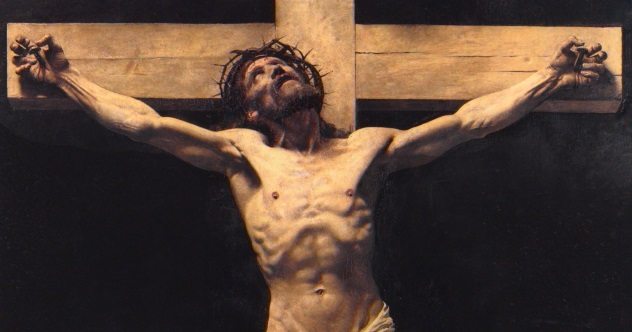
crucifixion image
The Crucifixion of Christ

The European Court of Human Rights has ruled against the use of crucifixes in classrooms in Italy. It said the practice violated the right of parents to educate their children as they saw fit, and ran counter to the child’s right to freedom of religion.

As expected, the Vatican objected vigorously – no doubt seeing this as an encroachment on their corporate mandate  – if not very lucrative business that continues to milk its customers with the promise they are able to save their sinful souls from being condemned and dragged off to hell. ( Where is that place, anyway?)

A Vatican spokesman told Italian TV: The crucifix has always been a sign of God’s love, unity and hospitality to all humanity.

Well, with respect to that particular statement – and in particular the reference to God’s love –  one might well want to take a good look at a crucifix.  It seems to me it seems to depict the horrible suffering and barbaric death of an individual nailed to a wooden cross.

How could anything so cruel and abhorrent be central to any religion where the subject in question is supposed to be the son of an all powerful deity, and “a loving God”? Obviously his love does no extend to his own son since what father would have allowed his own son to suffer such a savage and excruciatingly painful death while supposedly having the power to stop it at any time?

And so the real question is: how could God have allowed this to happen?  The answer is  – as Nietzsche put it once  ” downright terrifying in it’s absurdity: God gave his Son for the forgiveness of sins, as a sacrifice.  The guilt sacrifice, and that in its most repulsive and barbaric form, the sacrifice of the innocent man for the sins the guilty! What atrocious paganism!”

I guess for some folks the Dark Ages clearly aren’t over yet as they continue put their faith in this bizarre tale of human sacrifice and the baroque and antiquated institution that perpetuates this kind of barbaric pagan mythology.

Burkas and Other Religious Anachronisms

burka
Burka

How much of an anachronism an ancient tribal culture or religion can be in today’s world  was demonstrated recently in Amsterdam, when its Mayor Job Cohen said that women who refuse to give up wearing the burka for jobs should have unemployment benefits cut.

The view here is that – clearly –  it really isn’t fair to expect local taxpayers to support individuals financially who, because of their beliefs or lifestyles, render themselves essentially unemployable. If – in the case of the burka – an individual has been ordered (I would call it “condemned”)  by their culture or religion to walk around with a bag over their head – then the consequences of that action (such as limited employability) should be born not by the Dutch taxpayer – but by the individuals who have chosen to live that way. That position seems entirely reasonable to me.

Of course, to cut these folk’s off the government’s payroll will result in cries of discrimination by those who seem to attribute some innate value to whatever belief someone might come up with that makes them dress up that way. In addition, some will claim that this is just another move to try to ban a specific religious group.

But such an attack clearly misses the point being made here, as this is not about banning religious groups or what they do to themselves to give expression to it. This is about restricting your employability while being on government financial support – support that is being extended to you on the assumption that you make every reasonable effort to find employment. And if everyone can play by these rules, such a system is fair and equitable, and I would have no issue contributing to such a system.

Now, there are situations where people are restricted to certain kinds of employment because they have a disability or sorts, or some other kind of condition that is beyond their control – i.e., there is nothing they can do about it. However, in the case of following some bizarre religious or cultural custom that is limiting your employability – such as having to hide your face in public – well, that is still a matter of choice in the Netherlands (as it would be in any democracy). But then you would have to face the consequences of such an act, such as the fact that very few people would want to hire you.

And that is not an act of discrimination – the usual red herring that gets thrown around here – but the fact that what you are doing is incompatible with the prevailing culture.  In the West we like to look each other in the face, and this is an essential component of our social interaction. Putting value in that is not discriminatory, but an essential part of what it means to live in an open democratic society. That means we all have rights, not just those who come here to ride roughshod over the most common rules of established social interaction.

BC Legislative Session Starts With A Prayer?

No, that was not appropriate.  This stuff is meaningless to me – and although graceful hogwash by any other name – I want our politicians to be accountable to me and everyone else they claim to represent, the people in BC, and not some imaginary metaphysical authority. And all this would in essence be harmless if it wouldn’t be for the fact that elsewhere in the world people are appealing to similar “higher” authorities when they blow themselves up in public while killing hundreds of innocent people. This – for me- brings the entire concept of a “higher authority” in to question, wouldn’t you say?  It is time to grow up as a species and accept full responsibilities for our own actions; there is no one else in charge here.

What Will They Dream Up Next?

So there are folks in India and members of the Hindu religion, who –  at the occasion of the recent solar eclipse – gathered by the thousands to take a bath in the filthy and polluted Ganges river near the city of Varanasi in an attempt to gain some form of salvation from the cycle of life and death.

Apparently, this is about reincarnation – and wanting to be released from it. And the solar eclipse has some kind of cause and effect connection to this chain.  It seems to me  it would have been a lot simpler to break the supposed chain of life and death by giving up your belief  in reincarnation – and you don’t have to wait for a solar eclipse to just ditch that kind of metaphysical bamboozle – but clearly there is more to it than that.

These kinds of traditional and otherwise unsubstantiated beliefs are the mental opium of many generations, rendering their adherents vulnerable to mass manipulation by the proponents of institutionalized religion, including the pretenders to the throne of  Christ, or false prophets by any other name.

The only notion of salvation that would make sense in the current context  is to get clear of this pathetic streak of breathtaking gullibility running through the human race; a debilitating if not fatal flaw by any other name,  but seemingly so deeply embedded in our DNA that I’m not sure how we will ever get rid of it. Likely, it will require an upgrade of our evolutionary path in the gray matter department, and until such time we’ll have to just keep limping along. Pity!

The Meaning of Meaning

Meaning is a function of context – the framework of relationships between people, things and events that bear on a thing or event such that they are placed within this framework in a way that value is provided to the individual or individuals affected by them. And I am using “value” here in either a positive or negative sense, in that the meaning of something can be perceived in a beneficial and desirable light, or in a detrimental and less desirable light.

Only the individual can decide if there is value or not – this is entirely a subjective judgment –  if he or she doesn’t see it that way, the context of that action is devoid of meaning as far as that individual is concerned.  And so it might come to pass that there will be vast differences of opinion about some thing or event being meaningful or not.

All this goes to show is that value or meaning starts and ends with the individual; only they can bestow meaning to the context that they are involved with.  Does this mean that nothing could be intrinsically meaningful?  Since meaning or value isn’t some property of objects or events, e.g. colour, size or duration, they are devoid of meaning or value unless we can make that kind of determination.

Now the reason I want to talk about meaning here has to do with a number of references I have made earlier to “the larger context”, suggesting that there is a greater meaning to be discovered within our day to day existence.  Because  – as I have just shown – meaning is subjective, this larger context will be of our own making if we begin to maximize our human potential beyond being just another beast in the wild – a challenge no doubt but one well worth pursuing if we wish to redefine our relationship with reality on our own uniquely human terms and discover where this will take us.

The Truth Is Not Out There.

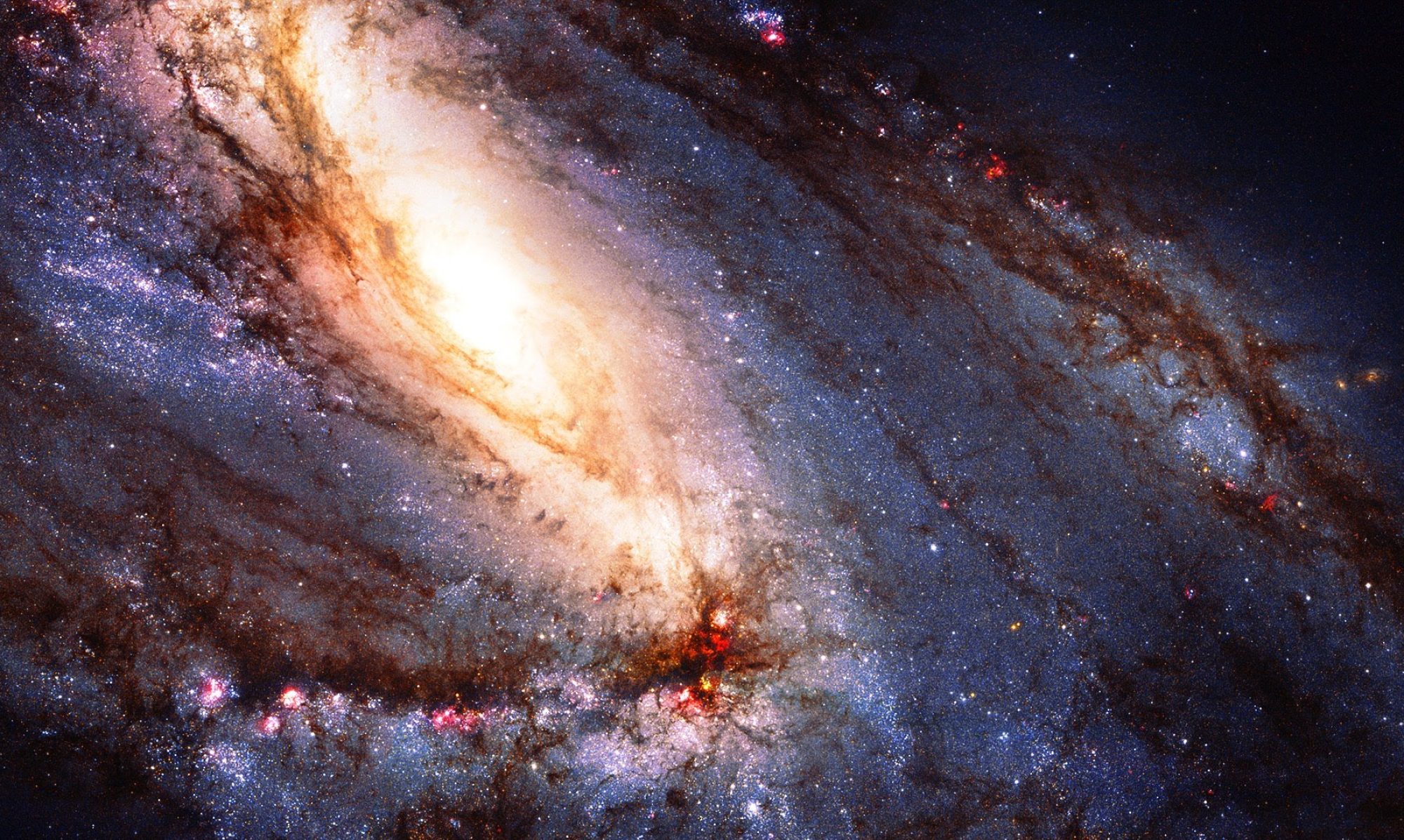
Some scientists like to believe that more information about the origin and nature of the universe can be found by poking around in the farthest reaches of outer space, many millions of light years away. What they are trying to do is catch up with the earliest light generated by “the Big Bang” – for those who subscribe to that theory – and hopefully catch a glimpse of what was going on at the time. I wish them luck, but suspect all they are likely to find is more space and more cosmic dust … and more “dark matter”, of course. (What is that stuff, anyway?)

andromeda galaxy
Andromeda Galaxy

I say this because it is my belief that poking around in the farthest reaches of the universe will not get us any answers about the origin of the cosmos, what it was that brought us about, and all that this might represent to us; that kind of information is likely not to be found out there. Why not?

Well, it is all about the nature of the information we are in search of. I believe we are necessarily limited in our ability to describe and interpret the universe beyond this being a function of the conditions that brought us about and defined the scope of what it is we are able to see, interpret and understand.

The nature of our perceptual apparatus is a successful response to these conditions, and our ability to gather, discern and interpret the data provided by it. Our survival as a species continues to depend on managing this information successfully, allowing us to see what we need to see, hear what we need to hear, etc.

Consequently, the universe that we see out there is very much of our own making, at least in terms of our conception of it, and to think we can extrapolate that to the larger hypothesis encompassing the very origin of the cosmos seems a bit of a stretch to me, notwithstanding some very smart people out there, including Stephen Hawking and his singularity theorems introducing such hypothetical entities as infinite space-time. But do we really understand what we are talking about here? I doubt it.

So where am I going with this? Not much further than to say that – to find the answers to the larger questions concerning our reason for being – we need to go in the opposite direction: into ourselves. We need to go into our own inner space and start cultivating the  fertile ground of our thoughts about who and why we are, with the hope that one day we might be able to grasp the significance of whatever it is that we represent as a living entity in the cosmos.

At the core of our being and in every atom in our bodies – and not hiding out in some far off corner in outer space – lies the origin of the cosmos, and the drive and determination that fueled the process that brought us here, and with it the meaning of all that we are and all that we can be. So very close to us – we cannot be separated from it – yet, clearly, still so very far away.

Does God Have a Belly Button?

According to the Christian bible, God created man in his own image. So this question occurred to me:  Given that we have one, does God have a belly button?  Yes, I know that is a silly question, but I’m sure a Creationist will have an answer for this, and most likely they will reject the question as being “irrational”, since they believe God was not created and already existed before the beginning of time. Presumably, that is a “rational” position to hold for them, as it is consistent with everything else they believe to be absolutely true without a shred of evidence, and  as unlikely as that might be available to them.

Now my theory is that God did not create man – and that in fact the opposite is true: man created God. As a result  – God – in a metaphorical sense, would indeed  have had belly button, since he sprang from the fertile mind of mankind – and today for those who still believe in him  the umbilical cord is still attached and keeping the idea of God alive a little bit longer.

And so man created God, together with all the other creatures that can be said to populate the metaphysical universe. He created God during the first dawn of reflective thought, when his mind became a mirror and he saw the world and himself in it; and when he did not know how or why he came about, or what his purpose in life was. And so he invented the idea of God – a parental creator and authority –  in response to the questions he could not find an answer for – like a soother in the mouth of babes – until such time he would come of age and has the courage to face his destiny on his own, and to accept full responsibility for it.

And this will happen, surely, when he is able to step back from his own ignorance with the realization that he isn’t the creature caught in the mirror,  but the actual source of it – that he is his own prime mover, and the embodiment of the force of life itself. That is: should we ever have the courage to open our eyes to consider and accept this.

 … It suggests that great discovery is the realization of something obvious; a presence staring us in the face, waiting until we open our eyes. (Michael Polanyi, in Science, Faith and Society)

The Evolution of the Global Mind

Is the Cosmos here for us, or are we here for the Cosmos?  Then again, it could be neither, or both, or we are just innocent bystanders, and a by-product – if not a casualty – of a cosmic cataclysm of unknown proportions; it origins unknown and its final outcome yet to be determined. Not knowing the greater scenario that is being played out here, it remains a challenge to assign ourselves some particular role in it and see if we are able to follow it along with some consistency, hoping all the while it isn’t – in Shakespeare’s Macbeth’s words: “a tale told by an idiot, full of sound and fury, and signifying absolutely nothing …”

In this role we are driven along an evolutionary path of unknown origins, taking us who knows where – and that leaves us to figure out for ourselves where we are heading to. And in light of the human and environmental wreckage we continue to leave in our wake  it would be difficult to accept that homo sapiens is at or near the pinnacle of evolution. We clearly still have some way to go if the roughly two thousand years of our recorded history are anything to go by; and not until such time we are no longer our own worst enemy in trying to move ourselves ahead from our troubled past. You have to believe in something like this if you think we can much better than that, even if all we have to show for to date is little more than a blood-stained past.

But setting aside our self-disgust for a moment, let us look at this again with a less jaundiced eye. The arrival of homo sapiens introduced a volatility and a riskiness to the world which could be indicative reaching a critical stage in the evolution of the world. That such risk-taking would be justified can be seen in the context of fending off entropy – at least here on earth, and for the time being  – should that be the ultimate fate of the universe. And thus there will be an urgency to the evolutionary thrust to get done what needs to get done before time runs out, and to take some risks along the way. A risk management process by any other name.

You see, something very unique and significant happened with the introduction of homo sapiens to the planet: homo faber – man, the toolmaker – arrived on the scene. And while hitherto the spectacular creativity demonstrated by evolution manifested itself only from the inside out – through the incredible diversity of life-forms encountered here on earth, from the simplest plants and smallest single cell organisms to the largest or most complex ones – through a human being the creative forces of evolution are for the very first time being applied externally. With our hands – and with the tools made by our hands – we are able to reshape matter directly, and through us the creativity pressure of evolution goes to work in a greatly accelerated fashion – if not at breakneck speed – to whatever end it needs to get to …

Initially with primitive stone axes, then forged iron implements, followed by mechanized devices, and eventually through the ability to derive electricity from material processes and the huge array of material resources extracted from the earth we have been creating things of unimaginable potential if their development continues at the current pace. Technology is the only area in which our species has made substantive and measurable progress since we first opened our eyes as a creature capable of  reflective thought – knowing that one knows – and we have done so in a hurry.

Most importantly, we have made significant advances in the area of information technology, such as the internet, to the point that all knowledge we have accumulated of the world can be shared instantly at any time and potentially from anywhere. As such we have gone beyond the layer of our planet’s biosphere to create a dynamic layer of knowledge which is about the world, and which belongs to the world. In a sense, this layer of knowledge functions as the conscious mind  of the world.

(Some philosophers such as Theilhard de Chardin have referred to this layer of knowledge as the “noösphere” – meaning “sphere of reason” – and after the geosphere and biosphere it would be the  next evolutionary geological layer in the life of the planet.)

Aliens, Lost in Space.

Man is absolutely not the crown of creation: every creature stands beside him at the same stage of perfection. … And even in asserting that we assert too much: man is, relatively speaking, the most unsuccessful animal, the sickliest, the one most dangerously strayed from its instincts – with all that, to be sure, the most interesting! (Nietzsche)

How useful would it be to dwell on our past from time to time. Our past as a species, that is.   Perhaps it will help us to understand the present, and where we’re going with all of this, as for the moment I cannot pretend to understand much of the present at all. But – so the theory goes – if you look back to see in what direction we have been going, and to examine the things we have done in the past, you might get an inkling that we actually have a goal in mind – intentionally or not – to which we’re striving.

And so I wonder what it would have been like at the very beginning of our species, to leave the bush and our animal past, and start taking steps towards becoming the human being of the present. What was it that motivated us to evolve into a direction that  appears radically different  from our animal past, and in more ways that I can think of.

Some will probably want to debate me on this point as they will claim that this is a difference of degree and not of kind, but I would want to claim that our behaviour is substantially different from any other animal although there are many aspects of it that clearly hark back to our shared animals past.

However this might have come about, it will have taken a few hundred thousand years to evolve from beast to homo sapiens and to arrive at that apparent difference between us and the animal that we still very much are.

However, we no longer just live in our environment and accept it for what it is.  Instead, we  manipulate it, artfully, craftily, and  – unfortunately – more often than not destructively,  in order to sustain us, and to restructure it as we see fit, even if this would be to our own detriment, and perhaps risk our own extinction.

Substantively, though, what are we aiming for, or what do we want?  Given the state of the world today,  all I can see is  mass bewilderment, a morass of sociopolitical and ideological strategies and their ensuing variations in inequities. No, we really don’t know where we’re going with all of this– an entire planet full of people, lost in space.  And we’re the only aliens out there.

Onward, Christian Soldiers!

For those who have argued that oil was the only key driver for the disastrous Bush plan to secure Iraq for the US, I suggest there may have been another strong motive to proceed with this dumb idea, from an entirely different source: the Religious Right.

Under the heading “Onward, Christian Soldiers”, on April 15, 2003, Max Blumenthal of the Salon Media Group in San Francisco writes:

Now that the Big Brother busts of Saddam Hussein are crashing to the ground from Basra to Kirkuk and widespread looting and violence have filled the power vacuum, Iraq remains tense and its future is murky. There, people are more concerned with things like water and medical care than the abstract world of politics. But in the West, a growing corps is squabbling over the spoils of war. While winners and losers in bids for reconstruction contracts and humanitarian opportunities are still being sorted out, one group seems certain to gain an avenue into the country: Southern Baptist Convention ministers prominent in the galaxy of the religious right. Among them is Charles Stanley, the former two-time president of the Southern Baptist Convention, a close ally of former President George Bush and a fervent supporter of the current president’s war on Iraq. ‘The government is ordained by God with the right to promote good and restrain evil,’ Stanley stated in a sermon. ‘This includes wickedness that exists within the nation, as well as any wicked persons or countries that threaten foreign nations … Therefore, a government has biblical grounds to go to war in the nation’s defense or to liberate others in the world who are enslaved.’ And sampling from a scattershot of biblical passages to inform his argument, Stanley warned that those who oppose or disobey the U.S. government in its drive to war “will receive condemnation upon themselves.

Even before victory has been formally declared, Baptists Ministries are just one phalanx in an army of Christian soldiers who see Muslim Iraq as an extraordinary new marketplace for their theology. Already, churches and ministries on the religious right are poised to send in missionaries and to ramp up broadcasts to the region. Like advance troops before the invasion, some U.S. military officials in Iraq have already staked out the country as a natural place to spread the Christian Gospel.

Given this kind of  “biblical support” Bush may have not misspoken when he went on national TV after 9/11 and used the word “crusade” in the context of needing to go after the “evildoers” who were responsible for that terrible calamity.